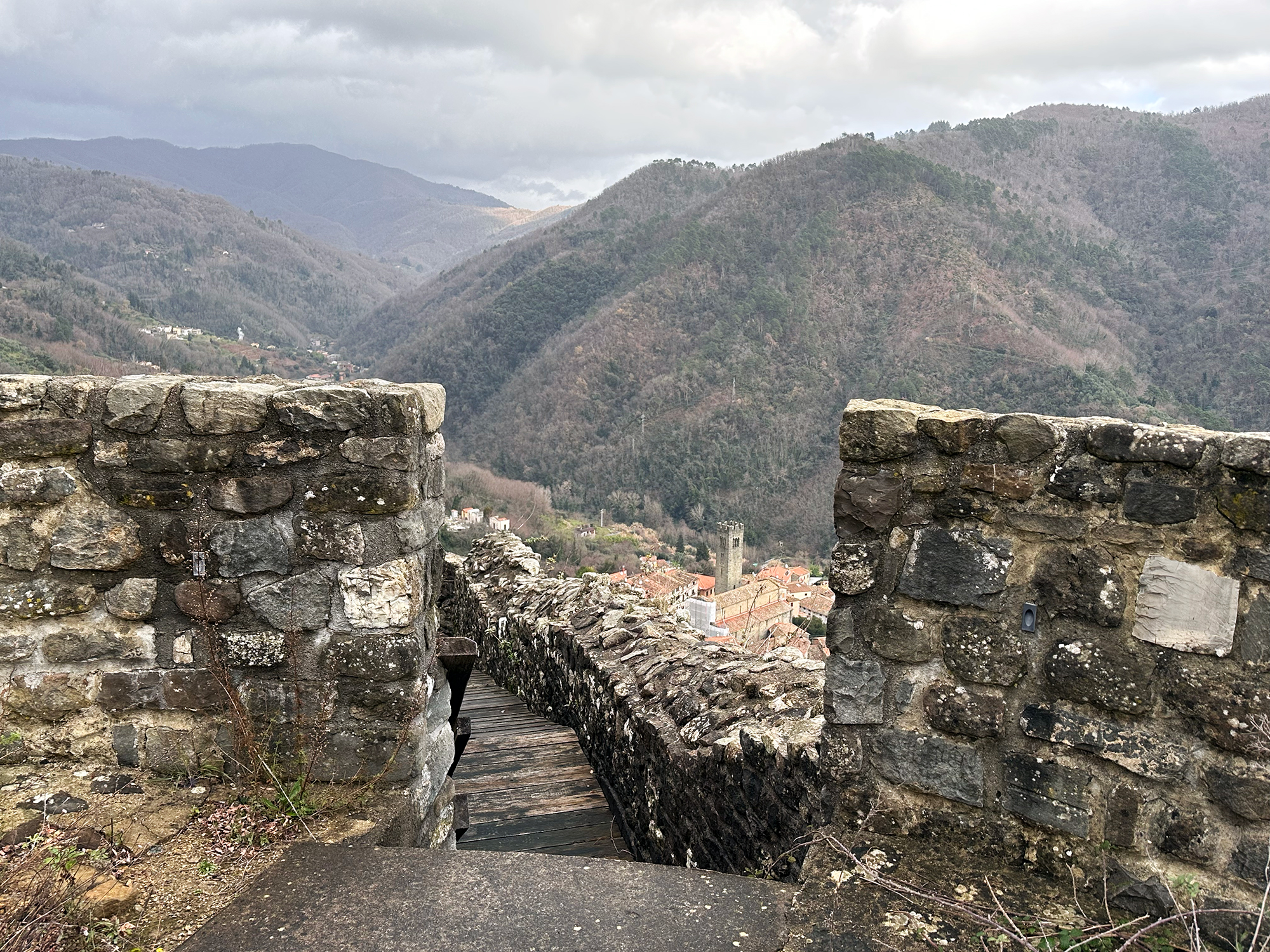
The history of Villa Basilica, in the Lucca area of Tuscany, is deeply connected to ironworking and the production of bladed weapons, particularly swords. For more than two thousand years, this valley represented a centre of artisanal excellence, leaving a legacy that still shapes the identity of the area today.
The earliest significant settlements date back to the period of the Ligurian Kingdom. It is likely that ironworking initially developed to supply weapons to Ligurian warriors, renowned for their strength and military skill.
In 184 BC, at the Marzalle of Pescia, Roman legions suffered a severe defeat at the hands of the Ligurians. Only later did Rome prevail, pacifying the territory and settling a colony of two thousand Roman citizens in the Lucca area. This land became known as Villa.
Roman armies passing through this valley on their way across the Apennines supplied themselves with weapons here. Even before the reign of Emperor Hadrian (AD 117–138), the people of Lucca were granted celebrated early sword-making workshops, known as Lucchese factories.
Around the year 1000, Villa was famous throughout the Italian peninsula for its ironworking and earned the nickname “Villa dei Battiferri”, due to the constant sound of hammers striking anvils. Its strategic position and abundant resources fostered remarkable economic growth.
Only after the year 1000, with the construction of the imposing Pieve of Santa Maria Assunta in Romanesque Lucchese style, was the name Basilica added to Villa, giving rise to its current name.
The importance of the bladed weapons industry was such that, in the official Lucchese systems of measurement, there existed a specific unit: the “cassa di Villa”, containing 208 blades.
Each sword maker engraved his name on the blades, making it possible to identify the families who practised this craft. Among the most renowned were the Nacchi, Cataldo, Girolamo di Matteo, Giovanni Angeli, and above all the Biscotti, considered the most famous sword makers of Villa Basilica.
The quality of swords produced in Villa Basilica was recognised far beyond Tuscany. A late 15th-century manuscript preserved at the National Library of Madrid mentions an artisan named Antonio as one of the six finest sword makers of his time, alongside Piero and Chataldo, both originally from Villa Basilica.
The same names also appear in a manuscript held at the Royal Library of Brussels, confirming the international reputation of these master swordsmiths.
A particularly significant episode emerges from the correspondence between Luigi Pulci and Lorenzo de’ Medici, known as Lorenzo the Magnificent. In a letter dated 1 February 1465, Pulci describes a journey specifically undertaken to Villa Basilica to purchase five swords: one for Lorenzo, one for Pietro Capponi, one for Tommaso Capponi, one for Ruberto, and one for himself.
Pulci notes that the Biscotti family was already famous at that time for the quality of its swords. During that visit, another blade was promised to Lorenzo as a gift by a great master known as Biscottino, who wished to test it personally before sending it to the Magnificent.
Today, swords forged in Villa Basilica can be admired in some of the most important museums around the world. They stand as evidence of a craft tradition that made this Tuscan village famous from antiquity through to the early Renaissance.
The story of the swords of Villa Basilica is a story of iron, ingenuity, and local identity, a cultural heritage that deserves to be known and valued, just like the castles and villages that tell the most authentic story of Tuscany.