How to reach
The Castle overlooks the village of Lecchi, in the municipality of Gaiole in Chianti. From Gaiole, follow the SP408 toward Siena for about 9 kilometers, then turn right at the junction for San Sano/Lecchi. Continue to the village of Lecchi in Chianti, from where a narrow drivable road of about 400 meters leads directly to the castle.
History
The Castle of Monteluco in Lecchi dominates the landscape of the Sienese Chianti from an elevation of about 510 meters, in a strategic position between the Val d’Arbia and the surrounding hills. More than a noble residence, it was conceived from the outset as a true military outpost. From its commanding position, the castle visually controlled a wide stretch of territory, from the routes of the Val d’Arbia to the Chianti hills, allowing the monitoring of troop movements and communications along a border that was unstable and contested for centuries.
Architecture and Structure
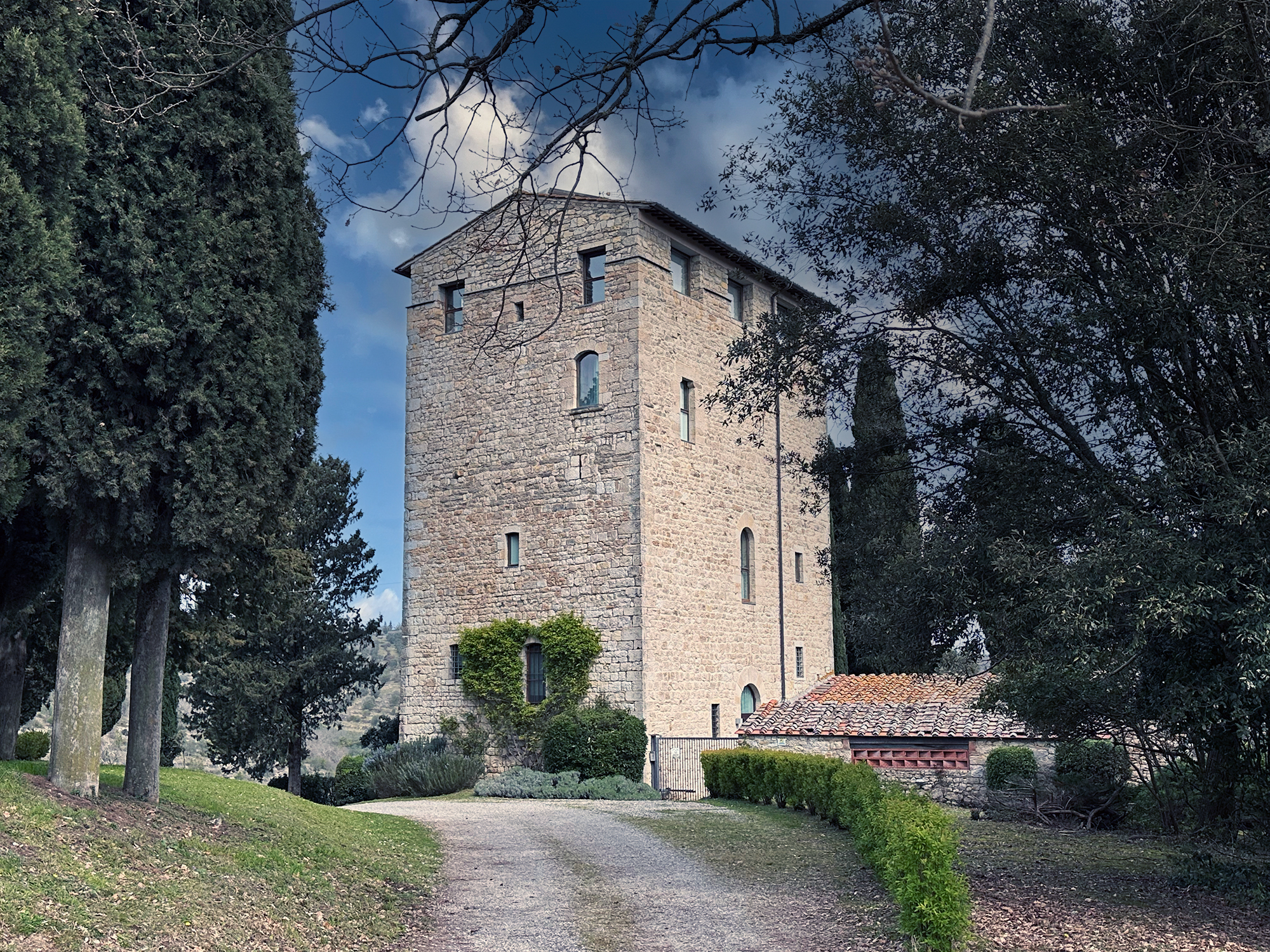
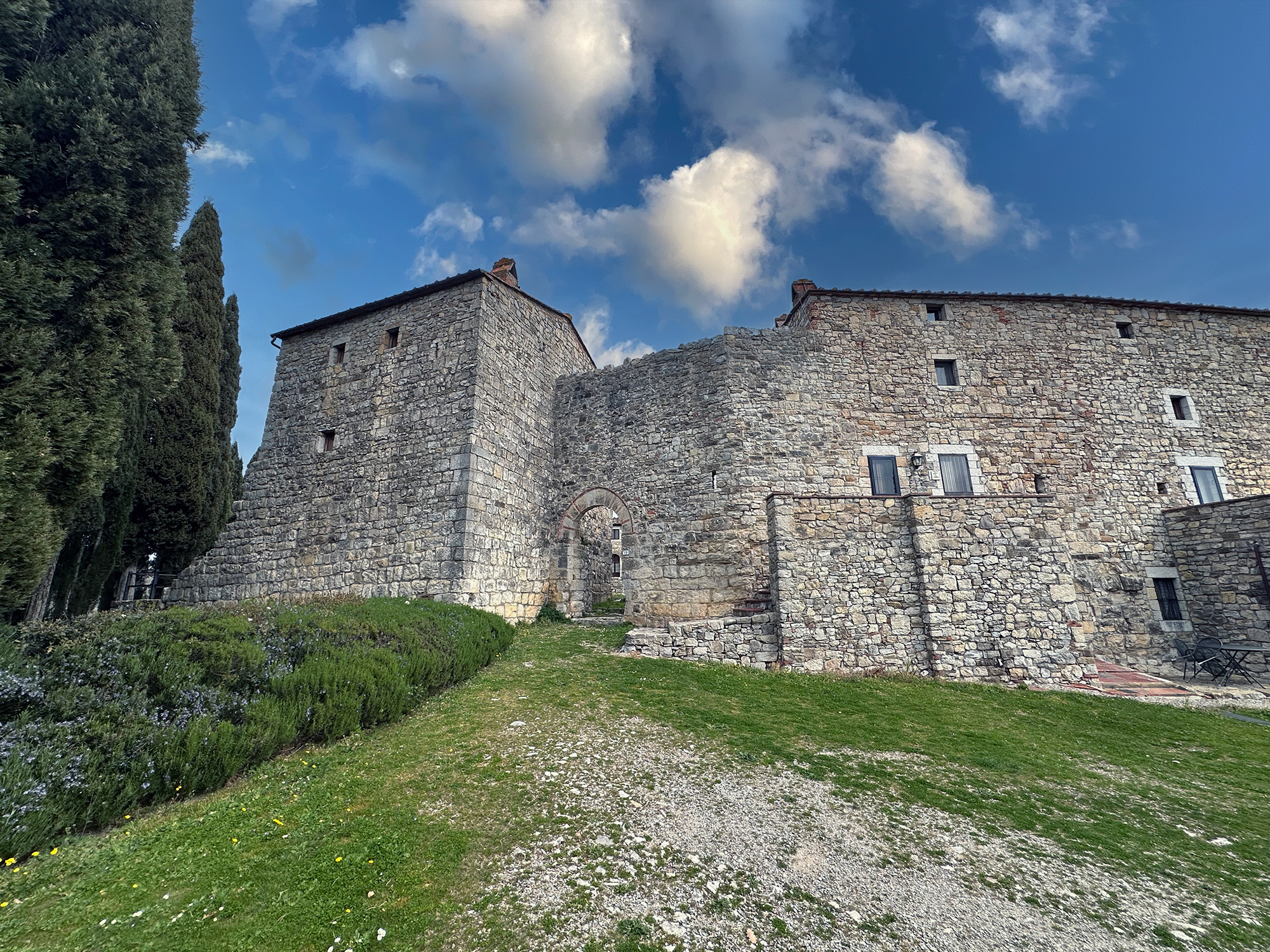
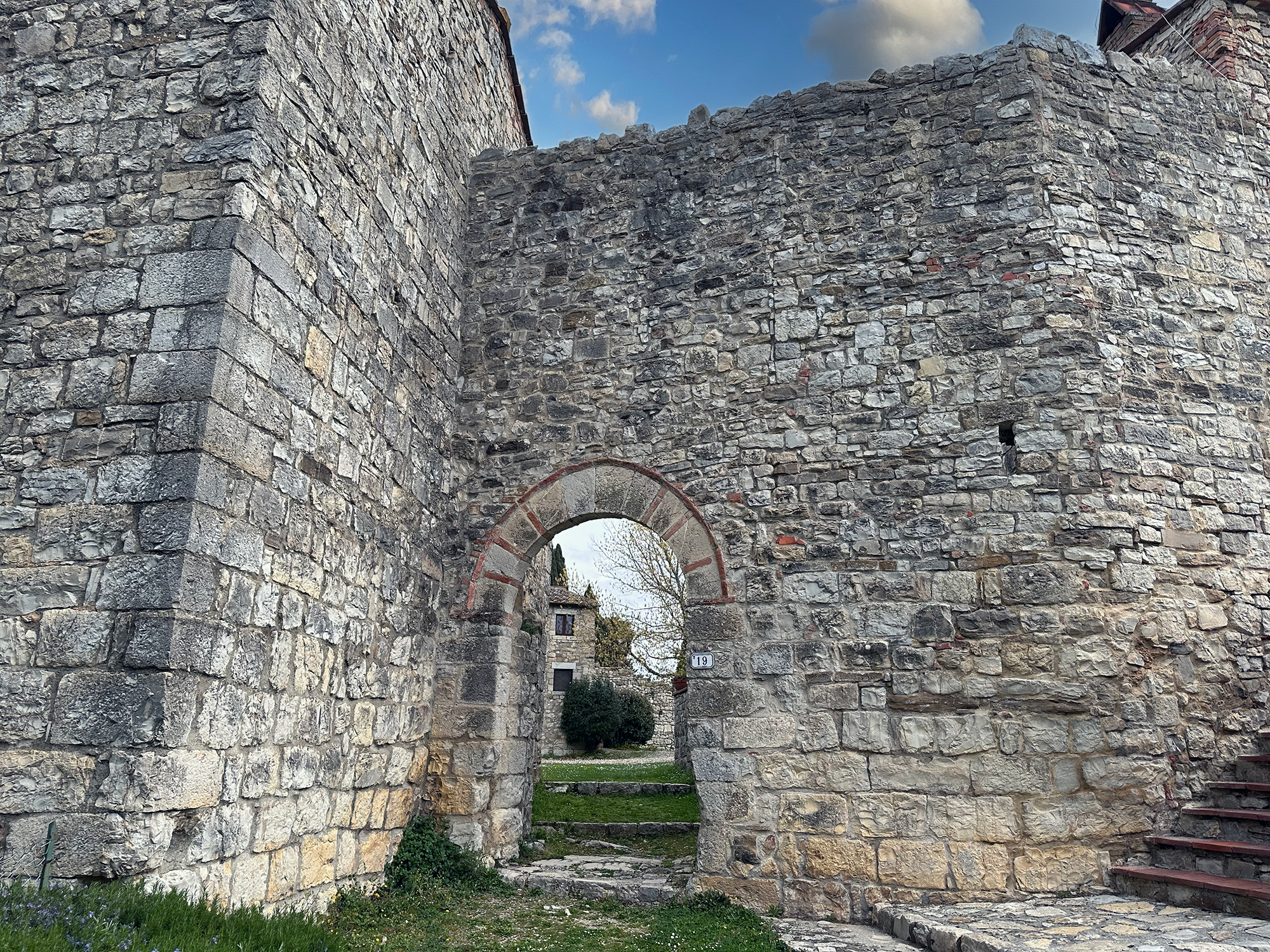
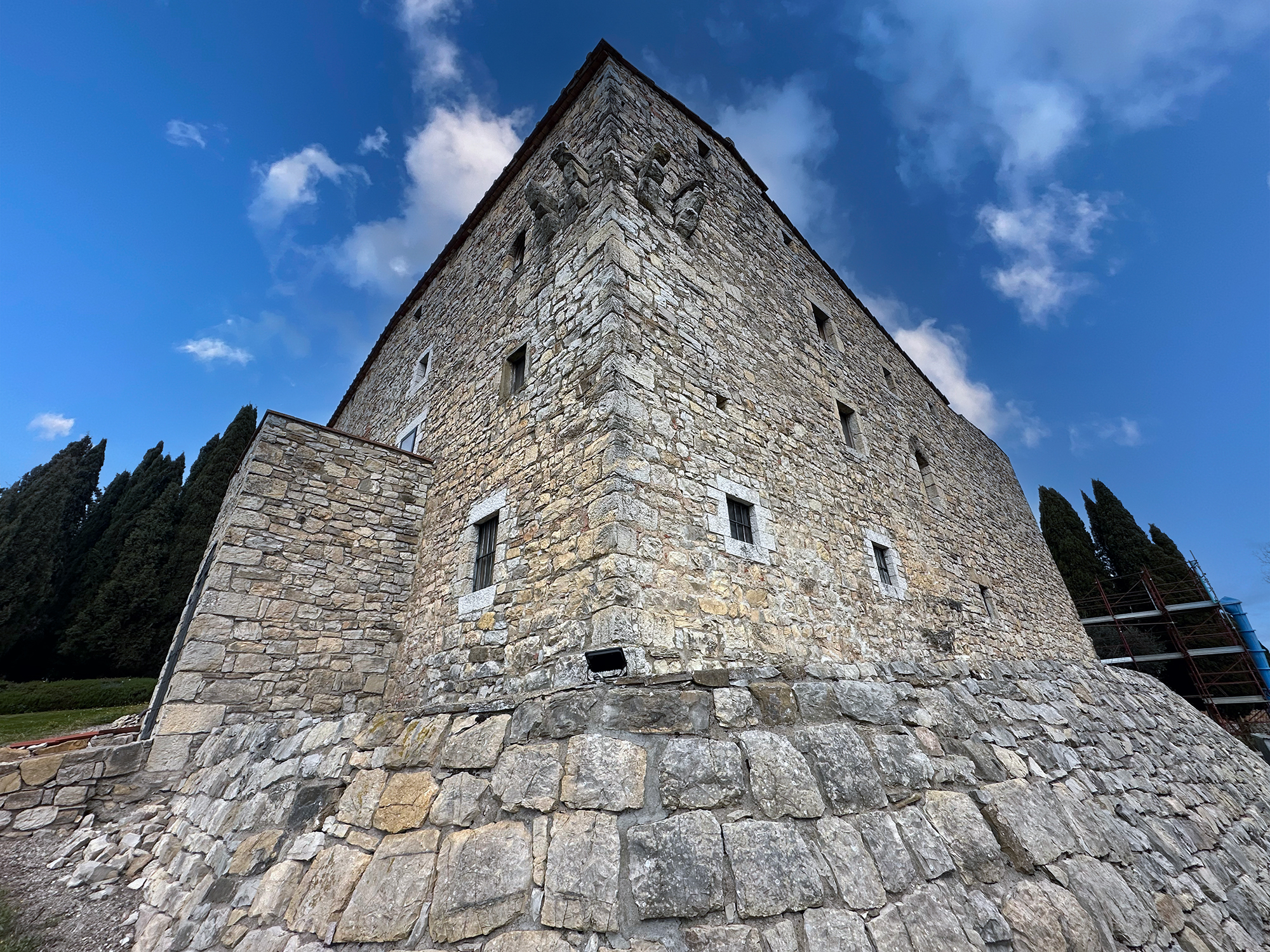
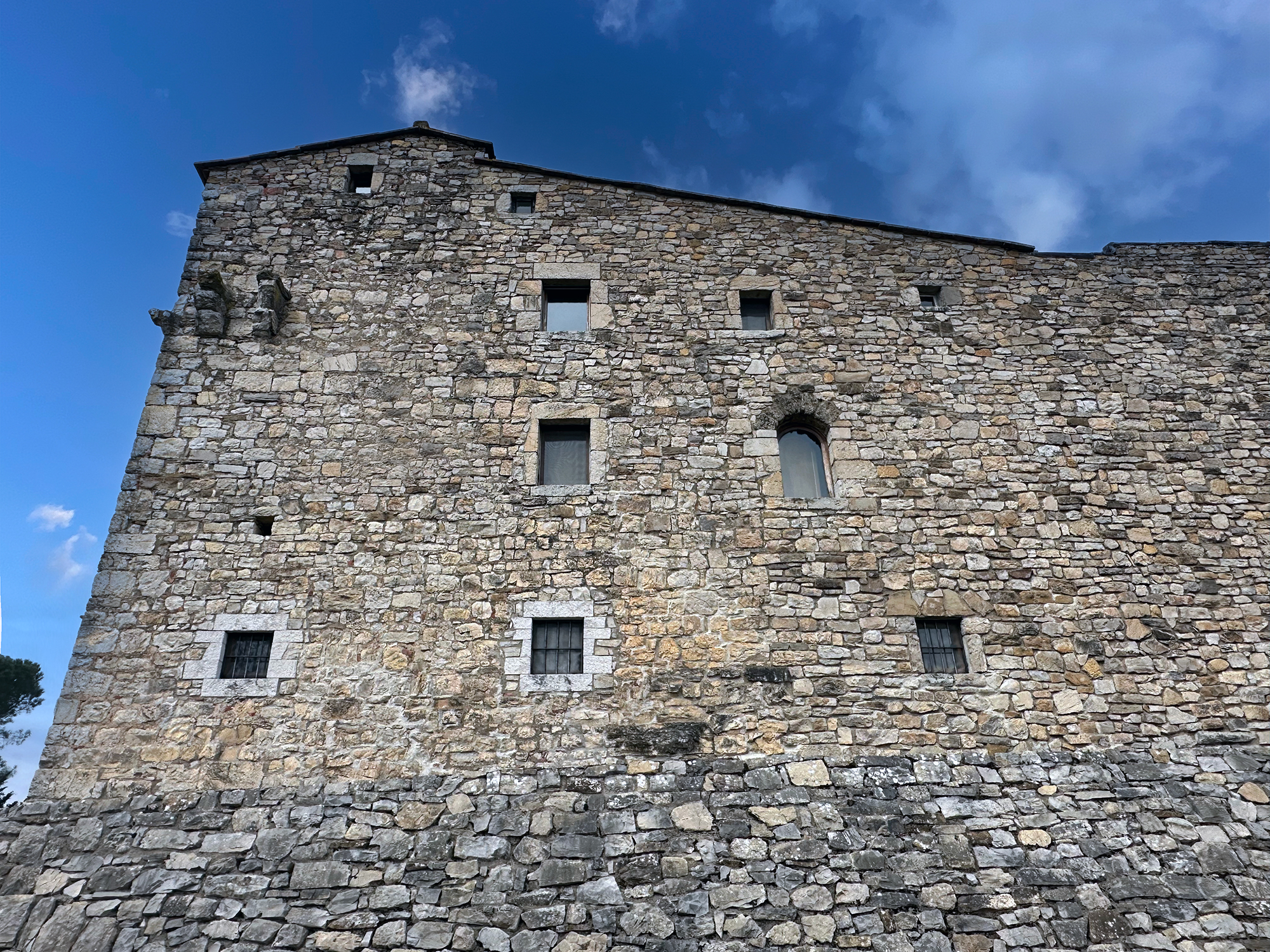
Even today, the complex preserves its original defensive layout, with a rectangular plan oriented along the north-south axis, entirely built in Chianti alberese stone, characterized by its typical ivory-white color and irregular rubble masonry. The most striking element is the massive tower, located outside the enclosure, positioned to defend the northern side—the most exposed—and featuring numerous defensive openings.
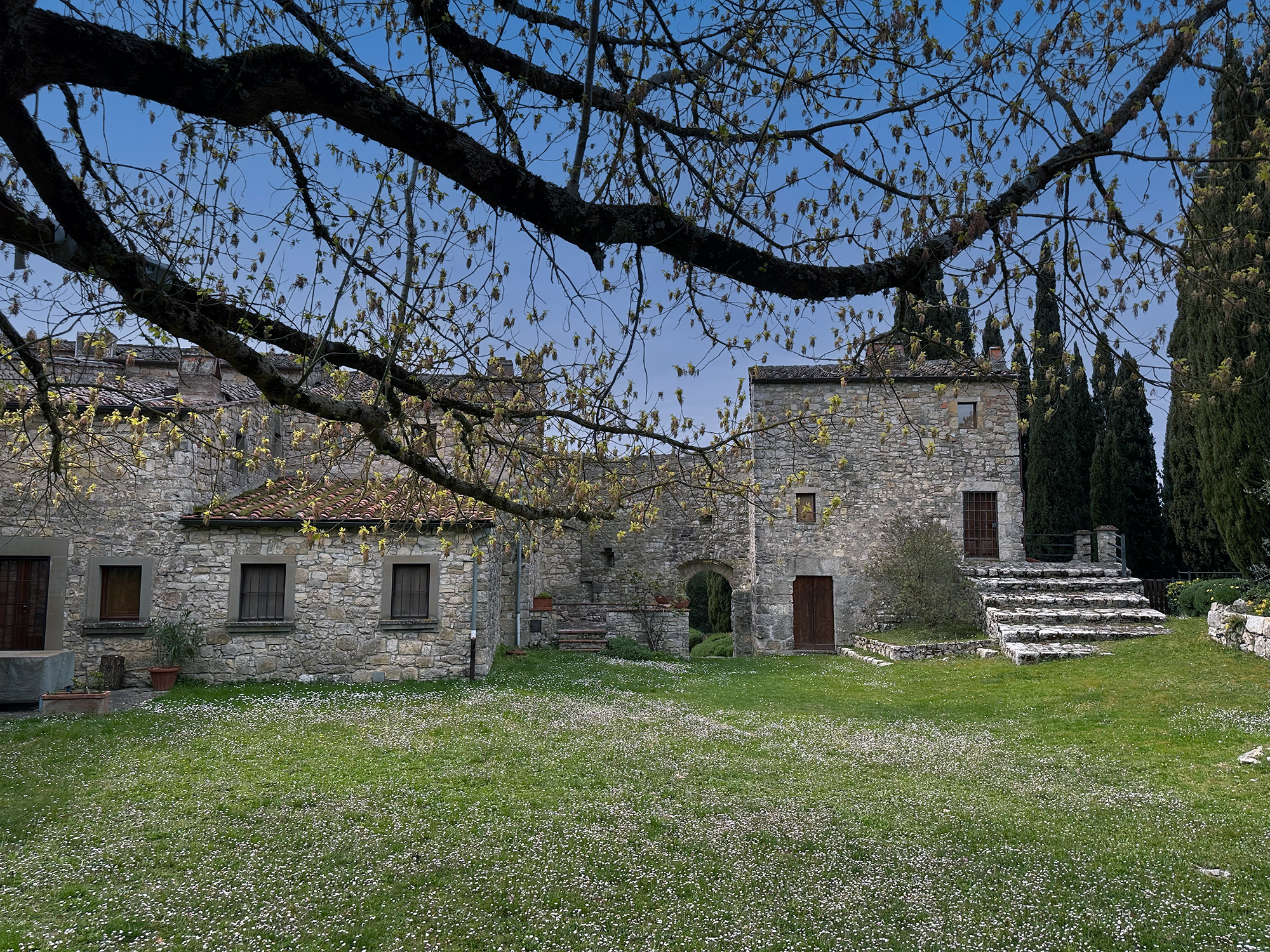
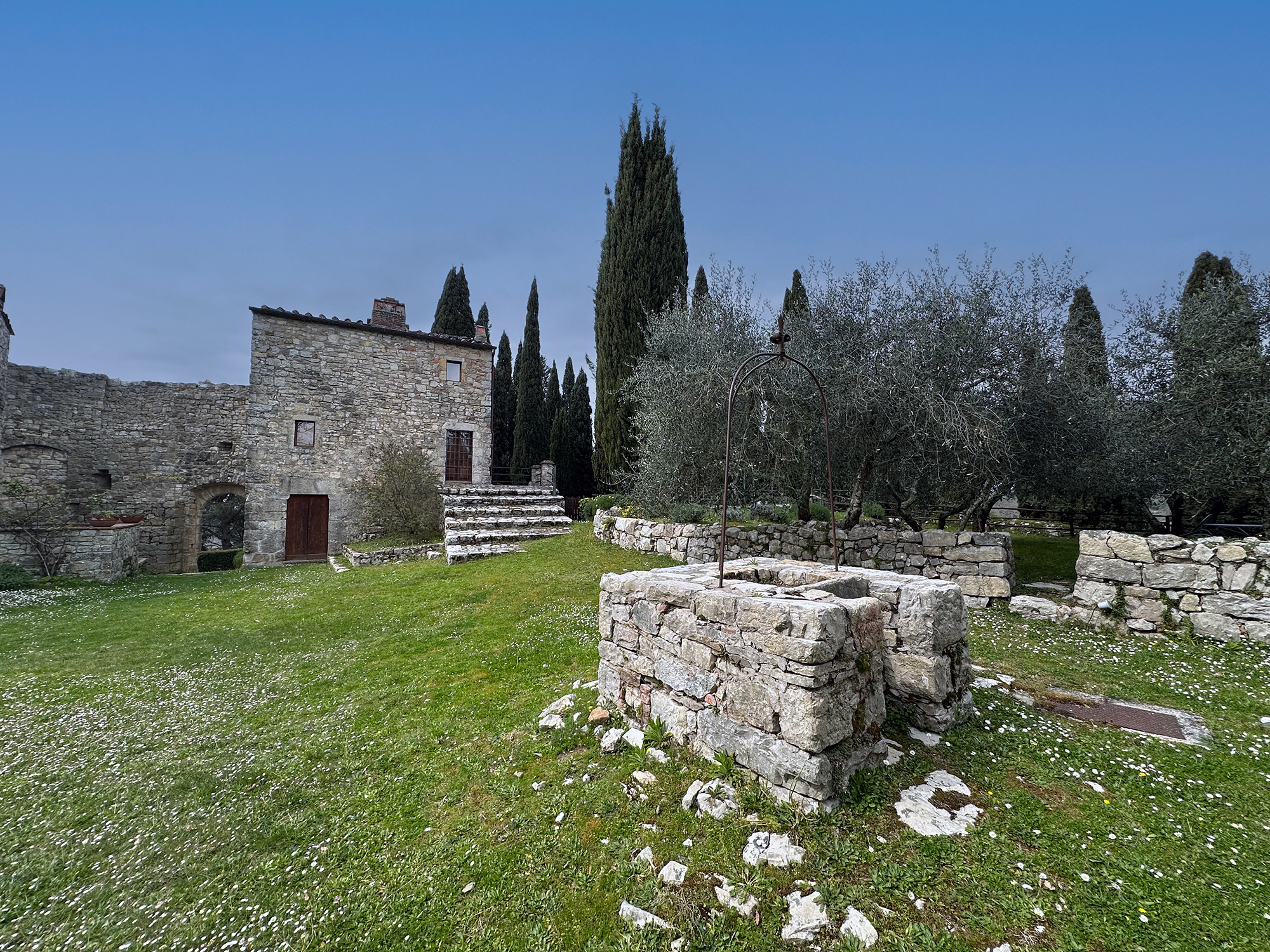
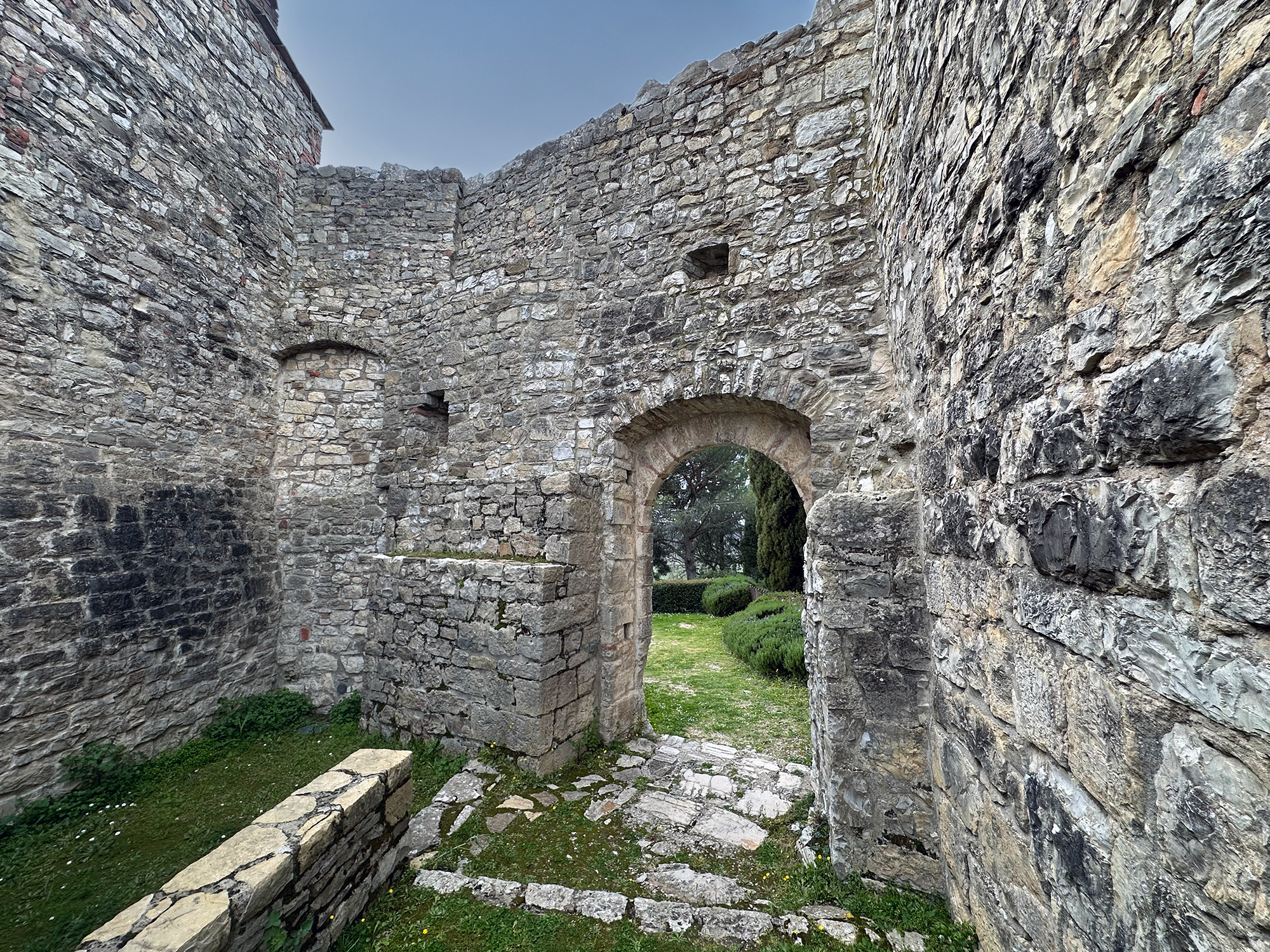
This is accompanied by the main structure, a compact fortification enclosing an internal courtyard, which is accessed through a doorway adorned with an elegant round arch with bichrome voussoirs in stone and brick, opened at the center of the southern curtain wall and built around the early 17th century after the Aragonese wars and the disputes between Florence and Siena. Inside, a suggestive well is preserved.
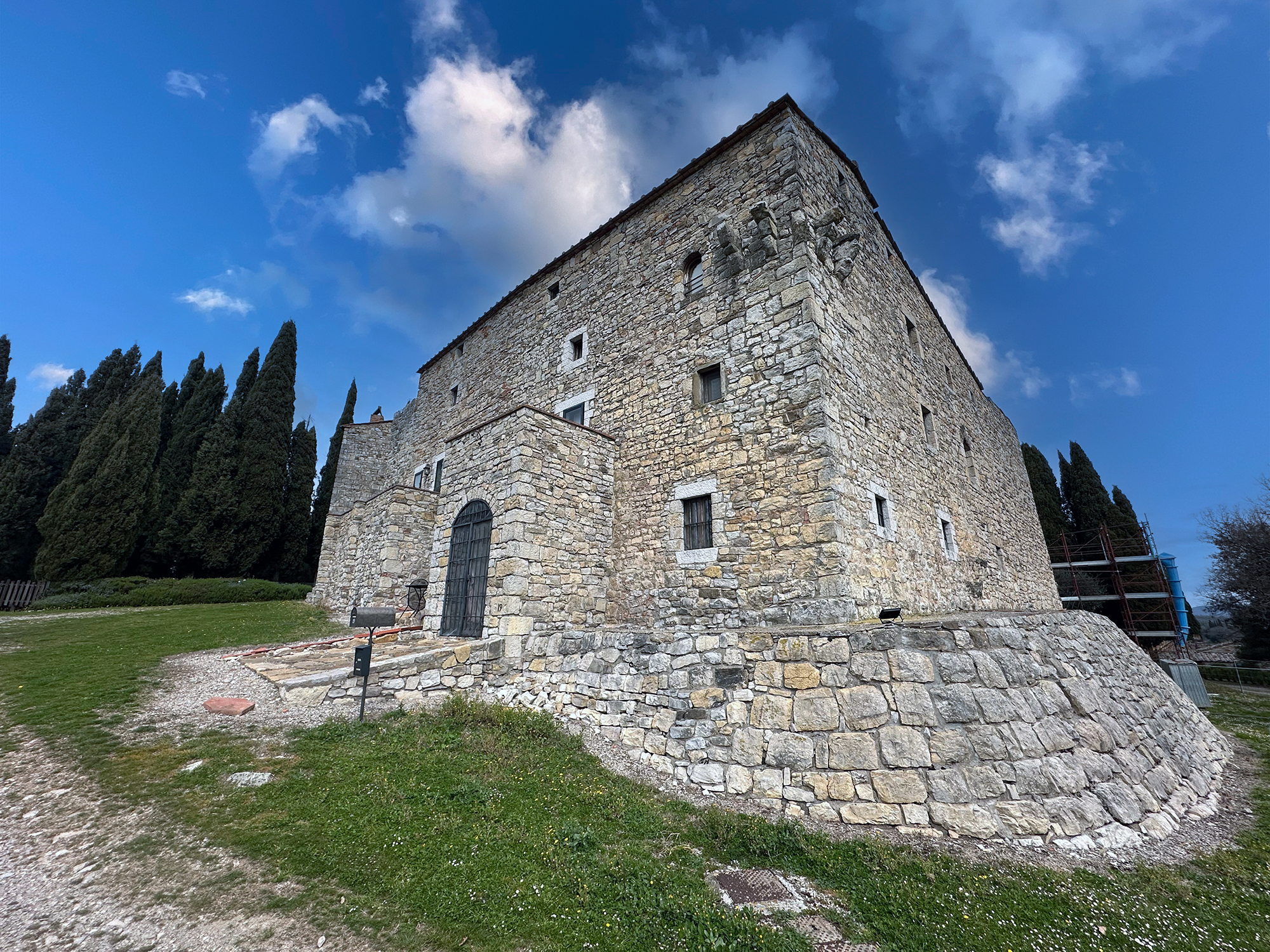
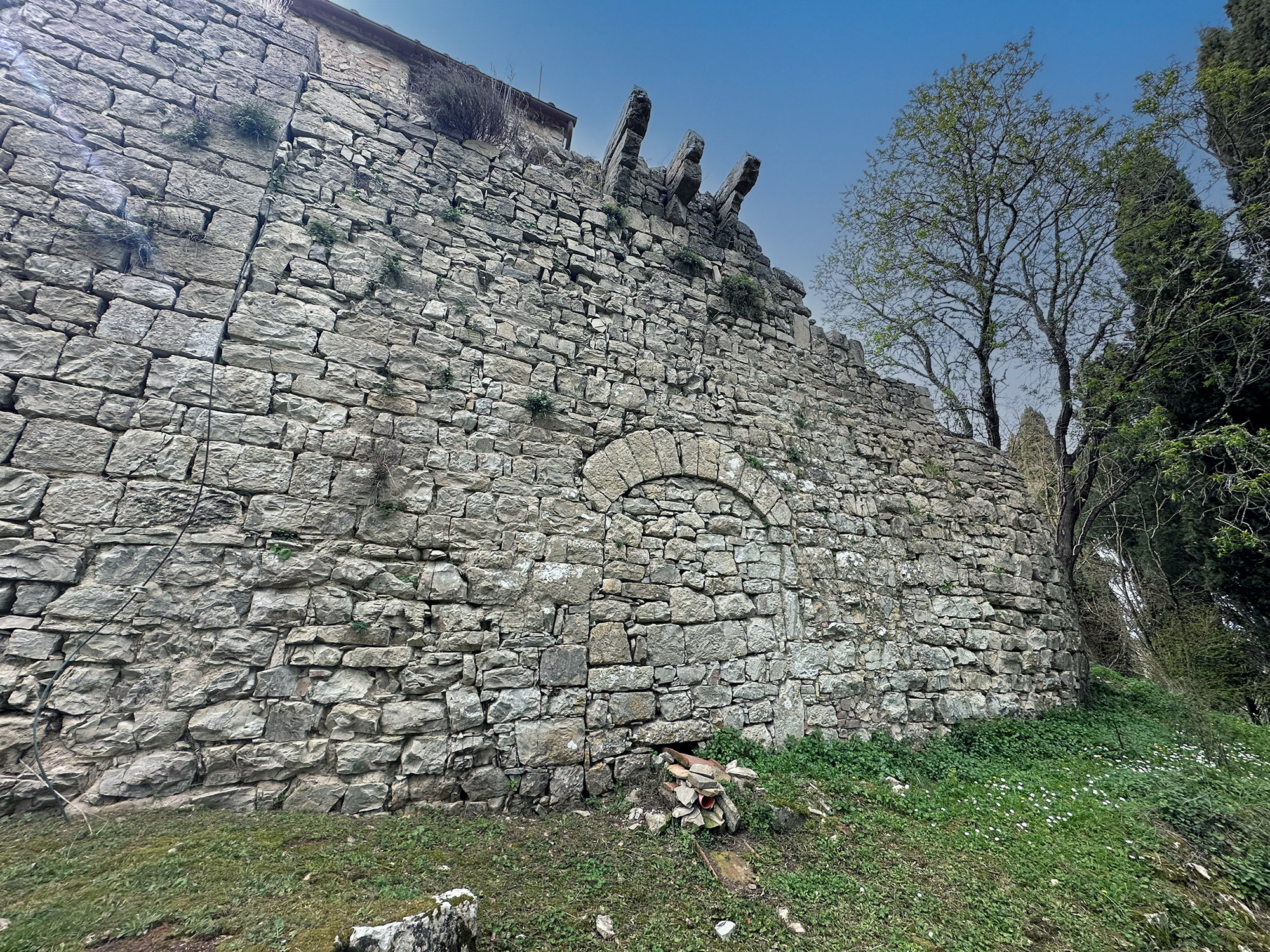
The original entrance is the one now walled up on the northern side, facing the external tower, with an arch composed of well-crafted radial stones and surmounted by three stone corbels. It was closed in the mid-1960s due to structural instability, when the families living in the fortress—under precarious conditions and as sharecroppers of the Ricasoli of Meleto—were given the opportunity to move into newly built public housing in the village of Lecchi below.
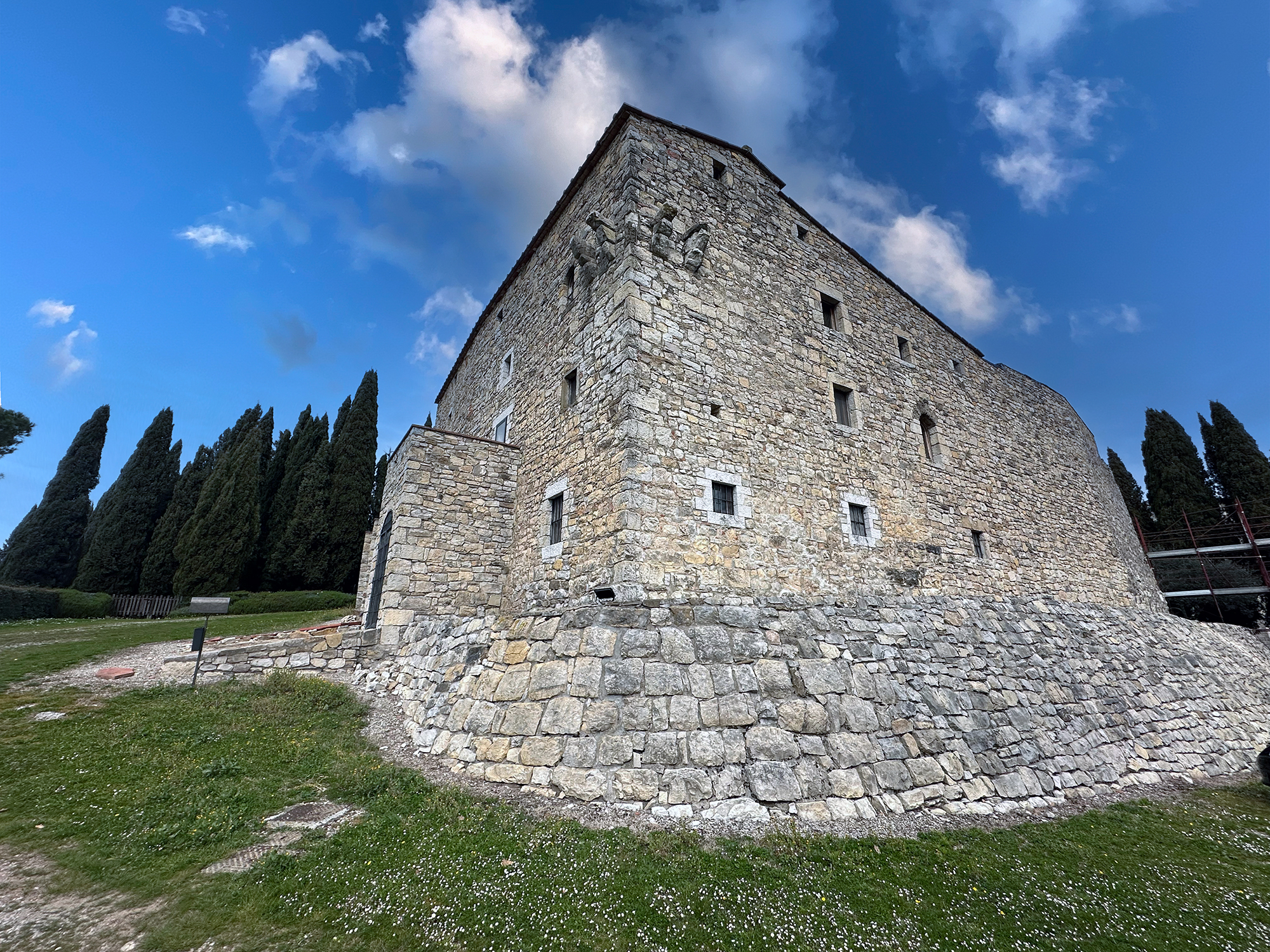
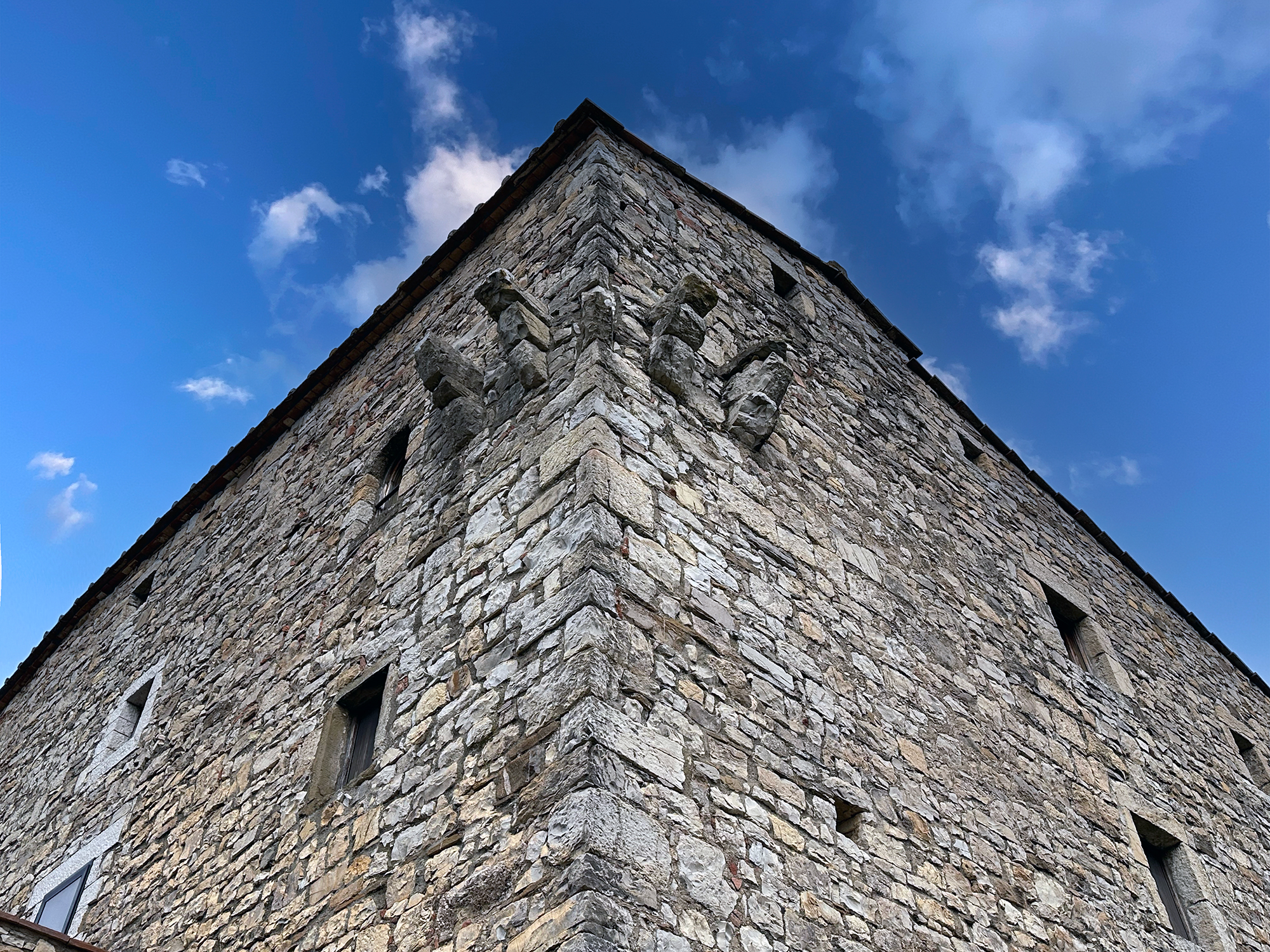
At the southeast corner, the protruding remains of stone corbels are still visible, probably part of ancient walkways or advanced defensive systems such as wooden hoardings. On the opposite side stands the so-called “cassero”, a building intended for the garrison commander, a massive element typical of medieval military architecture, now truncated at the height of the walls.
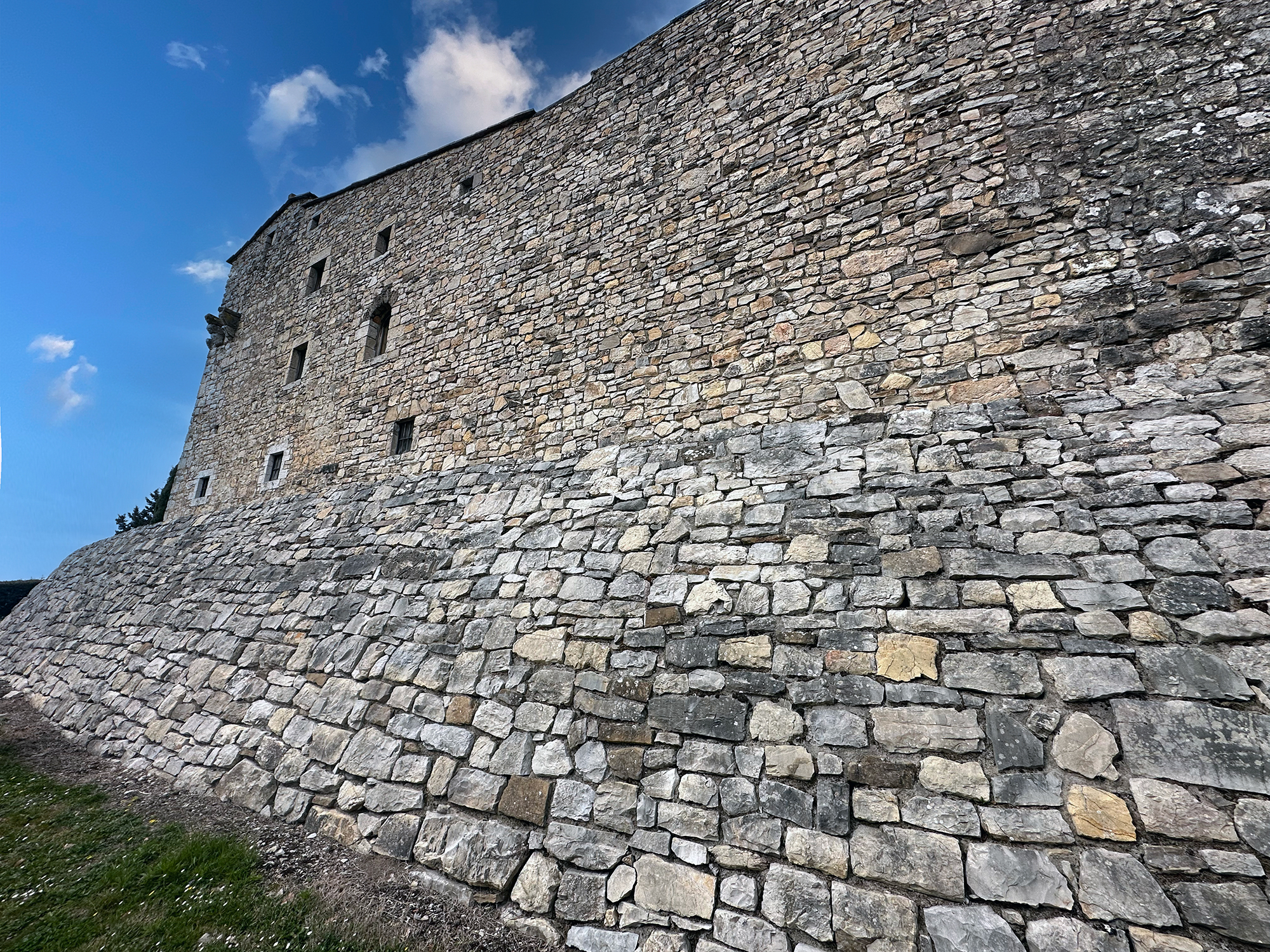
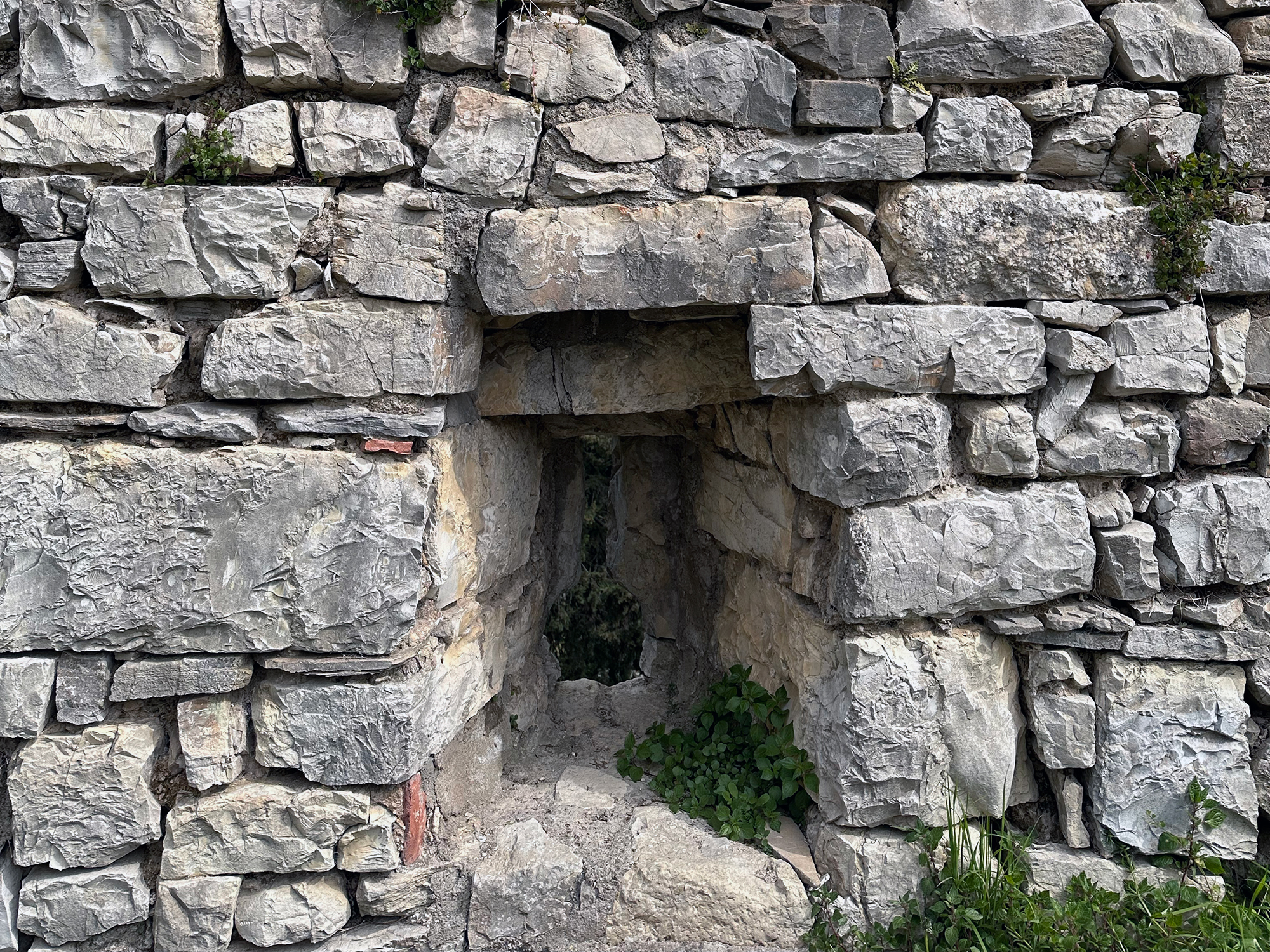
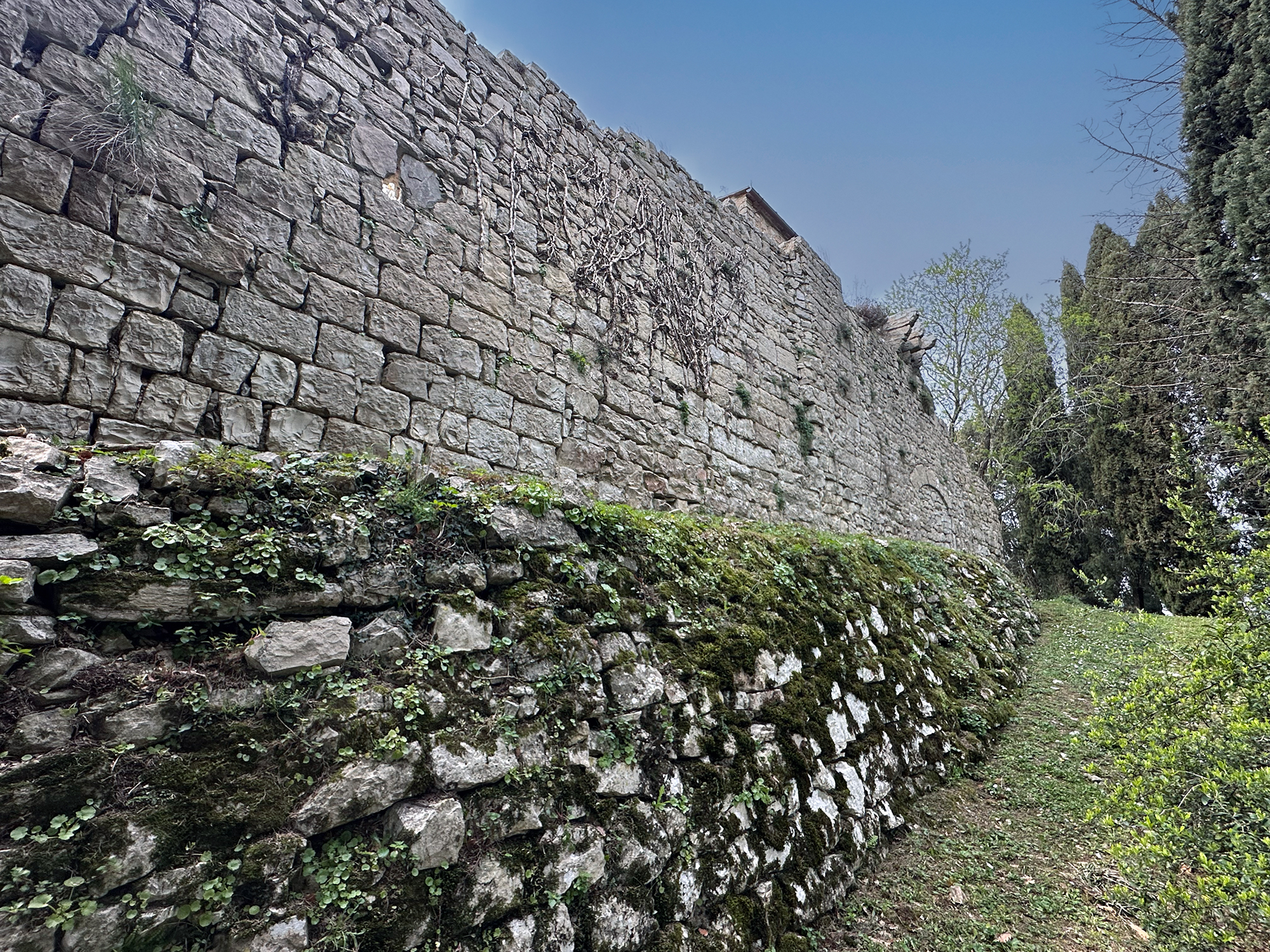
The entire complex was originally surrounded by a high and sturdy perimeter wall, of which large portions are still preserved: clearly visible is the original stone batter along the eastern front, together with numerous loopholes, later adapted for firearms, contributing to the severe and compact appearance of the settlement.
After a long period of abandonment, the complex has been restored in recent times and today is in excellent condition, divided into private residences and hospitality facilities, while maintaining its austere and fortified character.
History
The toponym “Monteluco” derives from the Latin "montem" (mountain) and "ilicem" (holm oak), referring both to its elevated position and the historical presence of holm oak woods, which are still an integral part of the landscape today.
The origins of the site date back to the Etruscan period, with an initial settlement at the foot of the hill in the 3rd century BC, later expanded by the Romans with new structures at the summit. The construction of the actual fortification, however, took place after the year 1000: the site is already mentioned in 998 as a curtis, when Marquis Ugo of Tuscany donated it to the Abbey of San Michele in Marturi, now Villa di Marturi, near Poggibonsi.
During the Middle Ages, Monteluco assumed a leading strategic role within the defensive system of the Chianti, being located along the contested border between Florence and Siena. As early as the beginning of the 13th century, it was used as a military base in Florentine operations against Siena, together with other castles in the area. During these years, the site was involved in events related to the Sienese noble Guarnellotto de’ Mezzolombardi, a key figure in alliances and conflicts between the two cities, until the final consolidation of Florentine control.
In 1240, the castle passed to the Ricasoli da Cacchiano, a powerful family destined to maintain a central role in the territory. During the wars between Guelphs and Ghibellines and subsequent military campaigns, Monteluco continued to serve as a strategic stronghold, resisting several attacks and contributing to the defensive system of the Chianti League.
The most severe damage occurred between the 15th and 16th centuries, when invasions by Aragonese and Spanish troops devastated the area: in 1478 the territory was occupied by allied forces of Siena and Naples, while in 1530, during the war for the Medici restoration, the castle was set on fire and heavily damaged.
The Florentine Histories
The Castle of Monteluco is also mentioned in the Florentine Histories by Giovanni Cavalcanti, a work composed of 14 books of historical accounts. The events described cover the period between 1423 and 1440, at the beginning of the Medici era.
At that time, the owner of Monteluco was Egidio da Ricasoli, a controversial figure who, due to debts and family disputes, risked arrest and the confiscation of his assets by Florence. To avoid imprisonment, he attempted to secretly sell the castle to the Sienese in exchange for 3,000 florins.
According to Cavalcanti’s account, Egidio had taken under his protection a local young man named Ungheretto. When the boy fell in love with the same woman frequented by Egidio, their relationship deteriorated. Tasked with delivering the documents of the agreement to Siena, the young man sensed the betrayal and attempted to flee toward Florence, but he was caught, deceived, and killed by Egidio himself inside the castle.
Egidio was later arrested but, thanks to the influence of his family, managed to regain his freedom after a few years.