A Brief History of the Guidi Counts
The story of the Counts Guidi is a long saga spanning almost five centuries, full of political intrigue, dynastic alliances, wars and castles. They were one of the most powerful feudal families of central Italy, with lands stretching from Romagna to Tuscany and their heartland in the Casentino, the mountainous upper Arno valley in the province of Arezzo.
Origins: from Romagna to Tuscany
The Guidi are documented as early as the 10th century. The first known member of the family is Count Tegrimo, active in the first half of the century between the Pistoia area and Romagna, where the family had its first base at Modigliana. The family name comes from Guido, the name that recurs in almost every generation.
The power of the Guidi rested on a combination of land, castles, feudal rights and ties with the great monasteries. Between the 11th and 12th centuries the family gradually shifted its centre of gravity towards Tuscany, and especially the Casentino, where it controlled the Apennine passes and the roads between Florence, Arezzo and Romagna.
The rise: Guido Guerra and “the good Gualdrada”
The family’s golden age came in the 12th century under Guido Guerra III. In 1164 Emperor Frederick Barbarossa confirmed by diploma his vast domain, which included dozens of castles across Romagna, the Casentino, the Valdarno and the Pistoia area.
Guido Guerra III married Gualdrada, daughter of the Florentine Bellincione Berti dei Ravignani: a marriage that tied the family to Florence and that Dante recalls in the Divine Comedy, where their grandson, also named Guido Guerra, appears among the great Florentines of Canto XVI of the Inferno.
«Nepote fu de la buona Gualdrada; / Guido Guerra ebbe nome»
Dante Alighieri, Inferno, Canto XVI, lines 37–38
(“He was the grandson of the good Gualdrada; / Guido Guerra was his name”)
The family branches and the struggle with Florence
In the 13th century the great Guidi inheritance was divided among several branches, each named after its main castle: the counts of Poppi, Romena, Porciano, Battifolle, Bagno, Dovadola and Modigliana. The division made the family less united just as Florence was expanding into the surrounding countryside.
In the mid-13th century the Guidi ceded to Florence their rights over several towns in the Valdarno and Montalbano, including Empoli, Vinci and Montemurlo. The family is still remembered in the area in the name of Cerreto Guidi.
The branches of the family often took opposite sides in the struggle between Guelphs and Ghibellines. The Ghibelline Guido Novello, Count of Poppi, ruled Florence as vicar of King Manfred after the victory of Montaperti (1260).
Campaldino, Dante and the false florins of Romena
On 11 June 1289, below the castle of Poppi, the Battle of Campaldino was fought between the Guelphs of Florence and the Ghibellines of Arezzo. Among the Florentine cavalry was the young Dante Alighieri; on the Aretine side, Guido Novello commanded the reserves but withdrew without fighting. The Florentine victory marked the beginning of the decline of the Ghibelline cause in Tuscany.
A few years earlier, in 1281, Master Adam (Maestro Adamo) had been burned at the stake in Florence for minting counterfeit florins at the castle of Romena on behalf of the Guidi counts. Dante places him among the falsifiers in Canto XXX of the Inferno. During his exile, according to tradition, the poet was a guest of the Guidi at some of their castles in the Casentino.
The castles of the Counts Guidi
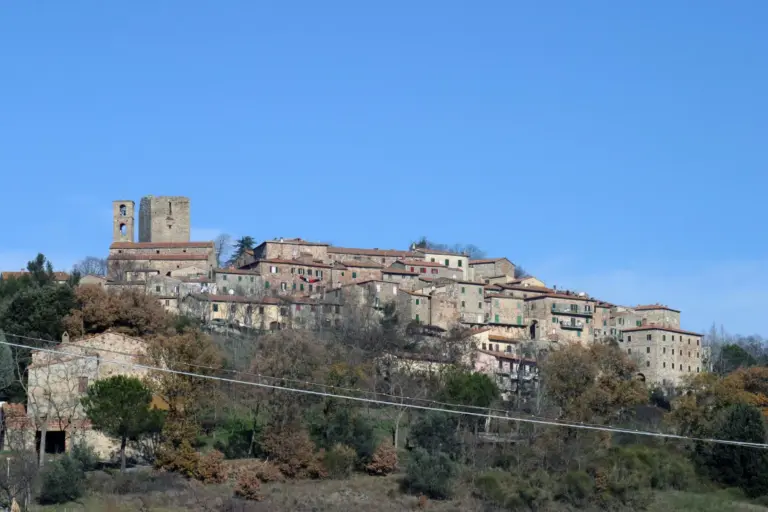
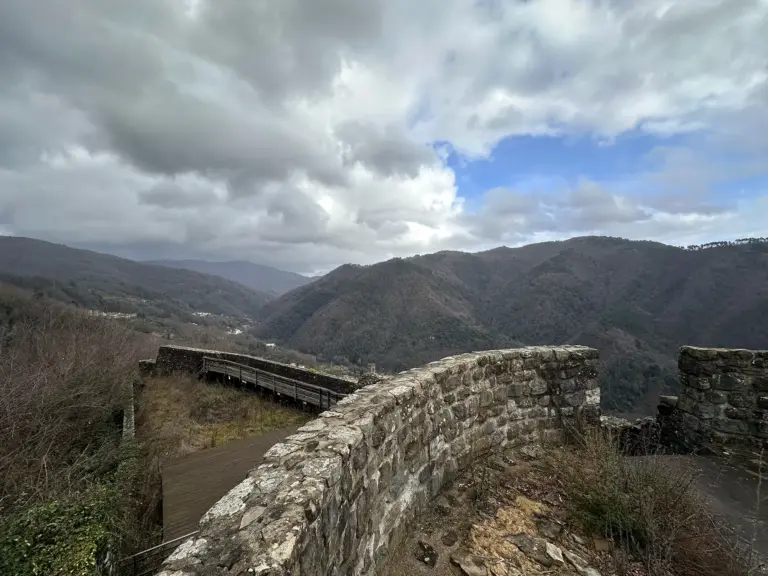
The Guidi held castles and fortresses across much of northern Tuscany and Romagna, with the greatest concentration in the Casentino. They were military and administrative centres, built on hilltops and in easily defended positions to control the valleys and roads.
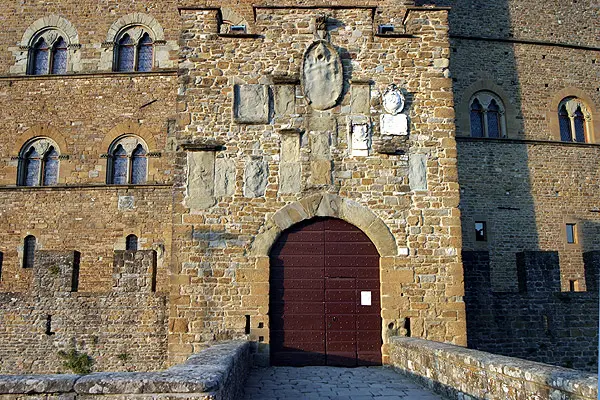
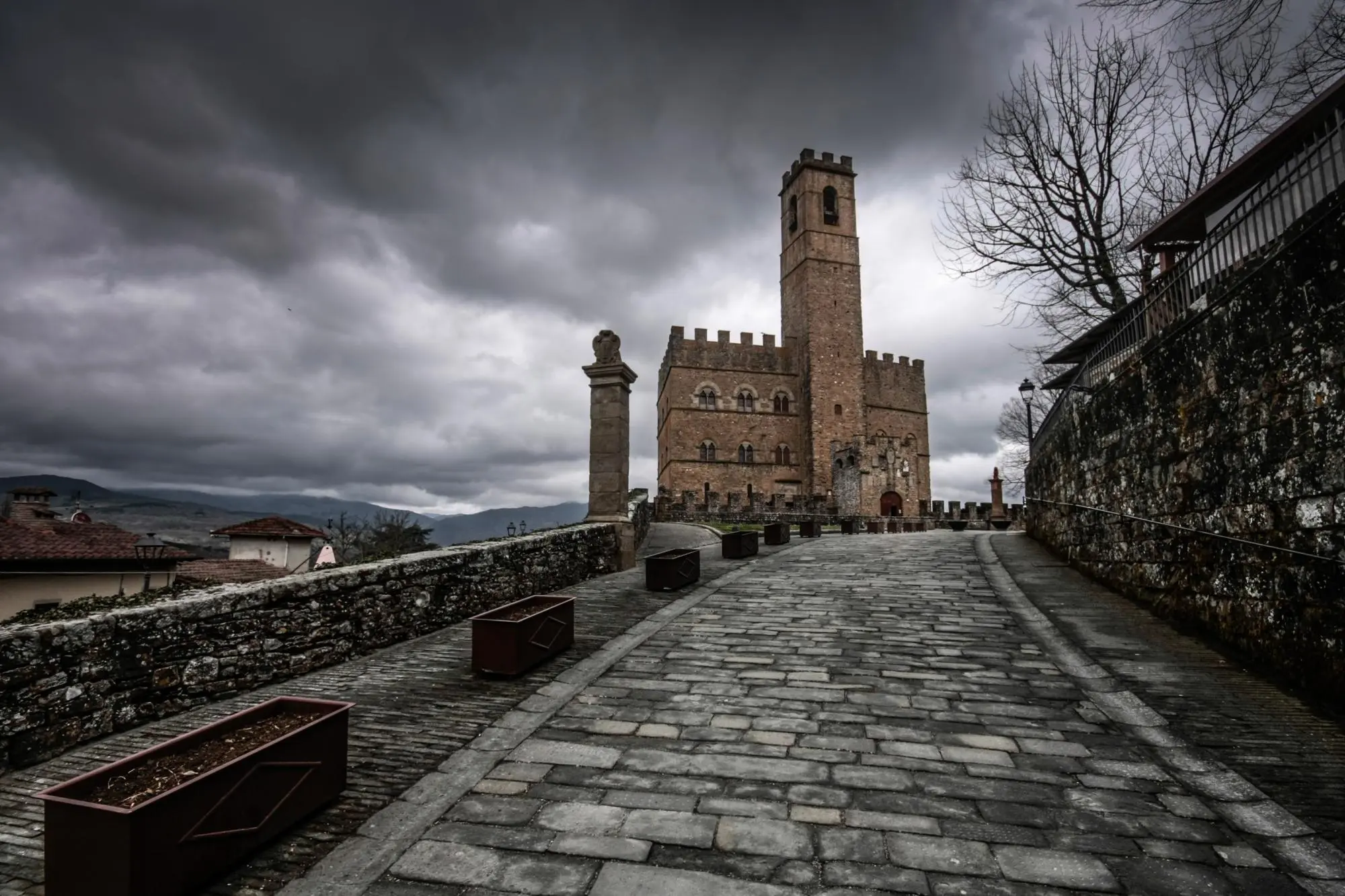
The most famous is Poppi Castle, also known as the Castle of the Counts Guidi, which towers over the town and the whole valley. Built in the 13th century, it is traditionally attributed to Arnolfo di Cambio and considered a model for Florence’s Palazzo Vecchio. Inside it preserves a chapel frescoed by Taddeo Gaddi and the Rilliana Library, rich in manuscripts and incunabula.
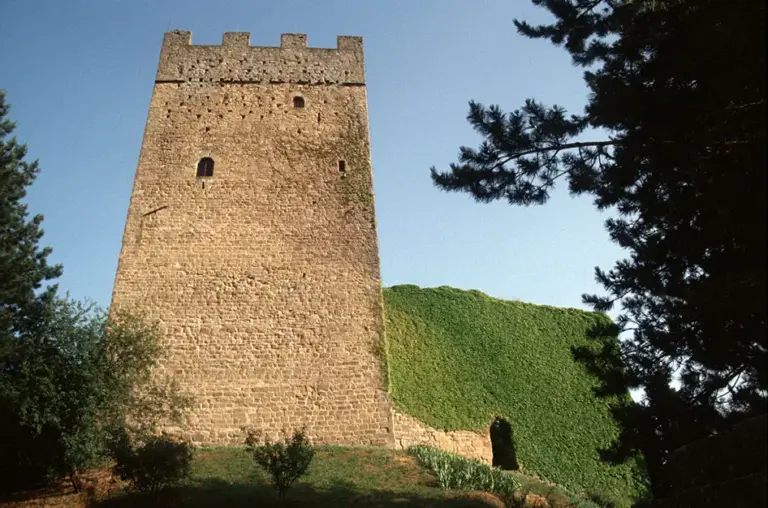
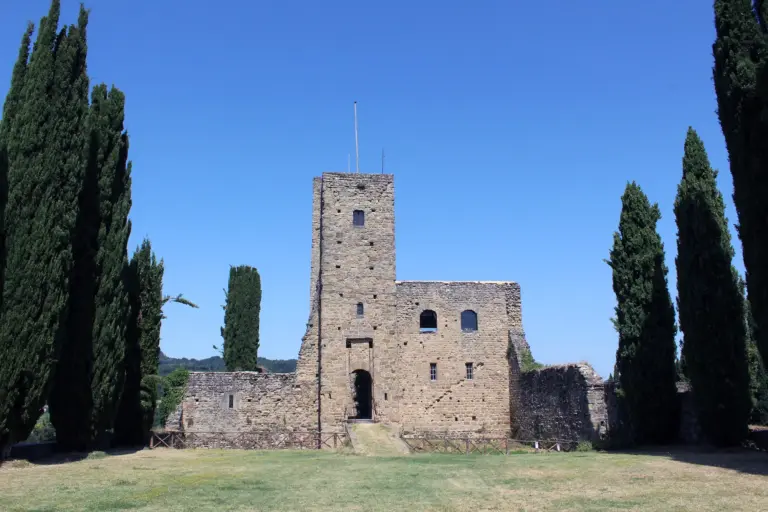
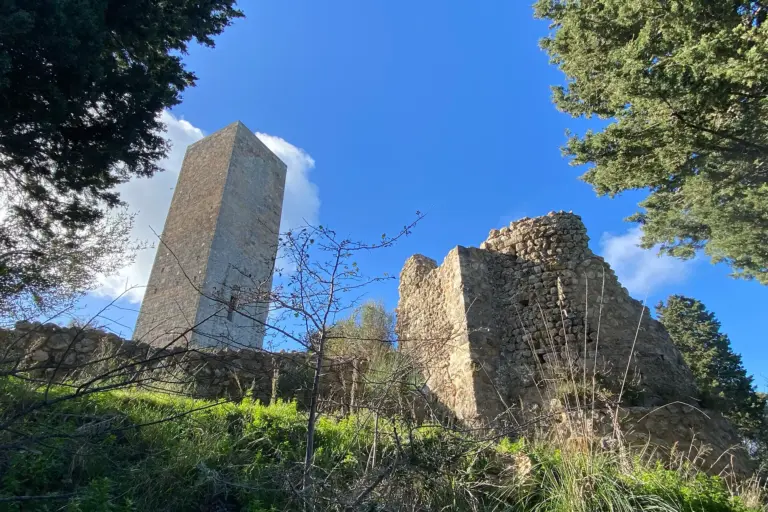
Other notable castles of the family include Porciano Castle, near Stia at the source of the Arno; Romena Castle, linked to the story of Master Adam; Castel Leone at Montemignaio; and Castel San Niccolò, guarding the Solano valley.
The decline: Anghiari and the end of Guidi rule
Between the 14th and 15th centuries Florence absorbed the Guidi lands one after another, through purchases, agreements and military conquest. The last major branch to hold out was that of the Counts of Poppi.
In 1440 Count Francesco Guidi sided with the condottiero Niccolò Piccinino, serving the Visconti of Milan, who laid waste to the Casentino. After the Florentine victory at the Battle of Anghiari (29 June 1440), Florence besieged Poppi and the count was forced to surrender and go into exile. The castle became the seat of the Florentine vicar, bringing Guidi rule in the Casentino to an end.
The legacy of the Counts Guidi
Although their political power came to an end, the legacy of the Counts Guidi lives on in the castles, churches and villages they left behind in the Casentino and Romagna. Many of these places can be visited today and draw travellers from all over the world, keeping alive the memory of a family that for centuries played a leading role in the history of Tuscany and central Italy.
Map of the Counts Guidi sites
The map shows some of the main castles and places linked to the Counts Guidi, across the Casentino, the Valdarno and Romagna. Select a marker to read a short historical note and, where available, open the castle’s page.
Locations are approximate. Red markers show battlefields.