Dove si trova
Il castello sorge al centro del parco pubblico omonino, nel centro della città di Scandicci alle porte di Firenze.
La storia
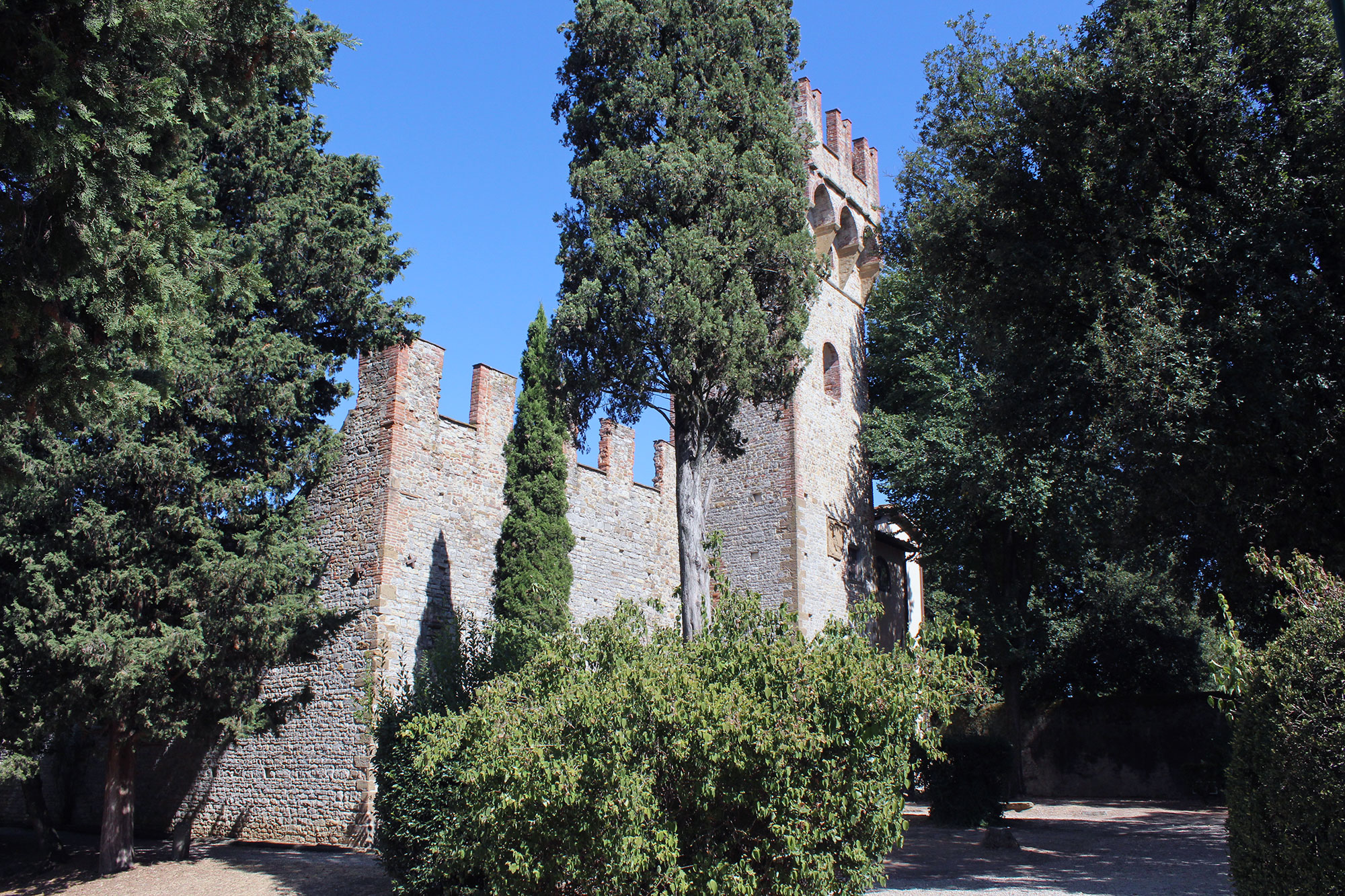
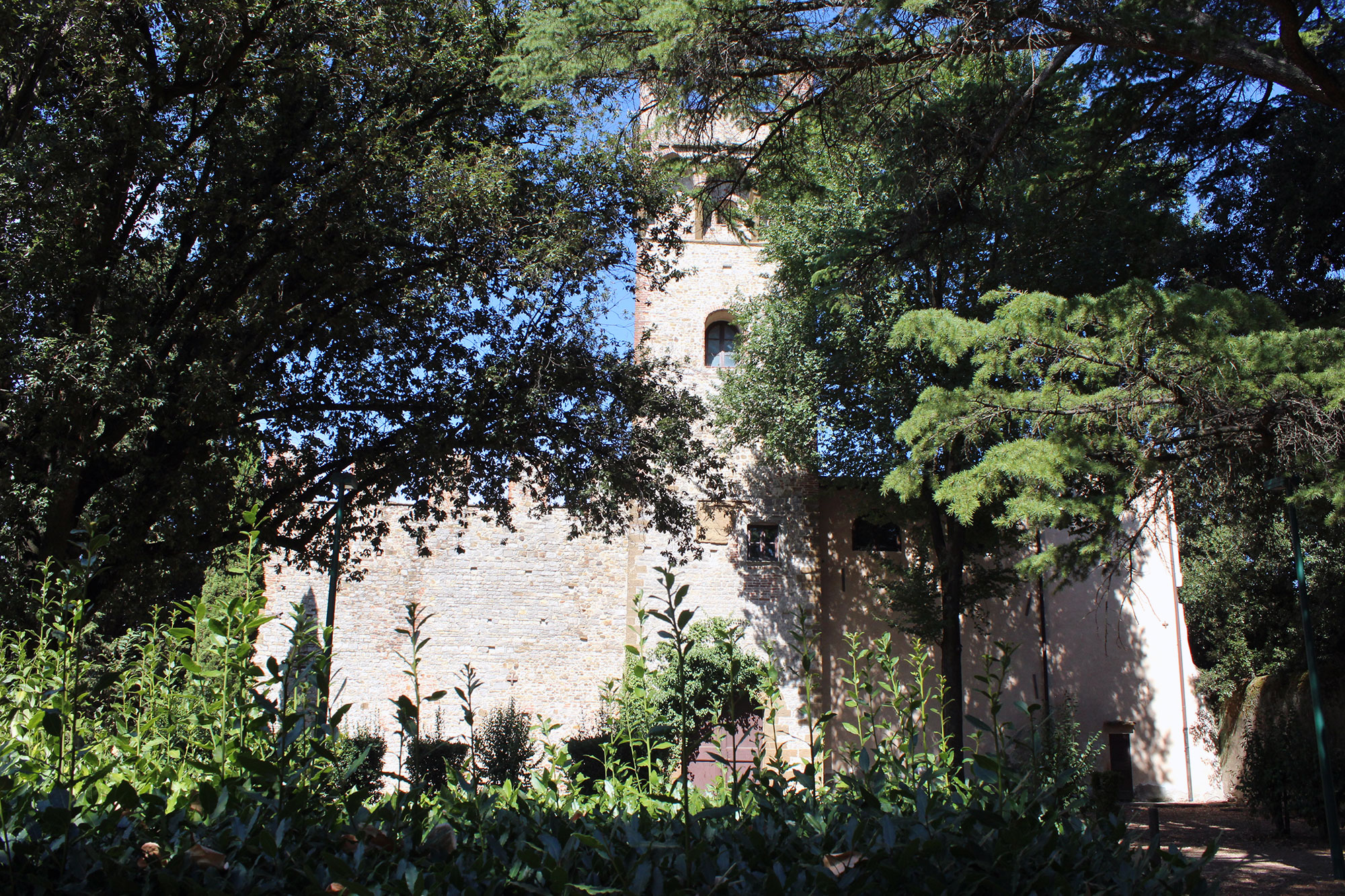
One of the very few, perhaps the only, buildings in the south-western area of Florence that has preserved its original medieval appearance almost entirely intact up to the present day is undoubtedly the Castello dell’Acciaiolo. Its location in the Arno valley made it an important strategic center controlling the river.
The earliest records of the castle date back to the mid-14th century, when the property belonged to the Rucellai family. Between the 15th and the 18th centuries, it passed through the hands of several other Florentine families, including the Acciaioli family, from whom it still takes its name today. In the 16th century, it belonged to the Davizzi family and became the setting of a grim episode of bloodshed: Neri di Pietro Davizzi kept his wife imprisoned within the castle walls and later, in order to free himself from her, poisoned and killed her. Once the crime was discovered, he was convicted and exiled from Florentine territory.
In the 19th century, the manor was purchased by Gentile Farinola, and since 1999 it has been owned by the Municipality of Scandicci, which has carried out an important restoration and recovery project.
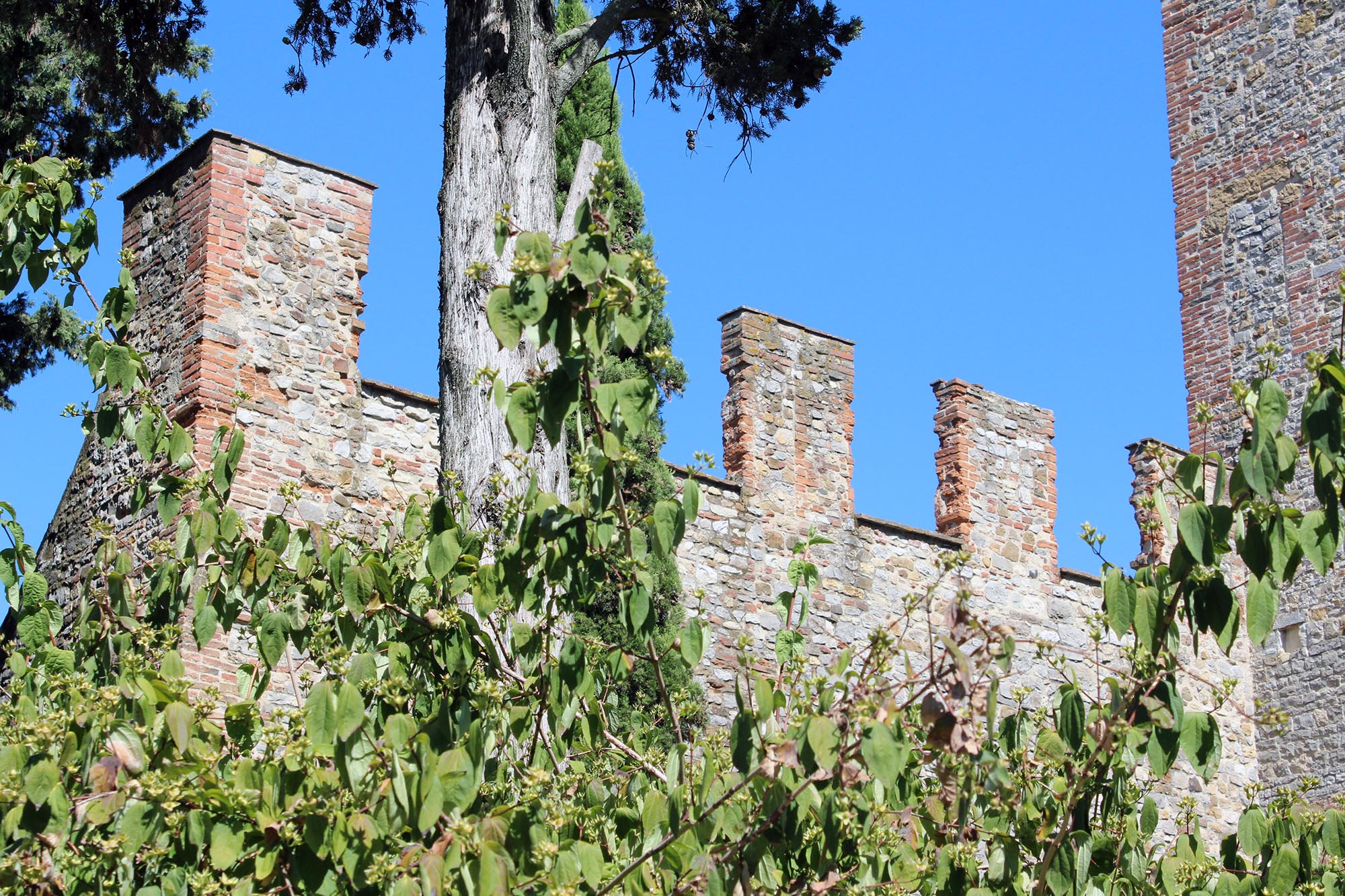
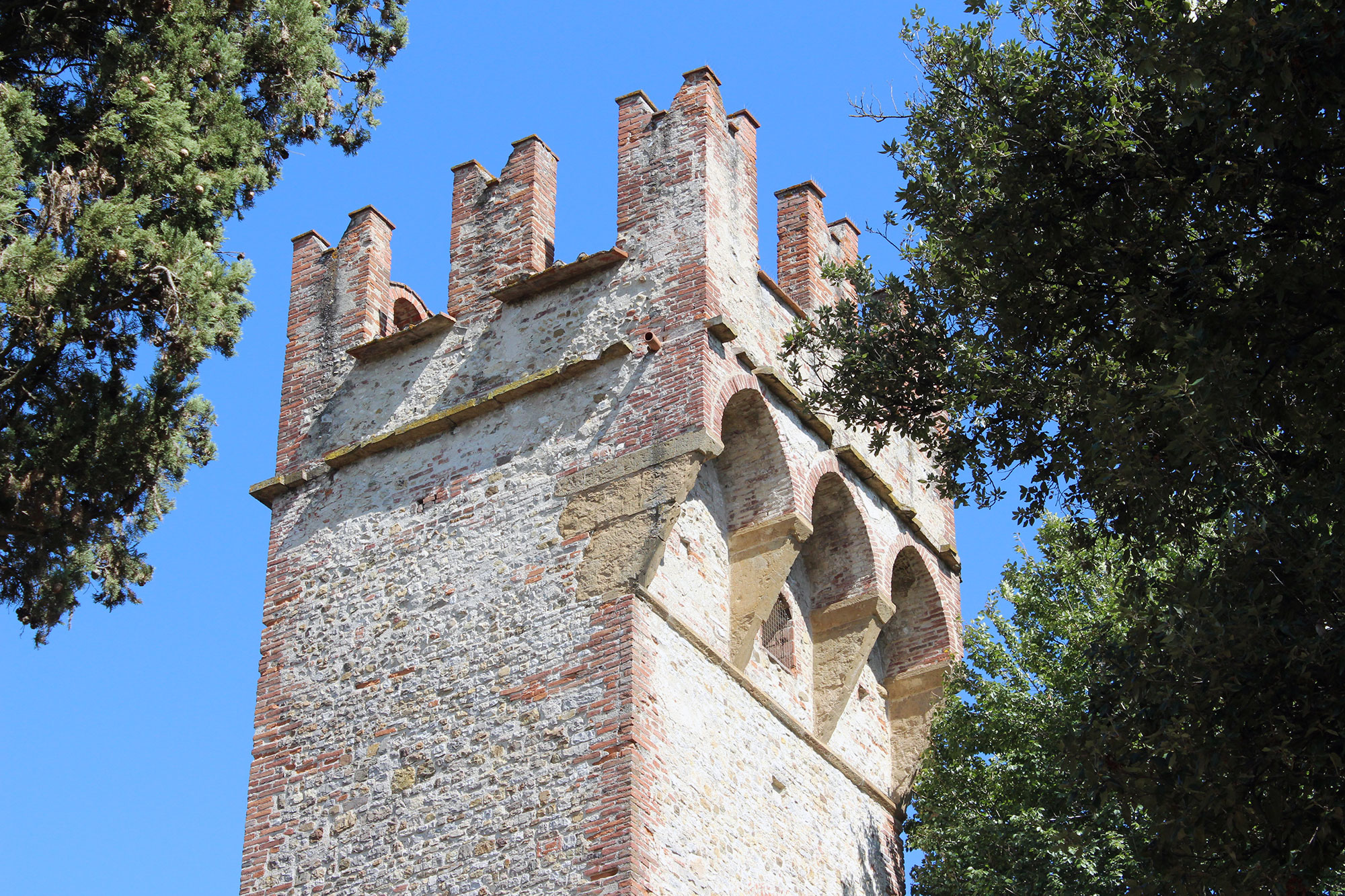
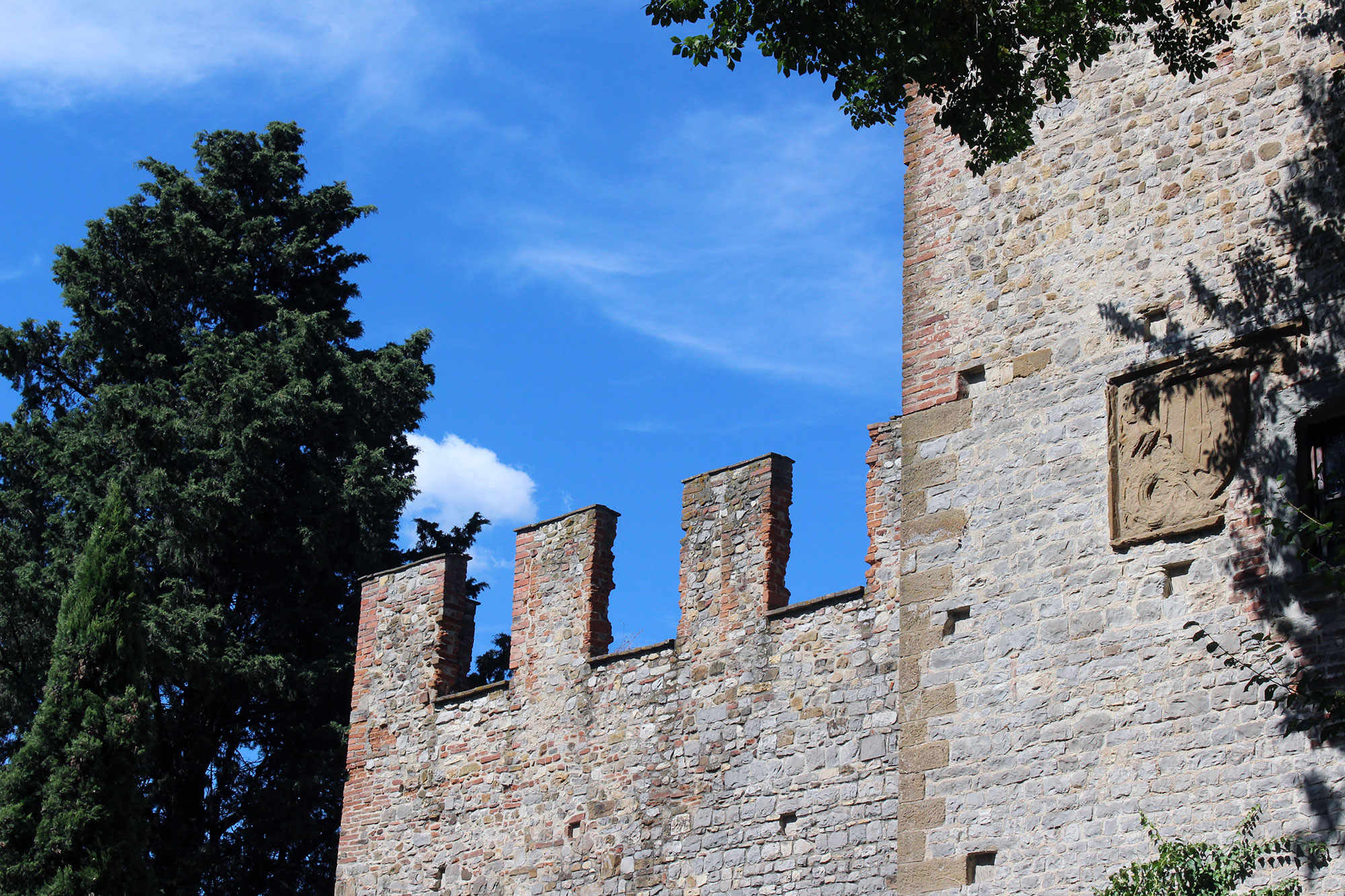
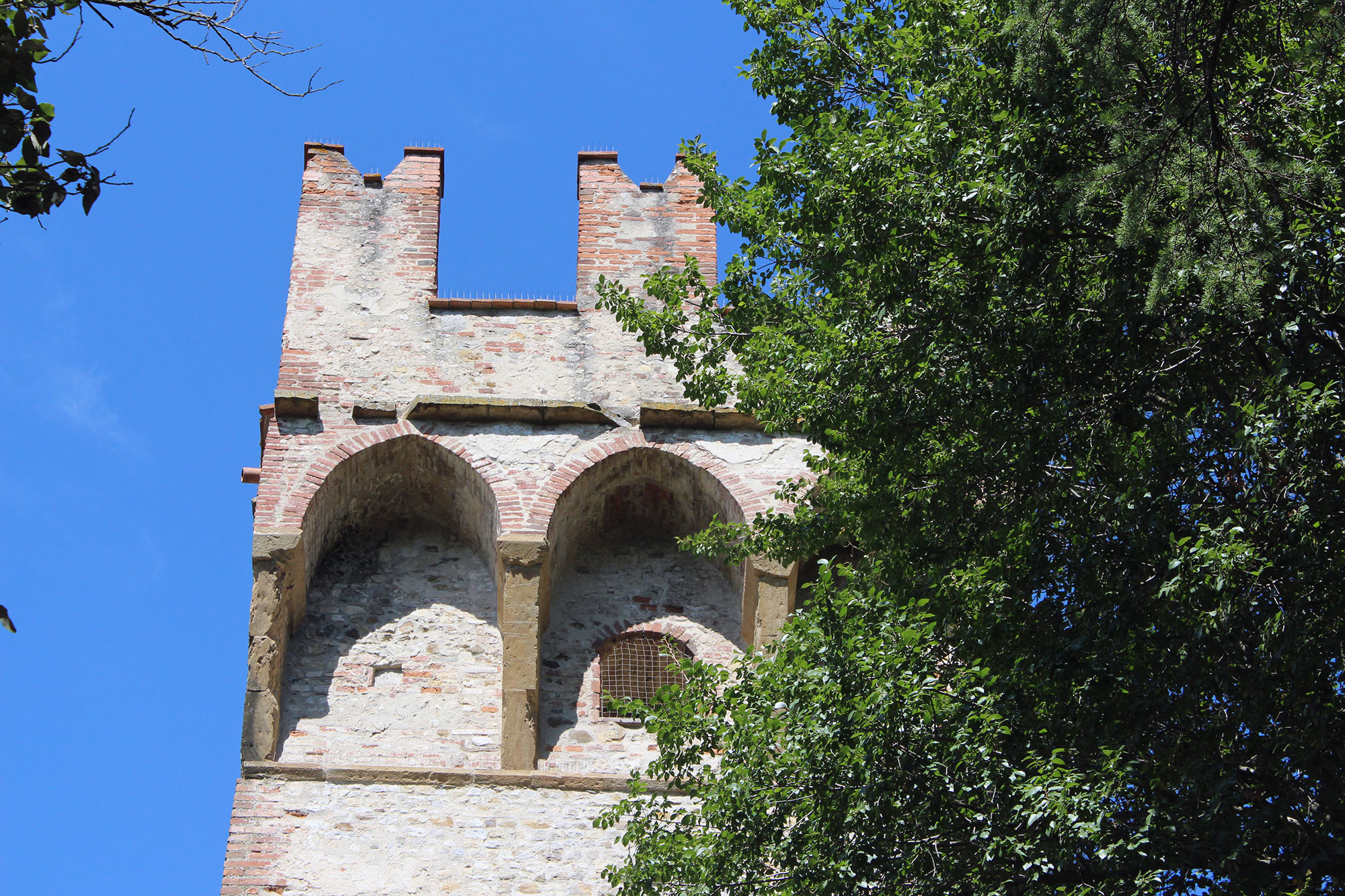
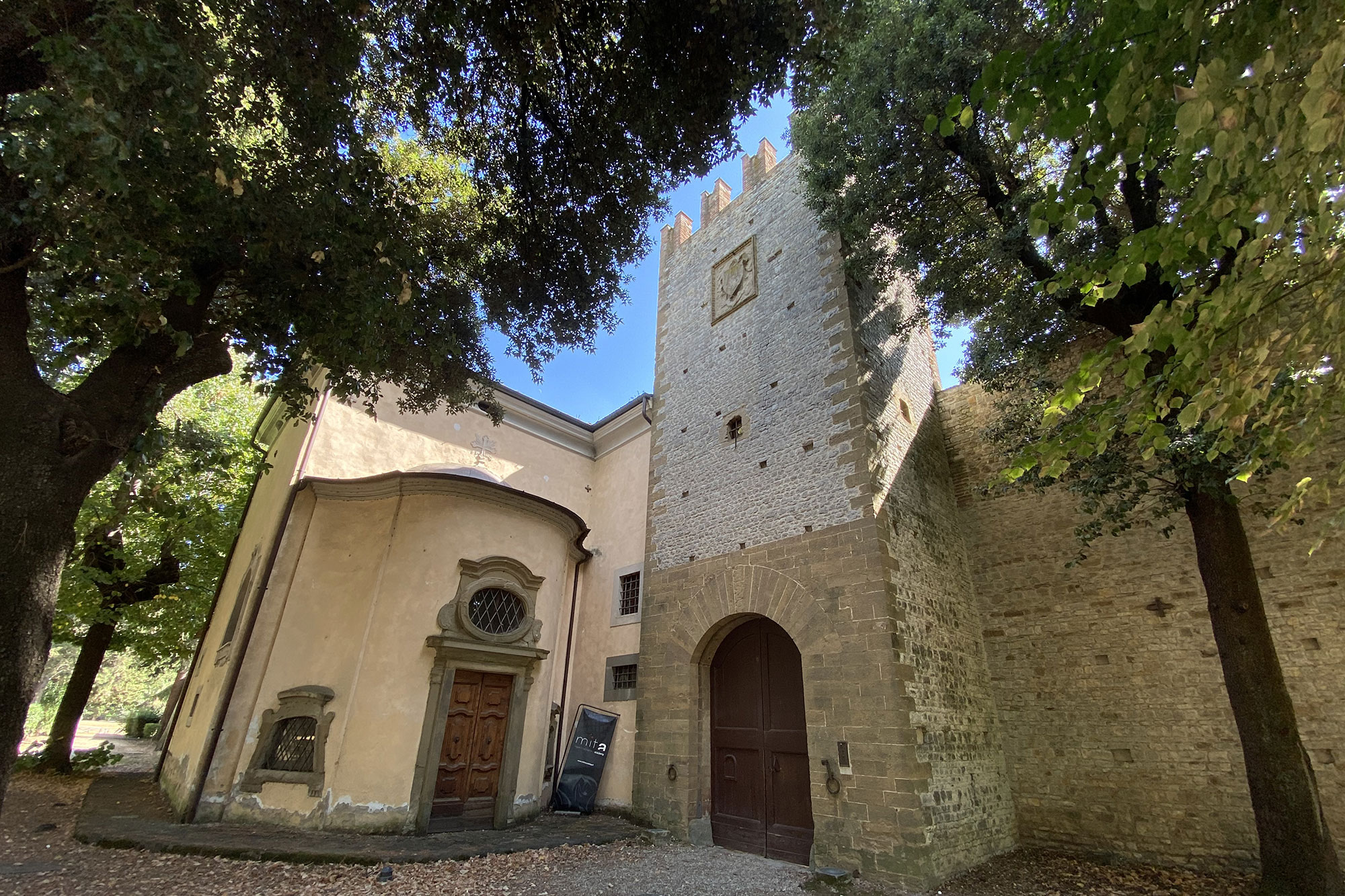
Also known as a 'Villa', the building is structured as a true rectangular castle equipped with two towers, still decorated with Ghibelline battlements overseeing the two entrance gates and surrounded by defensive walls. The original core can be identified in the former stone tower house rising from the main façade, around which the lateral wings were later added. The Chapel, located to the left of the entrance, features late 18th-century forms and is an example of late Baroque architecture, one of the few surviving examples in Florence. The Italian-style garden, created in the 17th century, has been almost completely destroyed; on the eastern side, an exedra still remains, with traces of its original mosaic decoration. Overall, the complex resembles more a noble residence closely connected to agricultural activities than a true military castle.