How to reach
Volognano Castle can be reached by taking the SP34, which connects Florence to Rosano; from there, follow the SP90 toward Rignano sull'Arno.
History
Volognano Castle stands on one of the hills that slope down from Florentine territory toward the Arno, in a commanding position above the confluence of the Arno and the Sieve. From the hill, a broad panorama opens over the Val di Sieve, the Valdarno, the Pratomagno and the hills of Vallombrosa. This position, particularly favorable for controlling the surrounding territory, helped make Volognano an important fortified settlement of the Florentine contado.
The origins of the site may predate the medieval fortification. Near the Bertinga farm, on the western slope of the hill, remains of walls and materials attributable to the Roman era have been identified. However, no direct continuity between the ancient settlement and the later castle has been documented.
Volognano is first mentioned in 1214, in documents relating to the church of San Michele, while the castle appears in a charter of the Abbey of Vallombrosa dated 1220 and in a later deed of 1299, where it is referred to as castrum de Volognano.
During the 13th century the castle became one of the principal residences of the powerful da Quona family, originally from the castle of the same name above Remole. After the destruction of Quona in 1143, various branches of the family settled in other fortified centers of the contado, taking the name of the places where they had settled. This is how the da Volognano branch came into being.
The da Volognano family was caught up in the violent struggles between Guelphs and Ghibellines that marked Florentine history in the 13th century. In 1267 numerous members of the family were among the Ghibellines besieged in the castle of Sant’Ellero, which was besieged and conquered by Florentine forces. The final defeat of the Ghibelline faction led, a few decades later, to the destruction of Volognano.
In 1304, the Guelph government of Florence had the castle occupied and dismantled as retaliation for the involvement of its lords in the struggles against the Comune. The fortification was stripped of its military function, but the settlement was not completely abandoned: on the surviving structures a new residential and agricultural reality gradually developed.
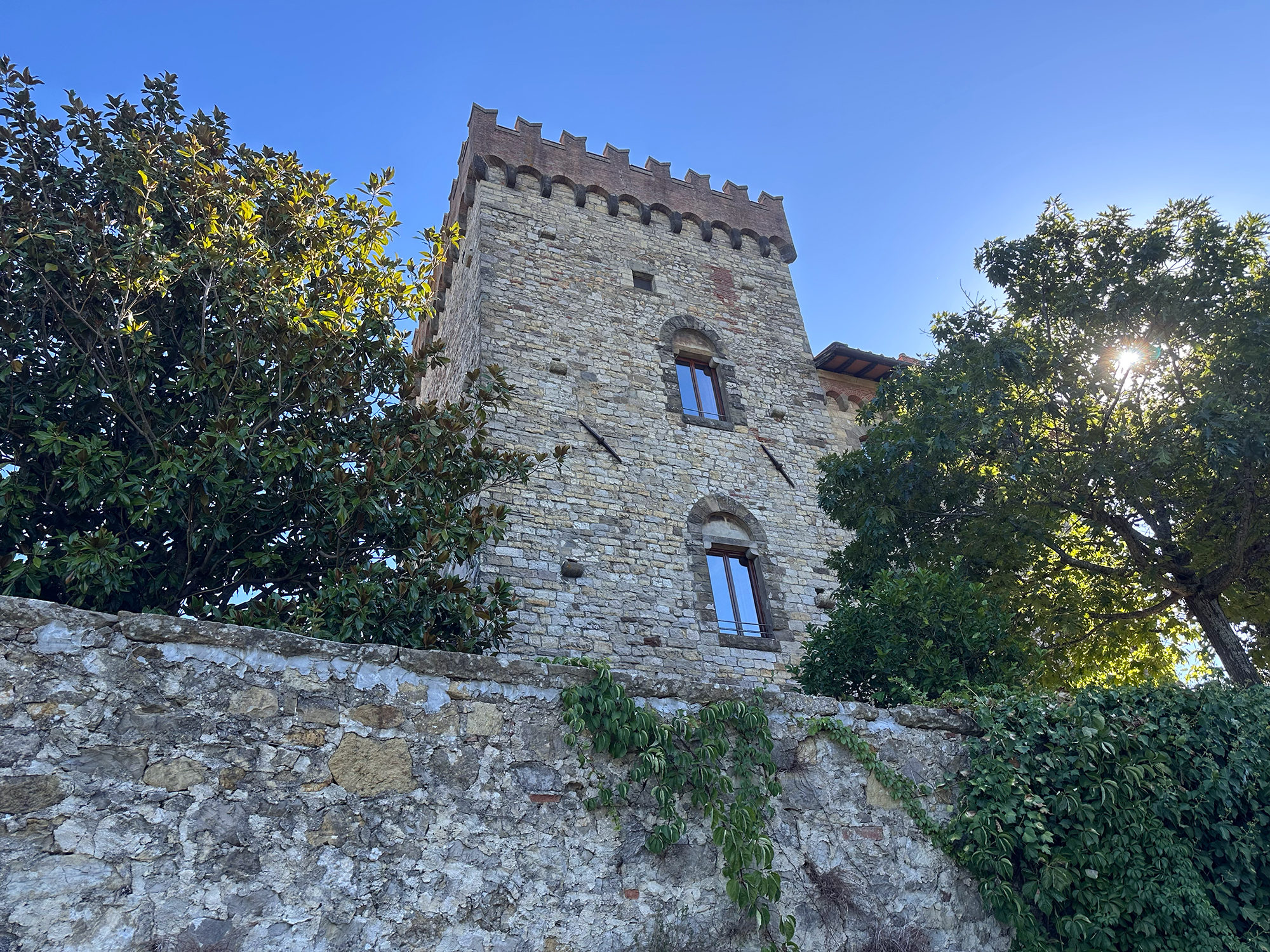
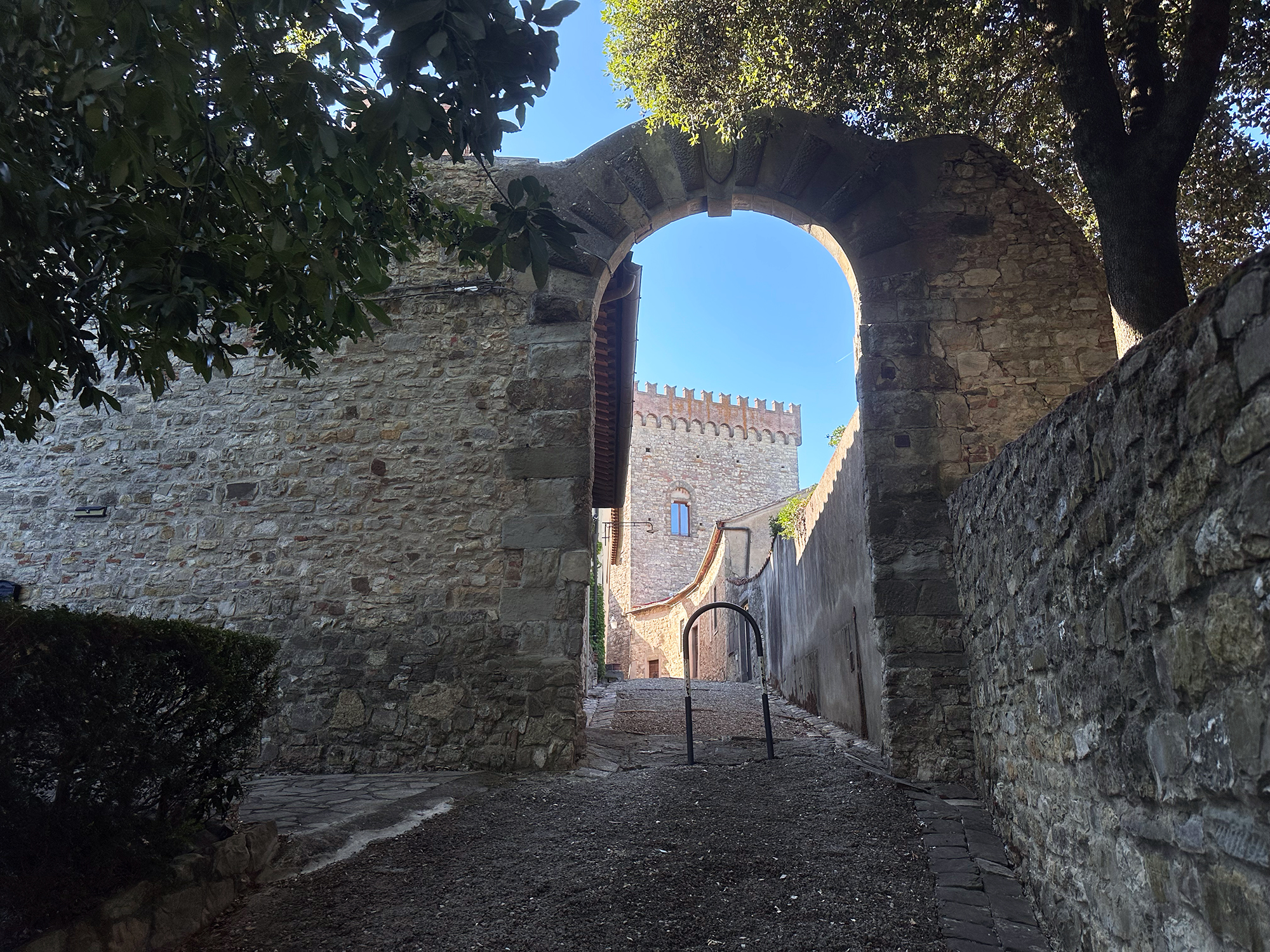
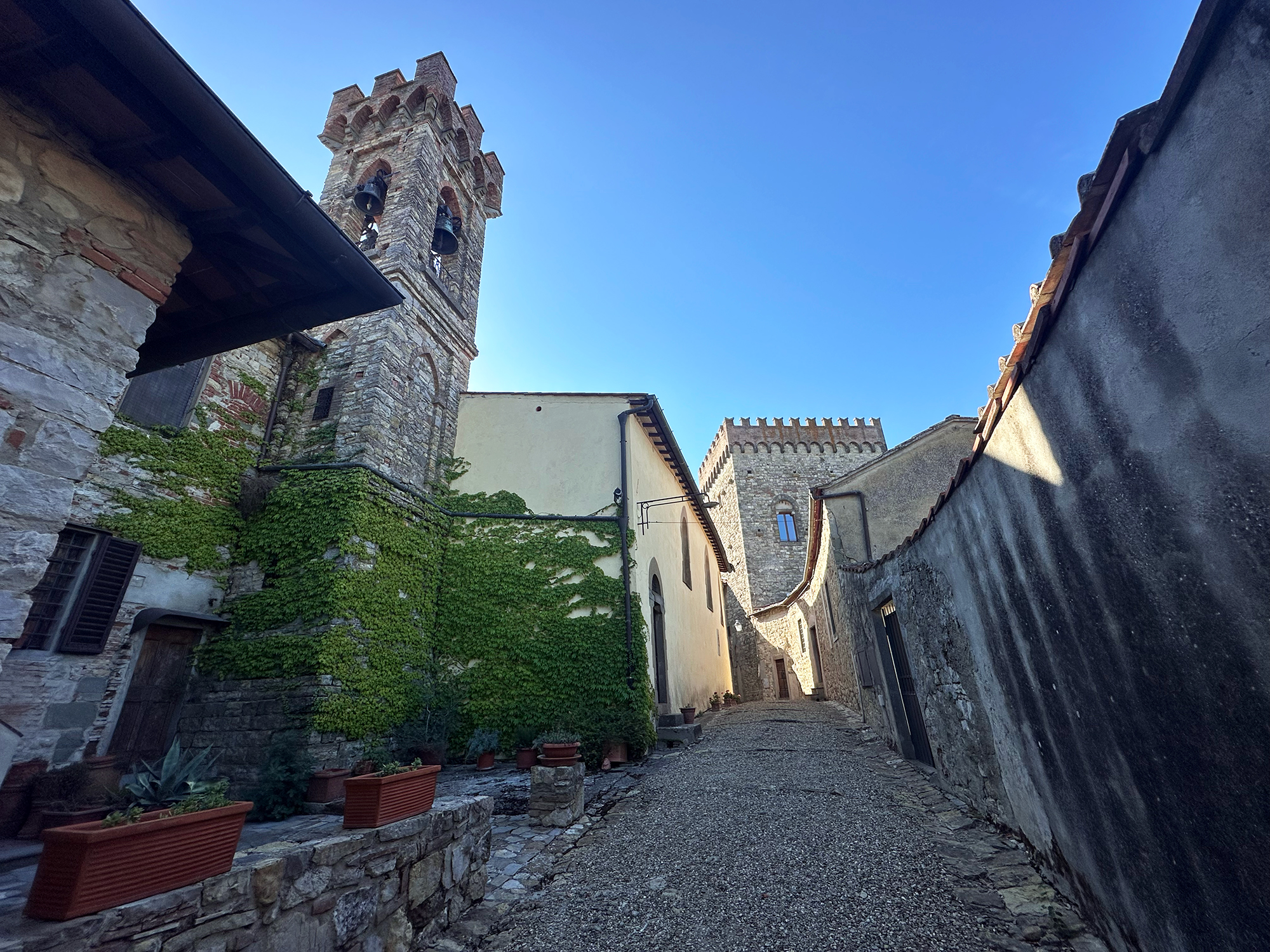
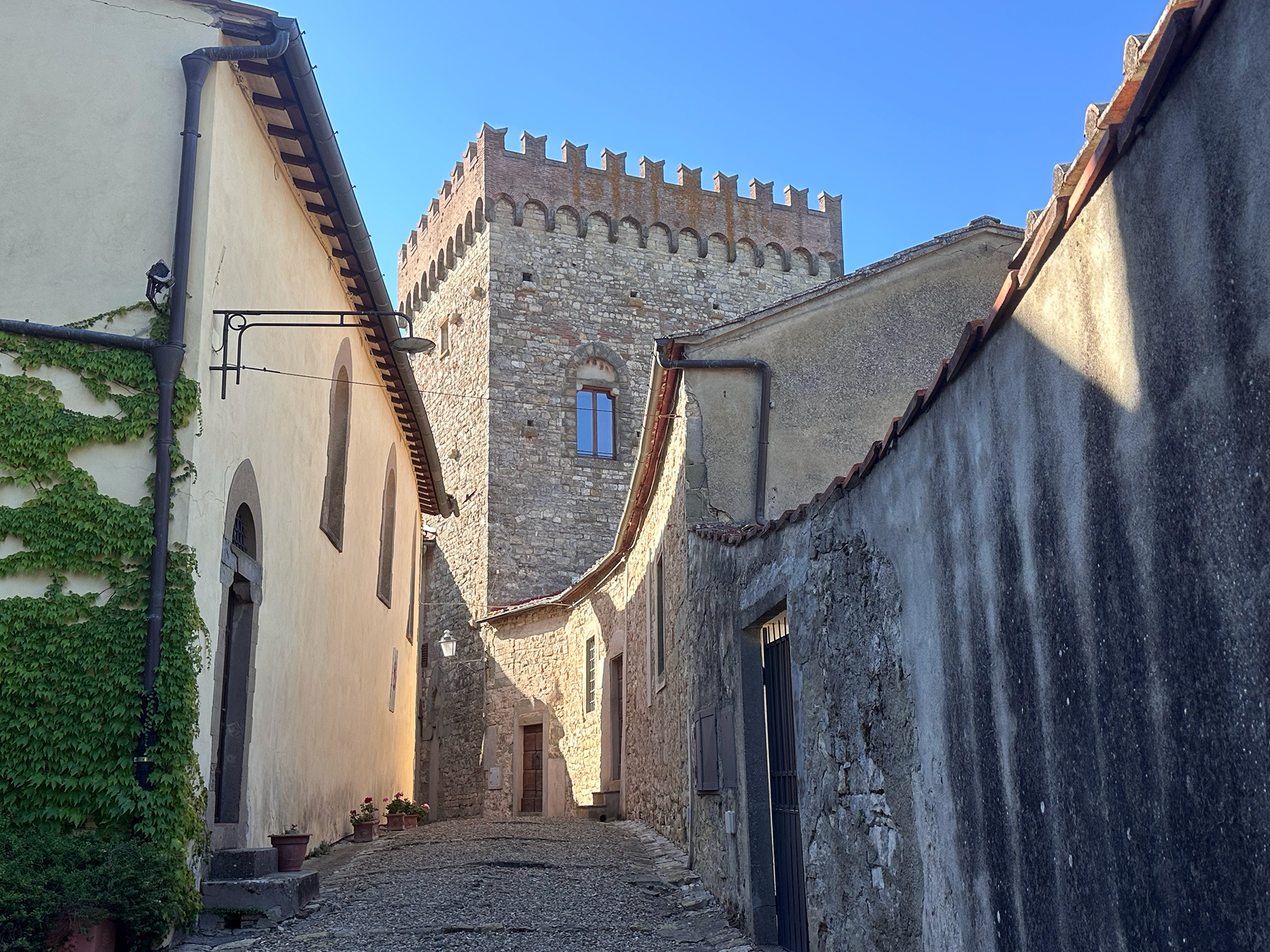
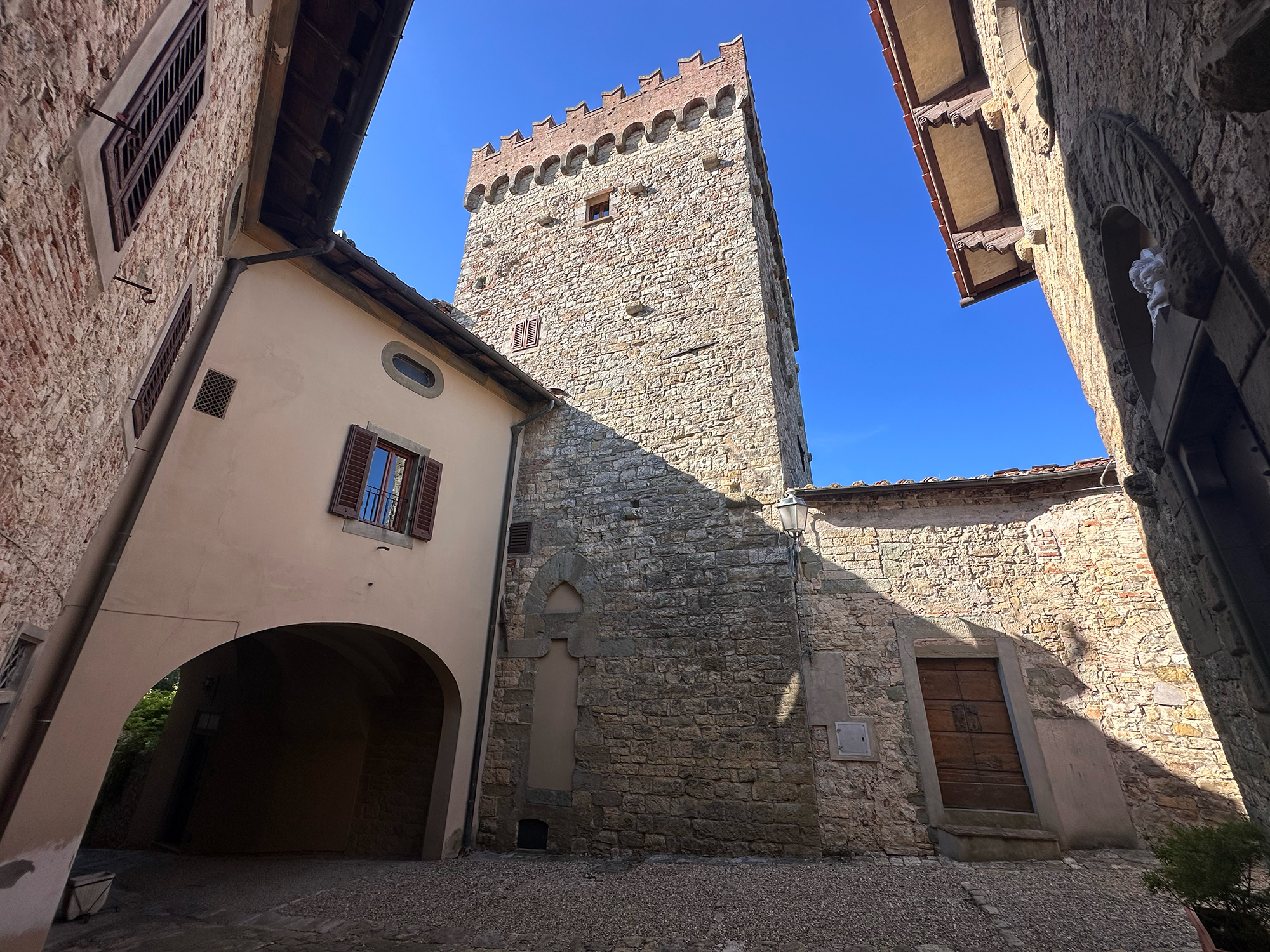
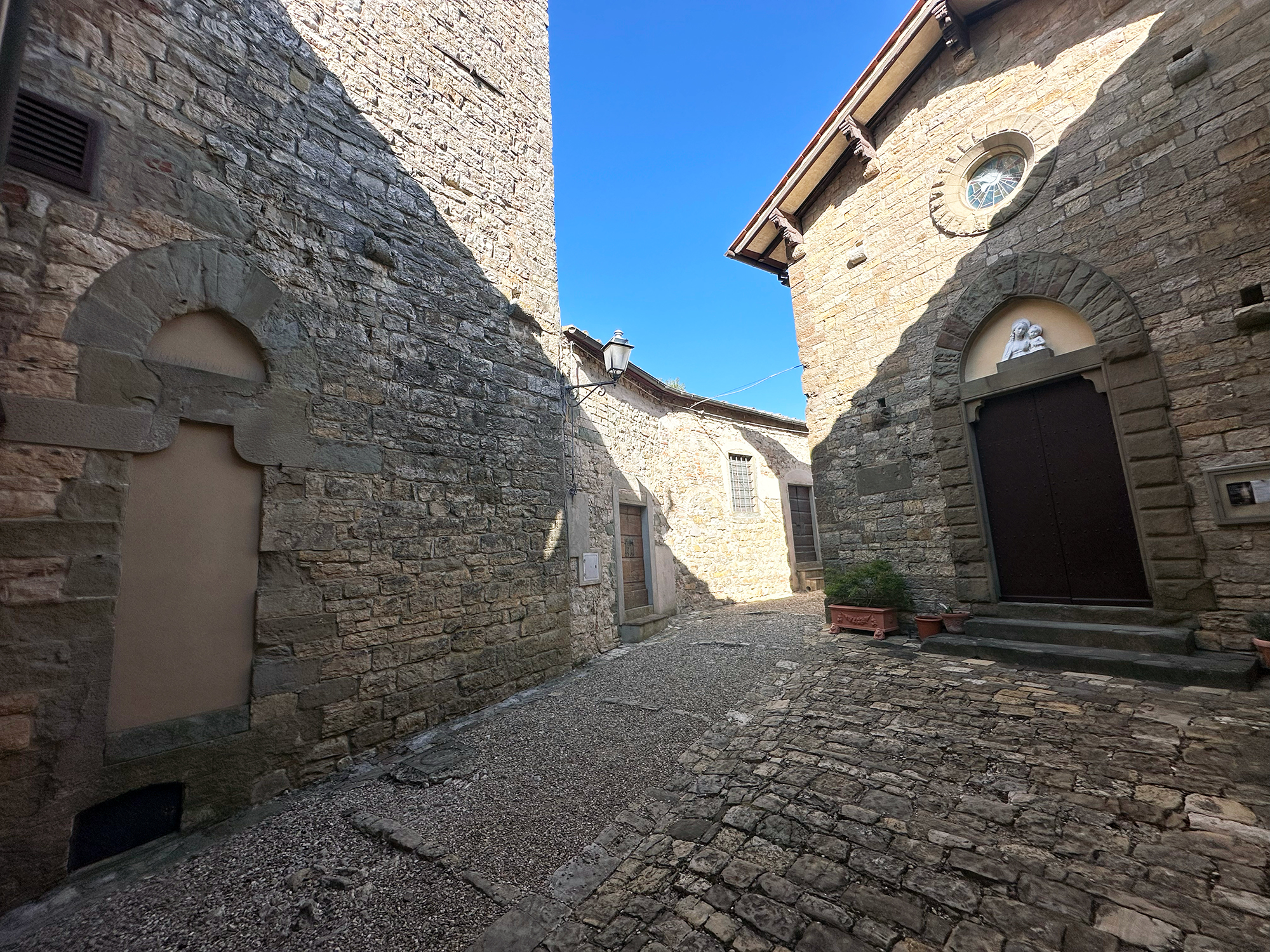
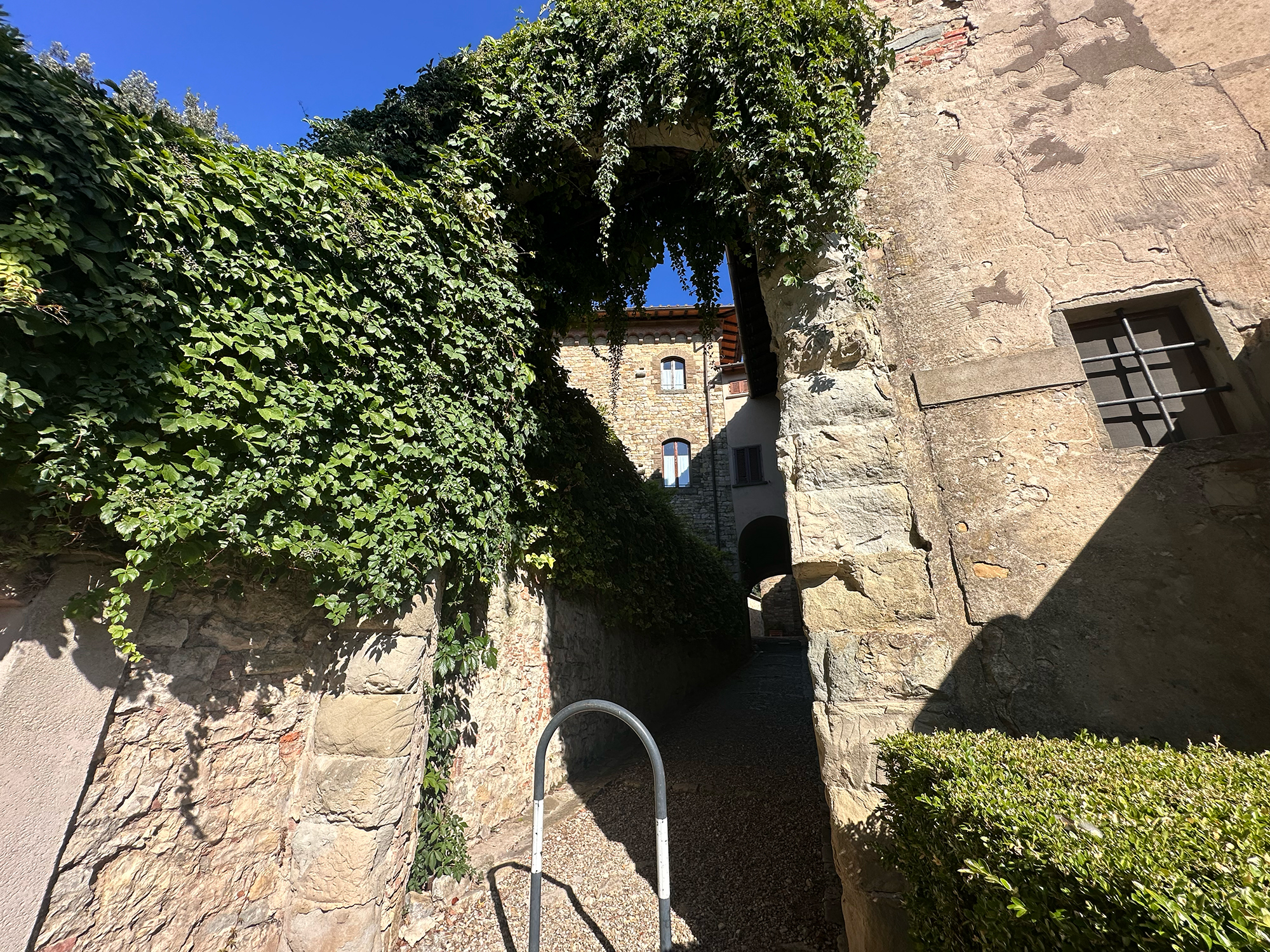
Several elements of the ancient stronghold are still recognizable today. The complex retains part of its elliptical curtain wall, crossed by the current internal road and marked by two ancient gates with round arches. The keep tower dominates the settlement, while other stretches of alberese stone masonry, an ancient walled-up portal, and details of the stonework allow the characteristics of the medieval structure to be recognized. These elements have been dated to the second half of the 13th century.
Within the ancient fortified enclosure stands the church of San Michele, documented as early as 1214 and transformed several times over the centuries. The present building is largely the result of a 19th-century rebuilding, but its presence testifies to the continuity of the settlement after the destruction of the castle.
After losing its military function, Volognano was converted into a villa-farm and passed through several families. Among the principal owners were the Martellini della Cerva, the Anforti, the Della Ripa, and finally the D’Ancona family. In the 19th century the complex was thoroughly renovated, taking on its present neo-Gothic villa-farm appearance, while still preserving important evidence of the ancient fortification.
A new phase began in the early 1960s, when Ezio Pecchioli purchased the estate and planted the first specialized vineyards, giving new impetus to Volognano’s winemaking vocation.
Today Volognano Castle preserves a distinctive historical layering: from the medieval fortification of the da Quona family, to the 19th-century villa-farm, to today’s agricultural and wine-growing estate. The tower, the walls and the ancient gates still make it possible to recognize, within the present-day complex, the traces of the ancient castle that for centuries dominated this stretch of the Florentine contado.