How to reach
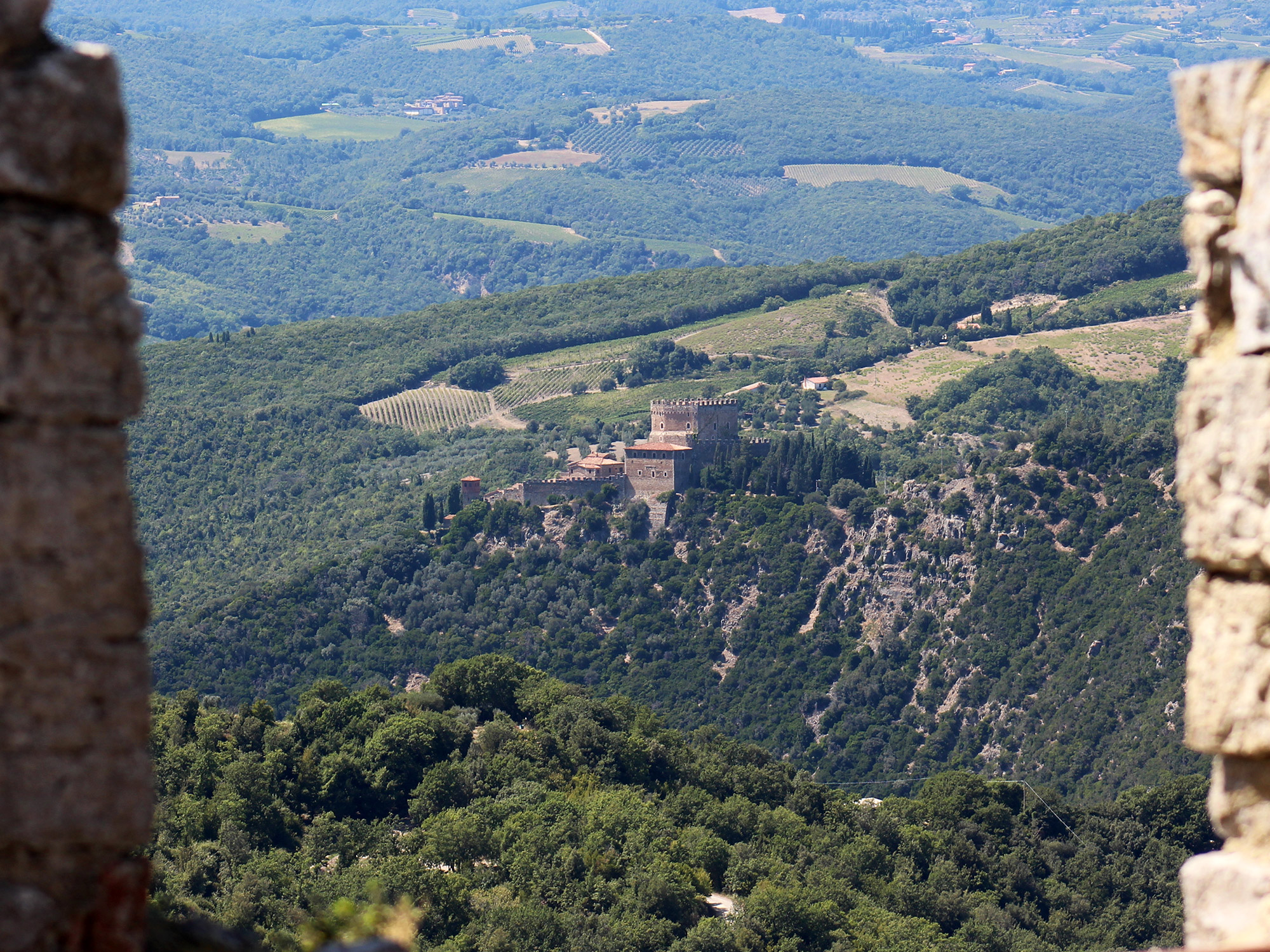
The castle rises in the heart of the Val d'Orcia; it can be reached by following the indications from the town of San Quirico d'Orcia.
History
The earliest documentary references to the Castello di Ripa d'Orcia date back to 1271, although some sources trace the site's origins as far back as 1213. Until the mid-13th century the stronghold was controlled by the Tignosi family; between 1250 and 1258 it was acquired by the Republic of Siena, which immediately recognised its enormous strategic and military value for controlling the Val d'Orcia, a crucial junction along the Via Francigena.
In 1274 the castle passed to the powerful Salimbeni family, who around 1318 built the first true fortified structure there, raising Ripa d'Orcia to the rank of stronghold (Roccham et fortilitiam, as recorded in documents from 1316). It was Giovanni Bottone Salimbeni who further expanded and reinforced the fortress after winning the favor of Emperor Charles IV; in 1355 Giovanni d'Agnolino Salimbeni received imperial confirmation of the family's authority over the fief and its jurisdictional rights.
Following the death of Giovanni Bottone in 1368, the property passed by marriage to the Sforza family, before returning under Siena's control. In 1417 the castle was sold to the Republic of Siena for 5,000 gold florins (according to another account, that same year it was acquired instead by the Hospital of Santa Maria della Scala). Between 1437 and 1483 the property belonged to the Agazzari family.
From 1484 the castle became part of the estate of the Piccolomini family, Carli branch, who in 1605 made it inalienable by testamentary deed: since then the property has remained continuously in the hands of the Piccolomini descendants, together with the Clementini and Febi branches, up to the present day.
The architecture
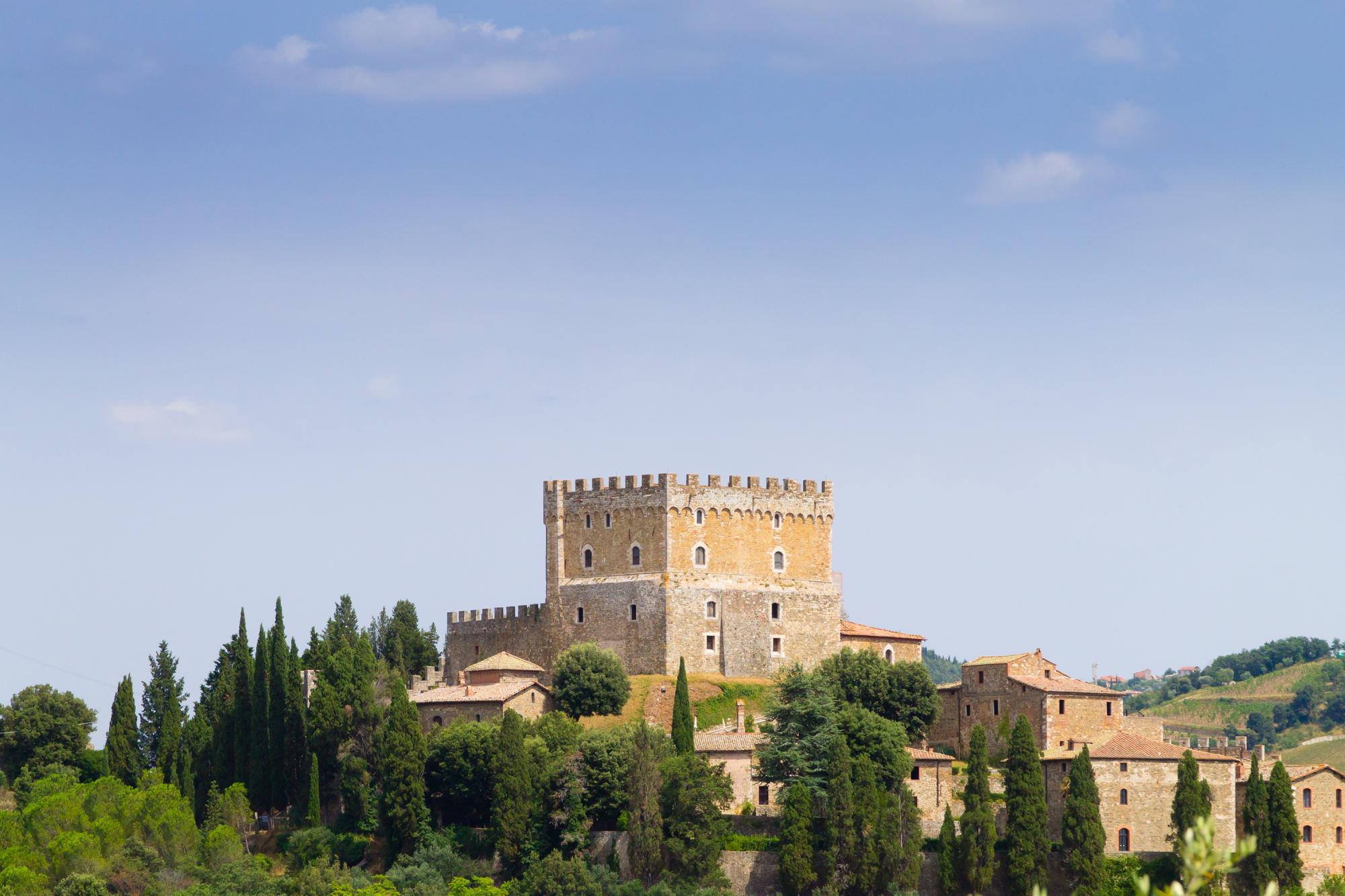
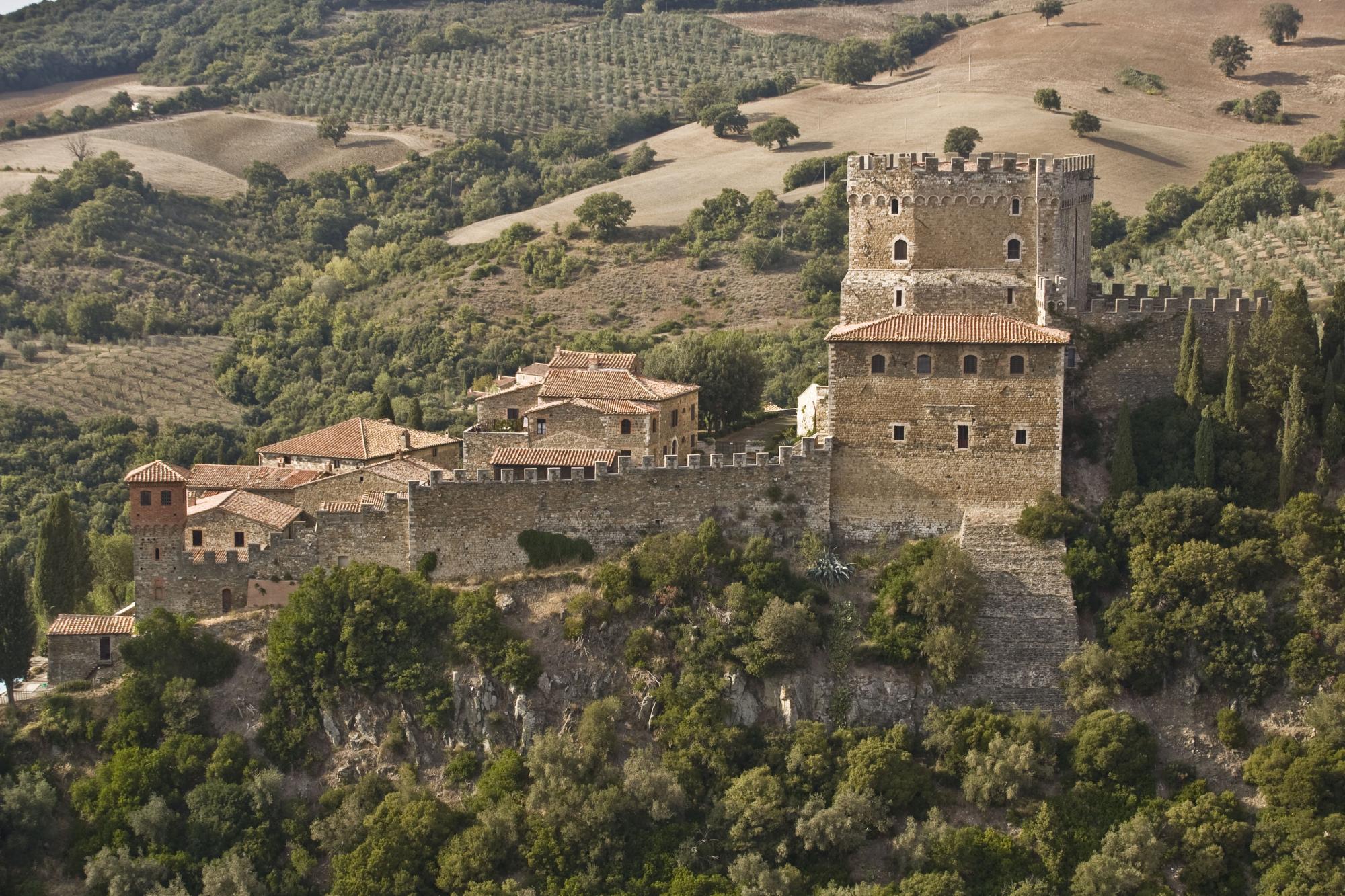
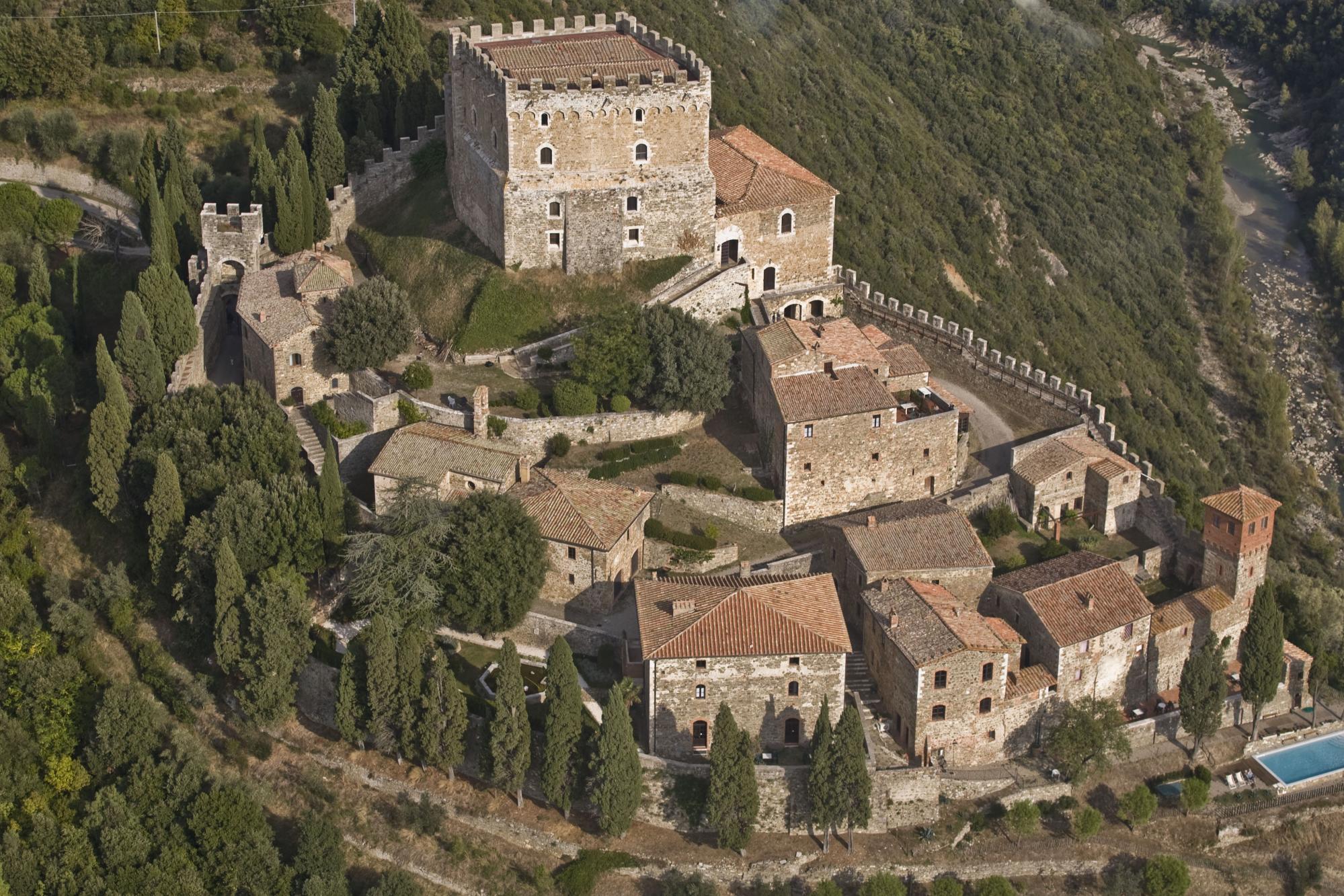
The complex is not simply an isolated castle but a genuine fortified village: its perimeter walls enclose roughly 7,000 square meters, within which a small settlement developed, complete with two streets and the Church of Santa Maria delle Nevi.
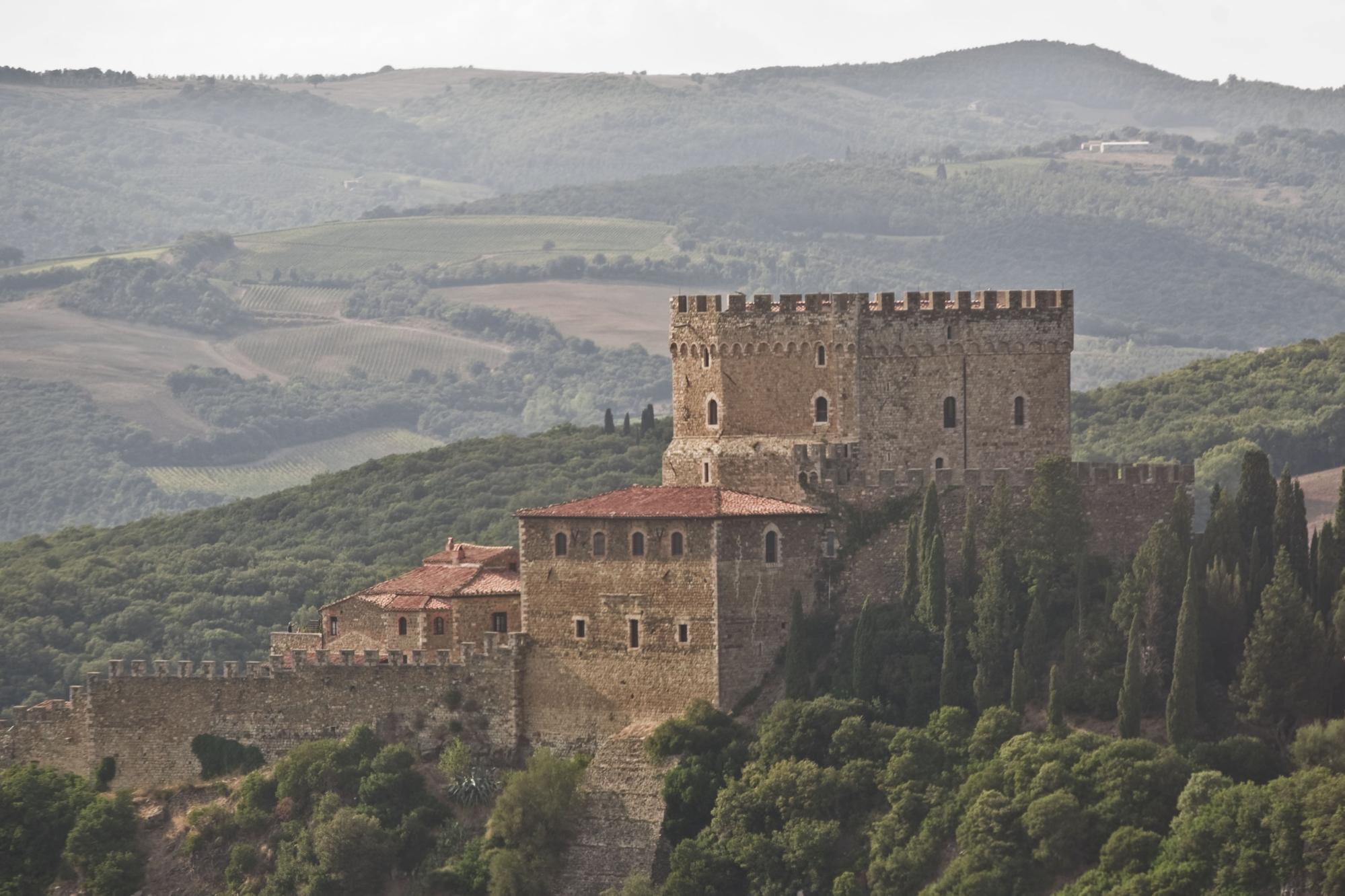
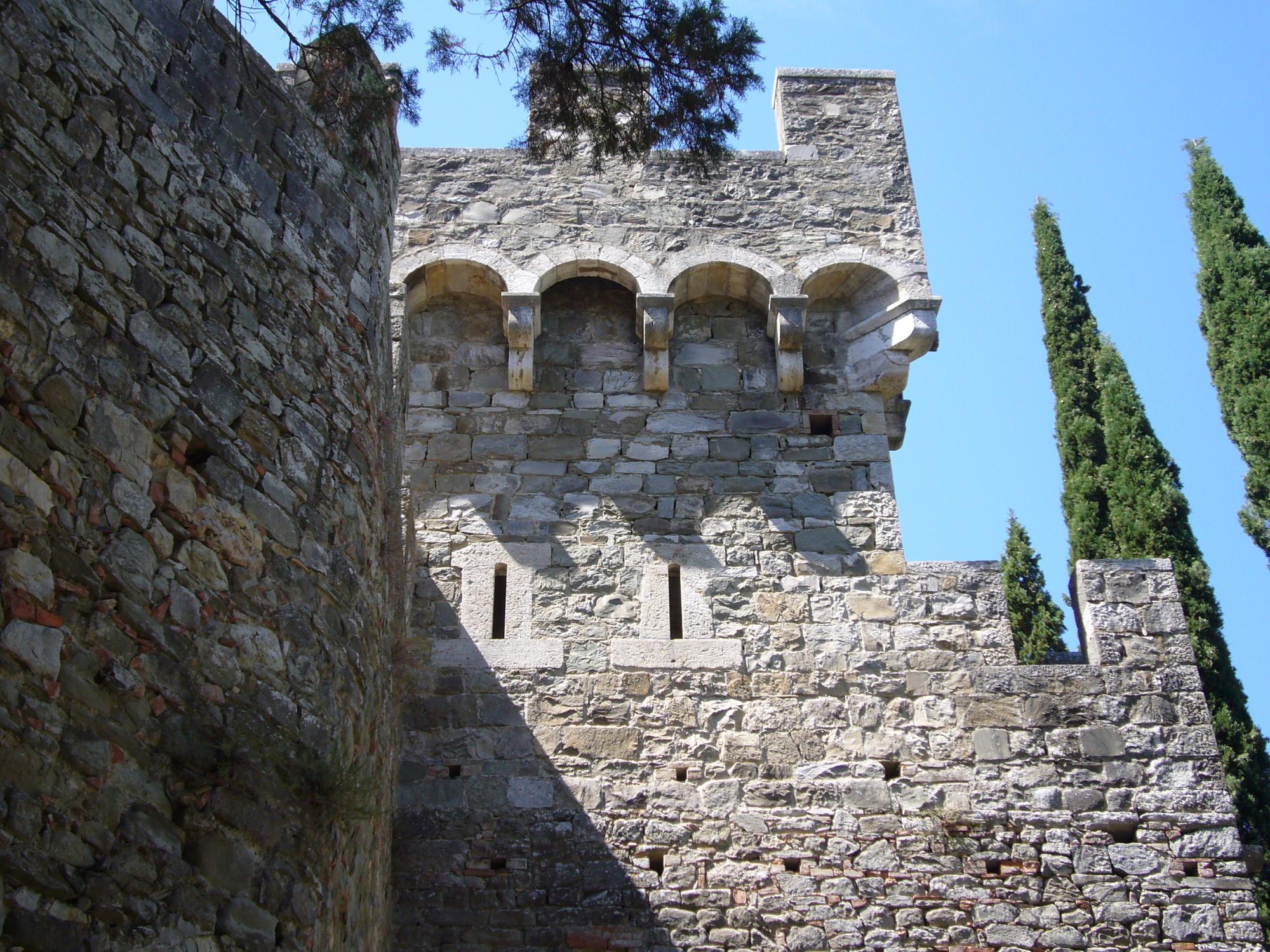
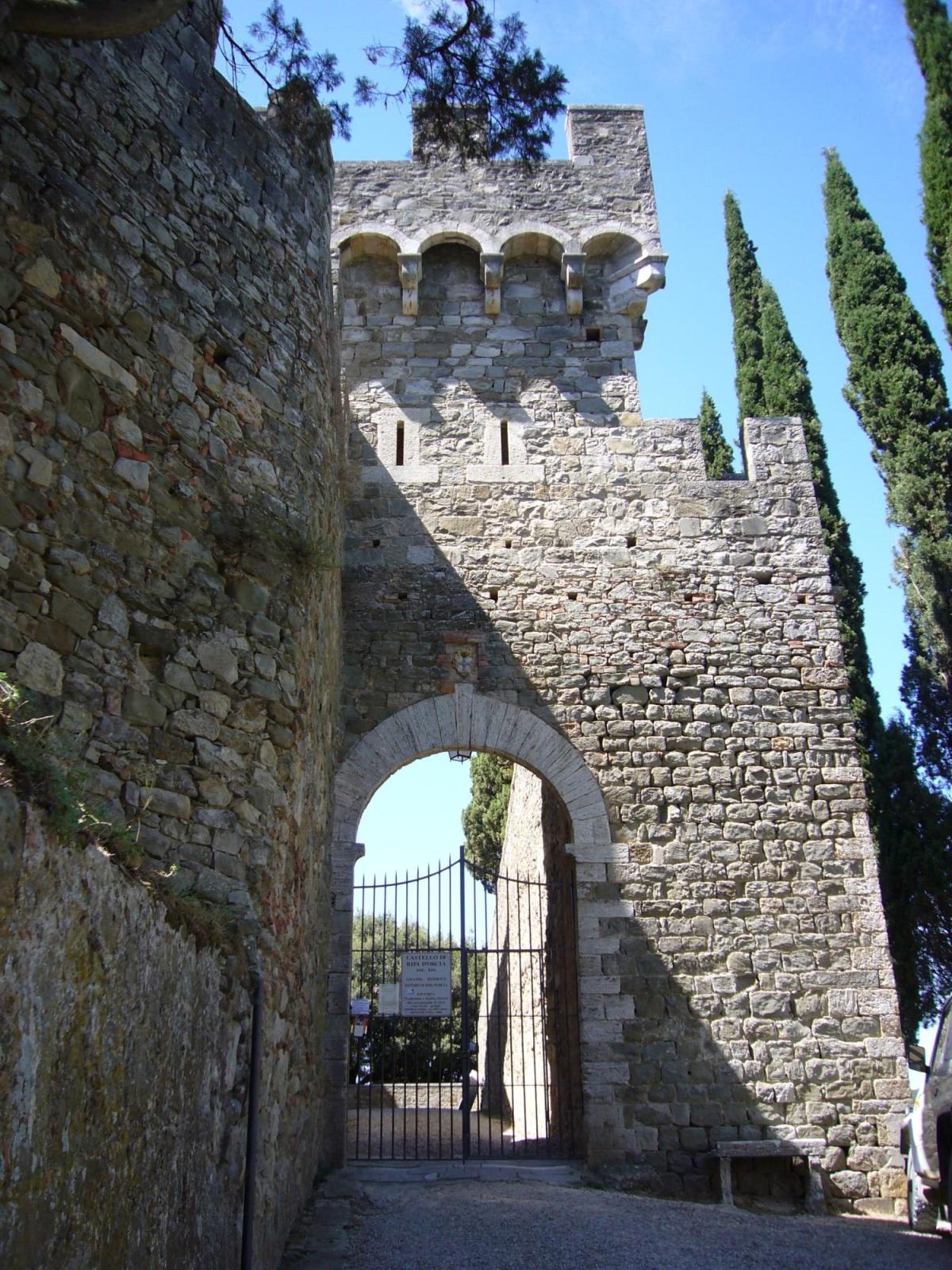
The structure is made up of three distinctive architectural elements: a tall quadrangular tower, the dominant defensive feature; a triangular arcaded courtyard, the heart of the settlement; and a lower rectangular residential wing with its own roof structure.
The restorations
Between the late 19th century and the early 20th century, Count Pietro Piccolomini Clementini, together with engineer Savino Cresti, carried out a major restoration project aimed at recovering the castle's original, characteristic authenticity, while at the same time modernising certain areas to make them habitable by the standards of the day. A further conservation restoration dates back to 1990.
Today it is a privately owned property that houses a farmhouse accommodation business.