How to reach
The Towers of Popiglio are located in the heart of the Pistoia Mountains, along the SS12 Abetone and Brennero road. From Pistoia, take the SS66 towards San Marcello Pistoiese. Continue towards La Lima and, once you reach the village, follow the signs for Lucca along the SS12. After less than one kilometer, a sign on the right indicates the road to the Towers of Popiglio. Follow this road for approximately 3.5 km until you reach a small open area on the left, where you can leave your car and continue on foot for about 500 metres along a woodland path leading to the towers.
From Lucca, take the SS12 Abetone and Brennero road towards Abetone. After passing through the village of Popiglio, continue for approximately two kilometres until you reach the turn-off for the towers on the left. The turn-off is less obvious and less clearly signposted when approaching from this direction, so pay particular attention to the road signs.
History
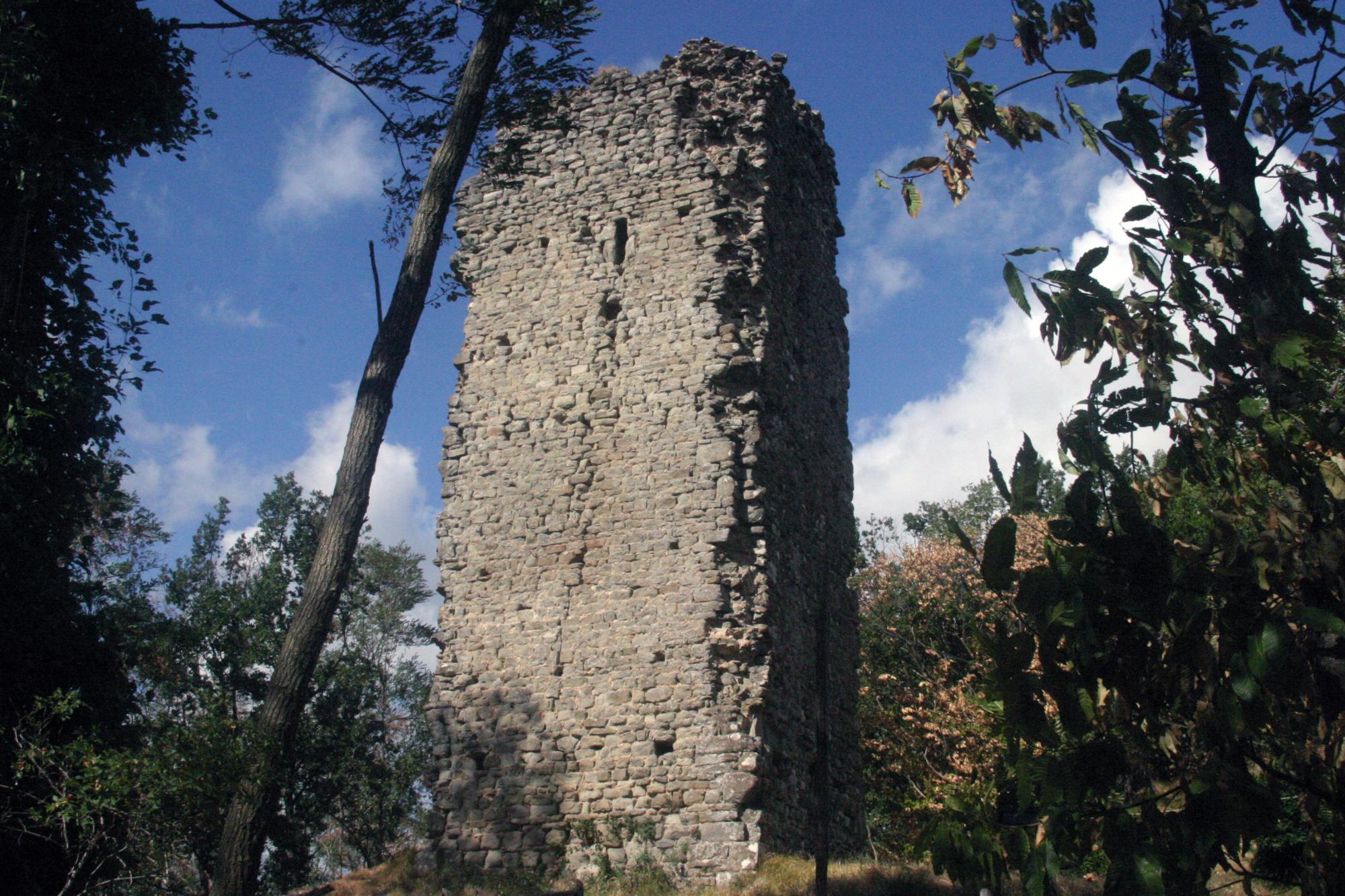
NB: The gallery also includes photographs taken before the 2005 restoration works.
The upper Lima Valley, in the Pistoia Mountains, has always occupied a strategic position along the routes connecting Pistoia, the Lucca area and the Apennines. In the Middle Ages, this territory belonged to the Guidi Counts of Modigliana, who owned the castles of Popiglio and Piteglio, as attested by the imperial charters of Henry VI in 1191 and of Frederick II in 1220 and 1247.
The area subsequently came under the control of Pistoia, and the two castles were placed under a single podestà, or chief magistrate. Popiglio later became part of the territories of the Republic of Florence, becoming one of the fortified strongholds of the mountains guarding the territory towards Lucca.
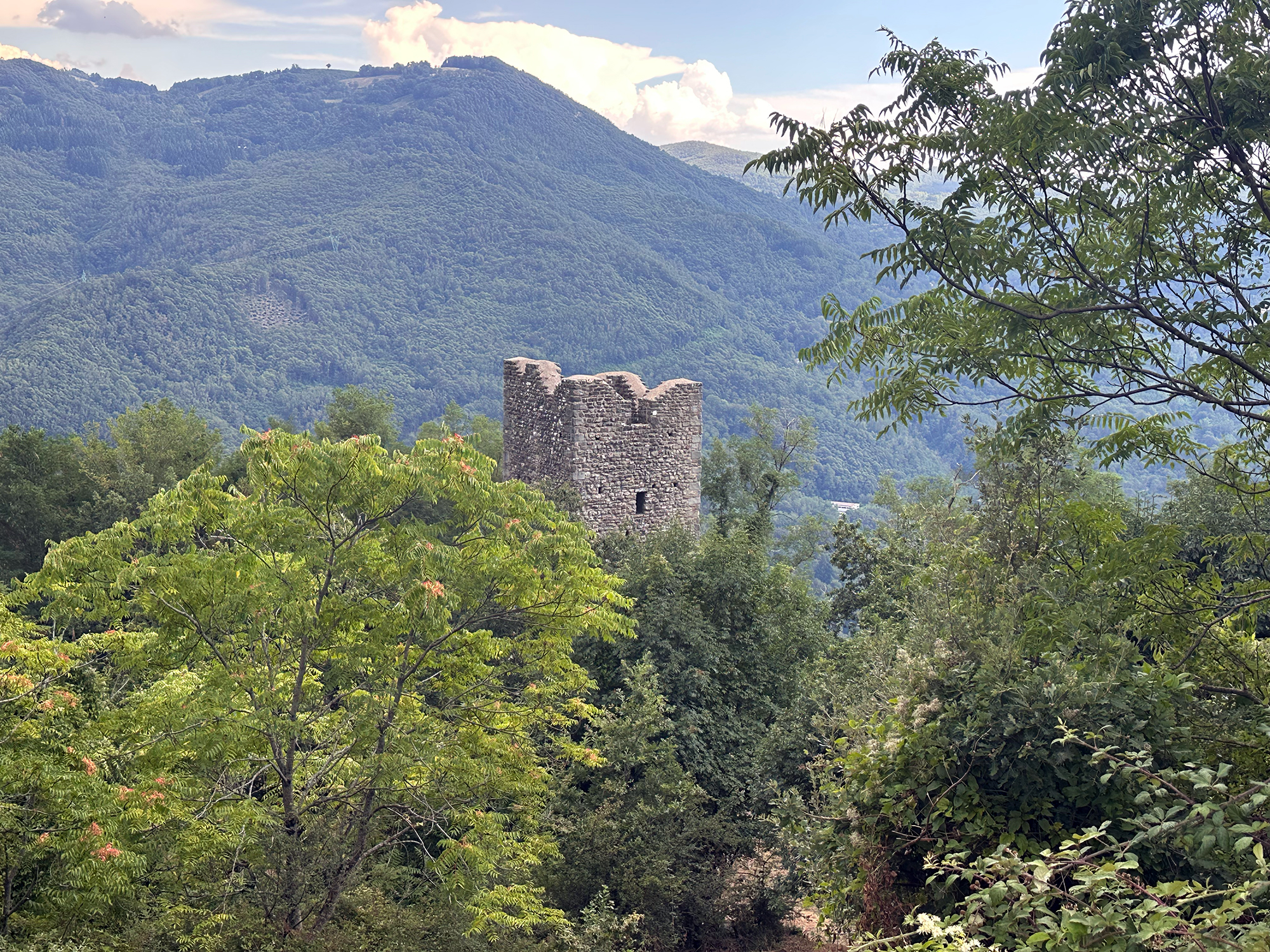
The village of Popiglio lies on the northern side of the valley. The castrum de Popilio is mentioned in medieval sources, although little remains today of the ancient castle and the walls that once protected the village. On the mountainside overlooking the settlement, however, the two imposing Towers of Popiglio still survive. They are the last surviving remains of the Rocca Securana, a fortified complex designed to control the valley and the routes passing through it from above.
The Two Towers
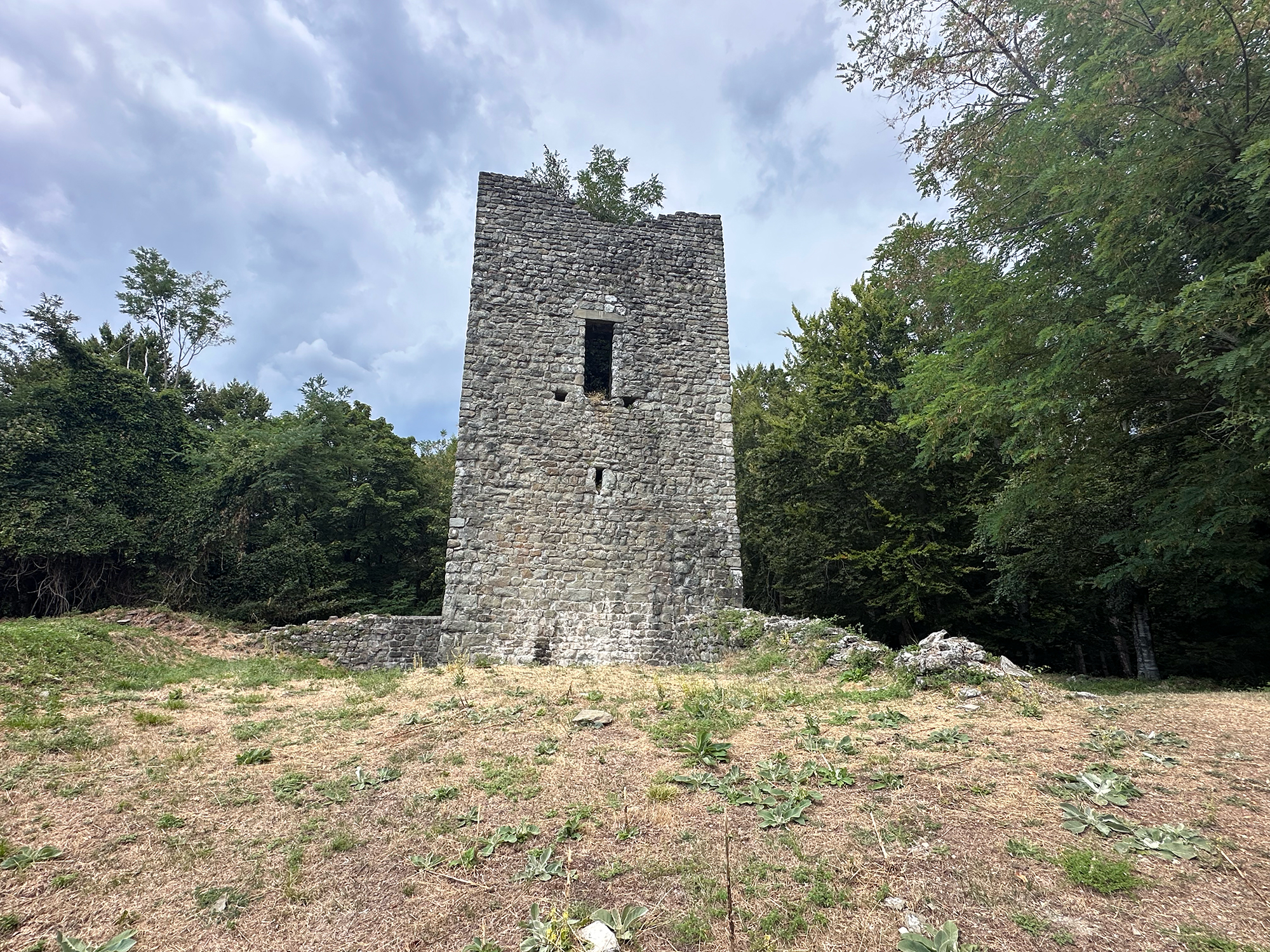
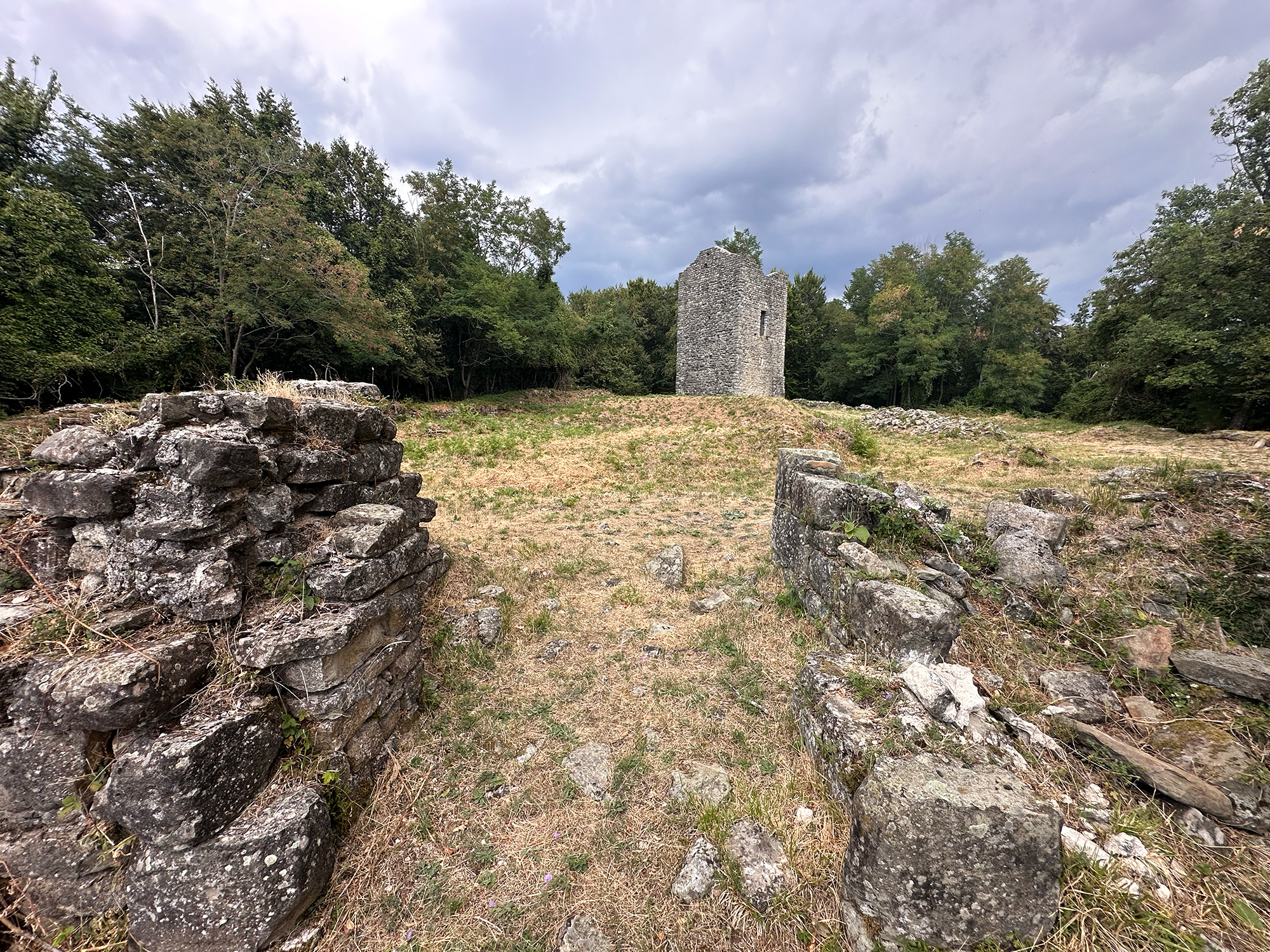
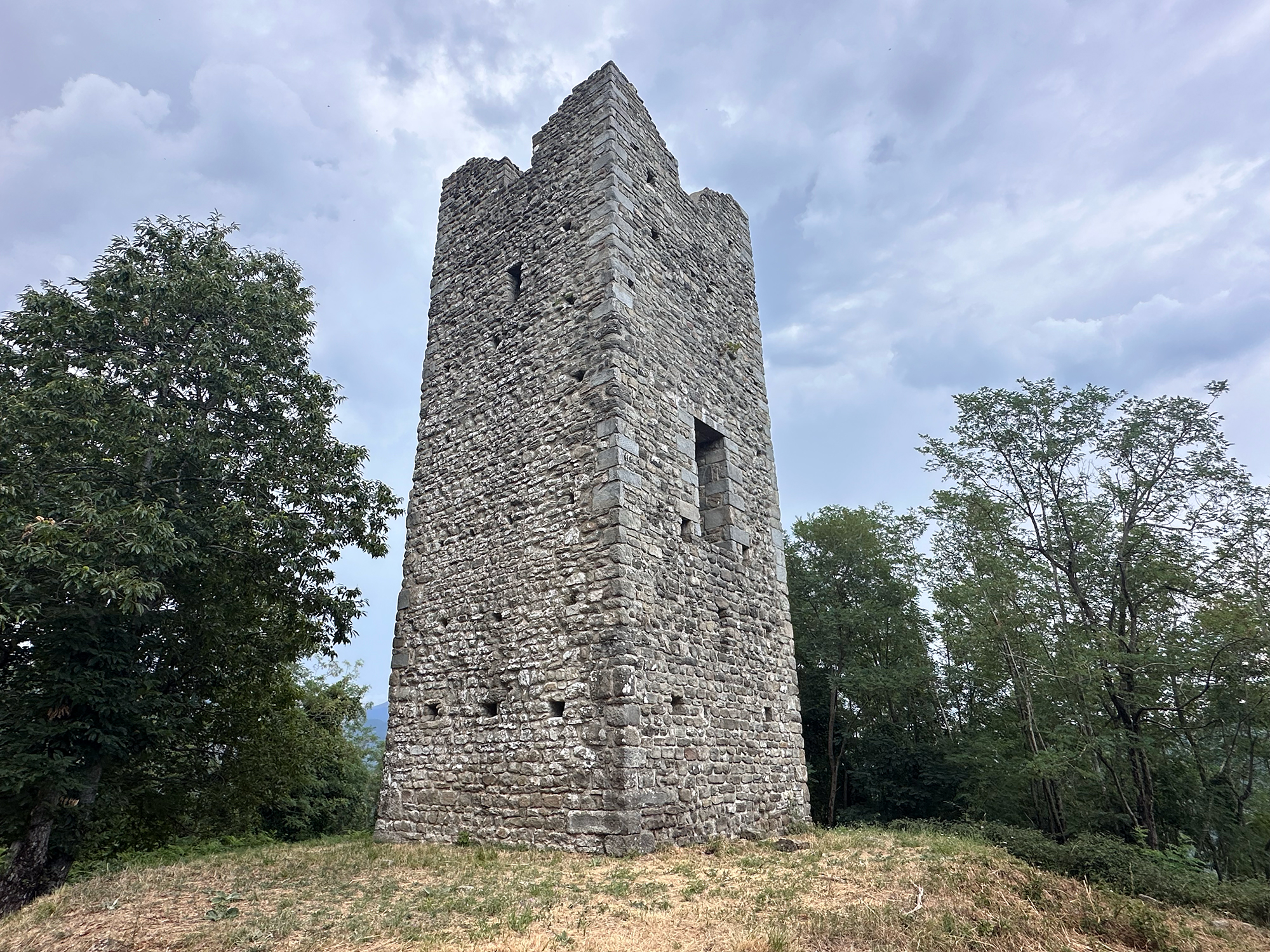
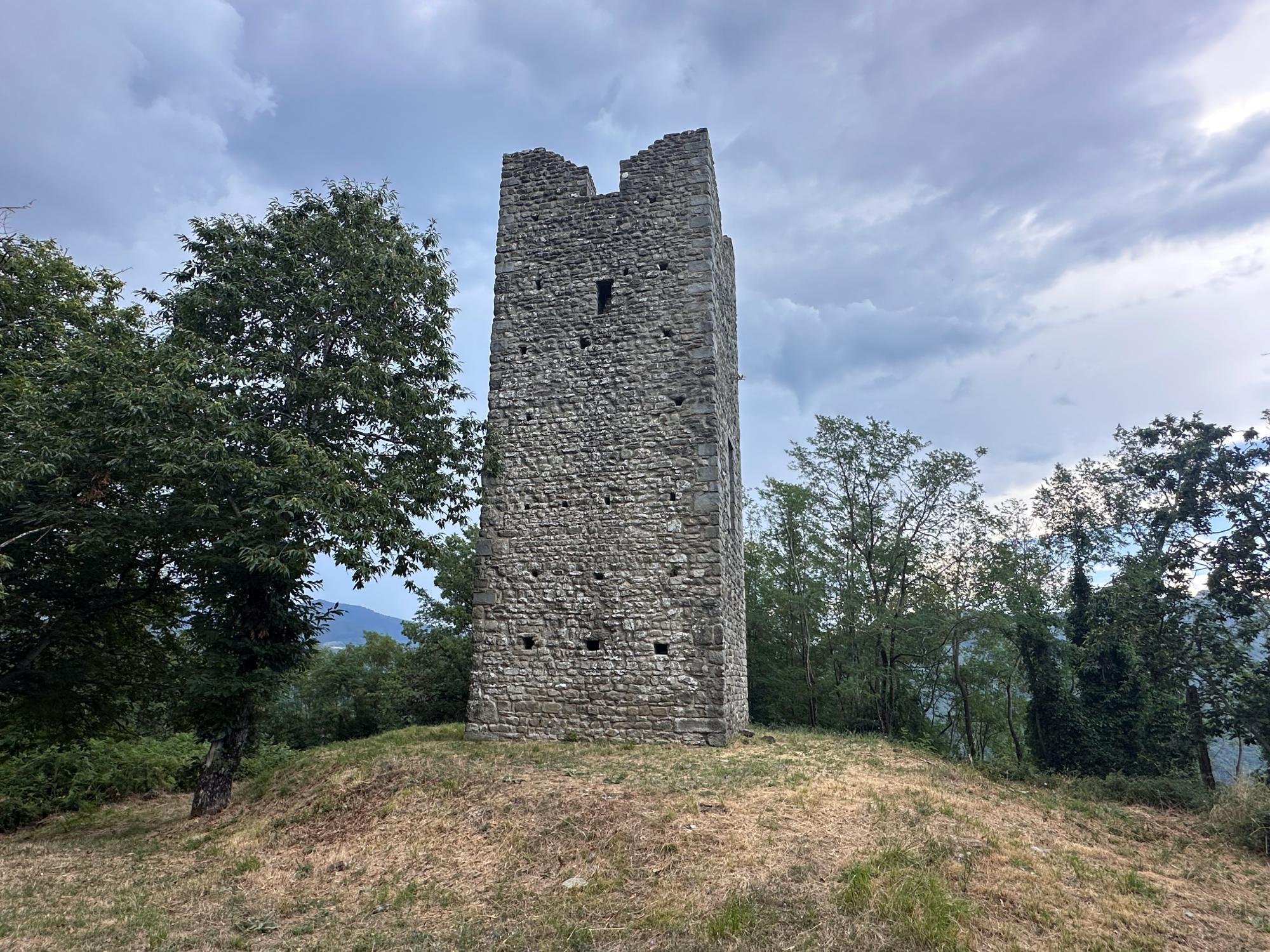
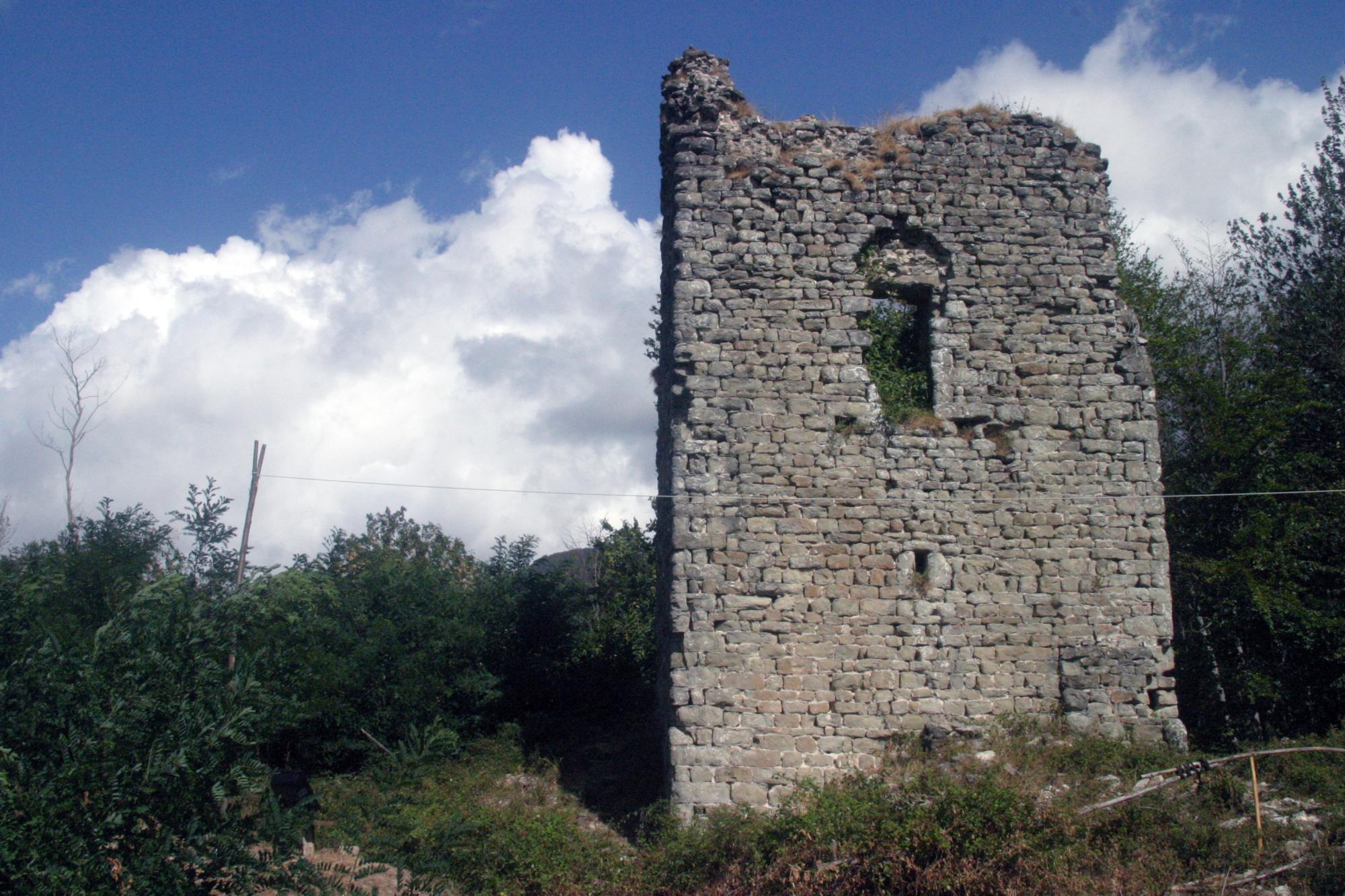
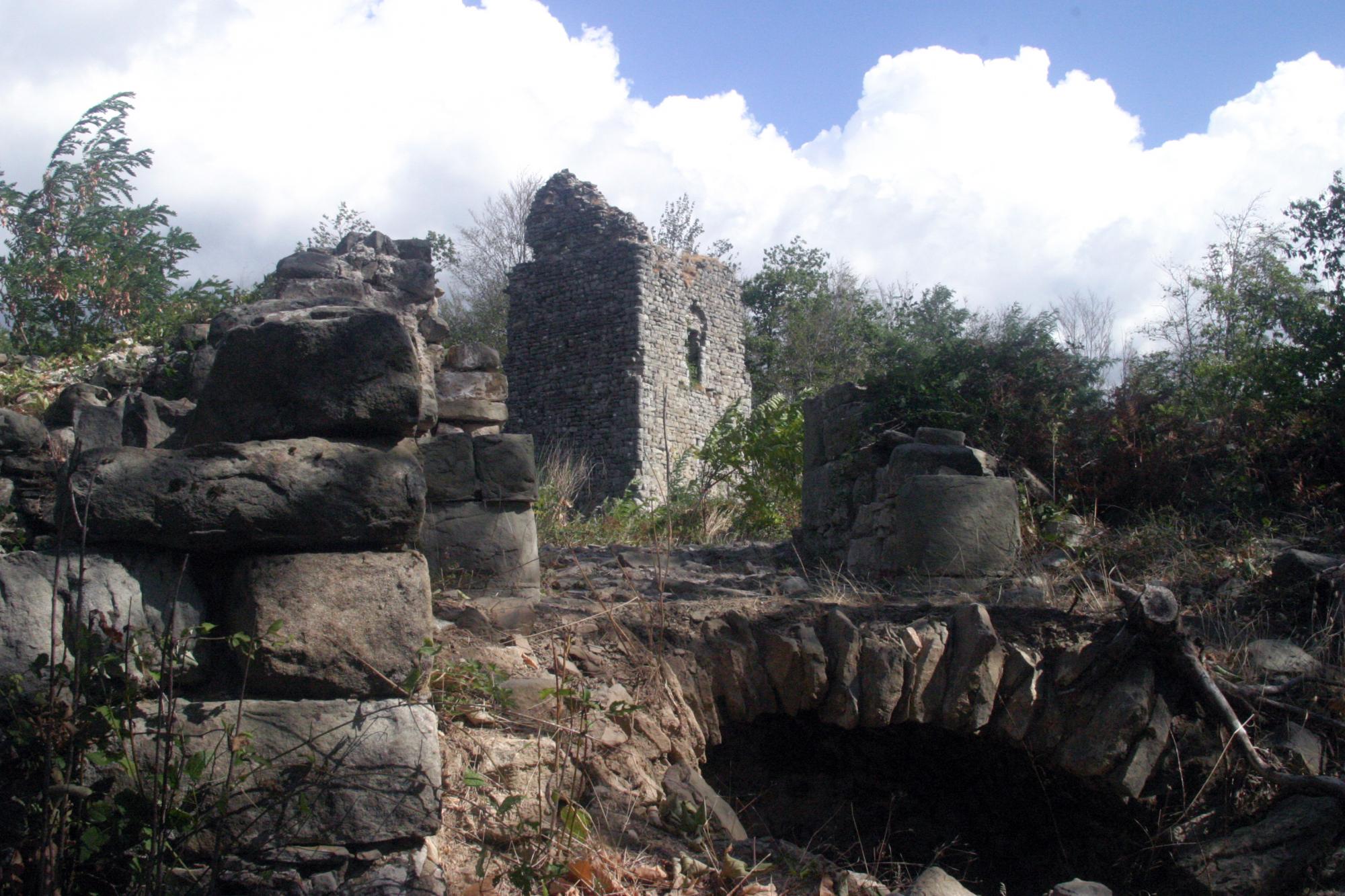
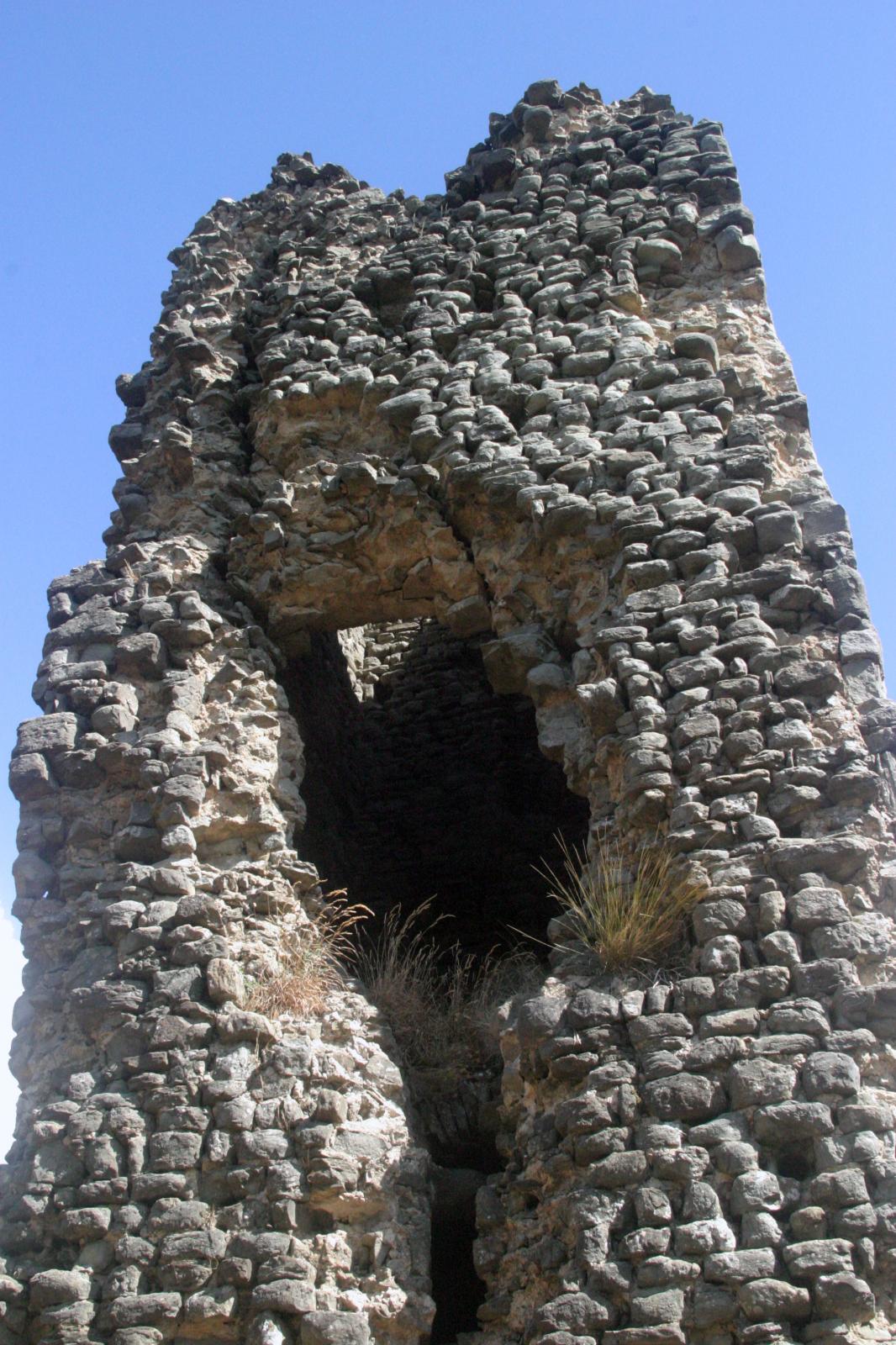
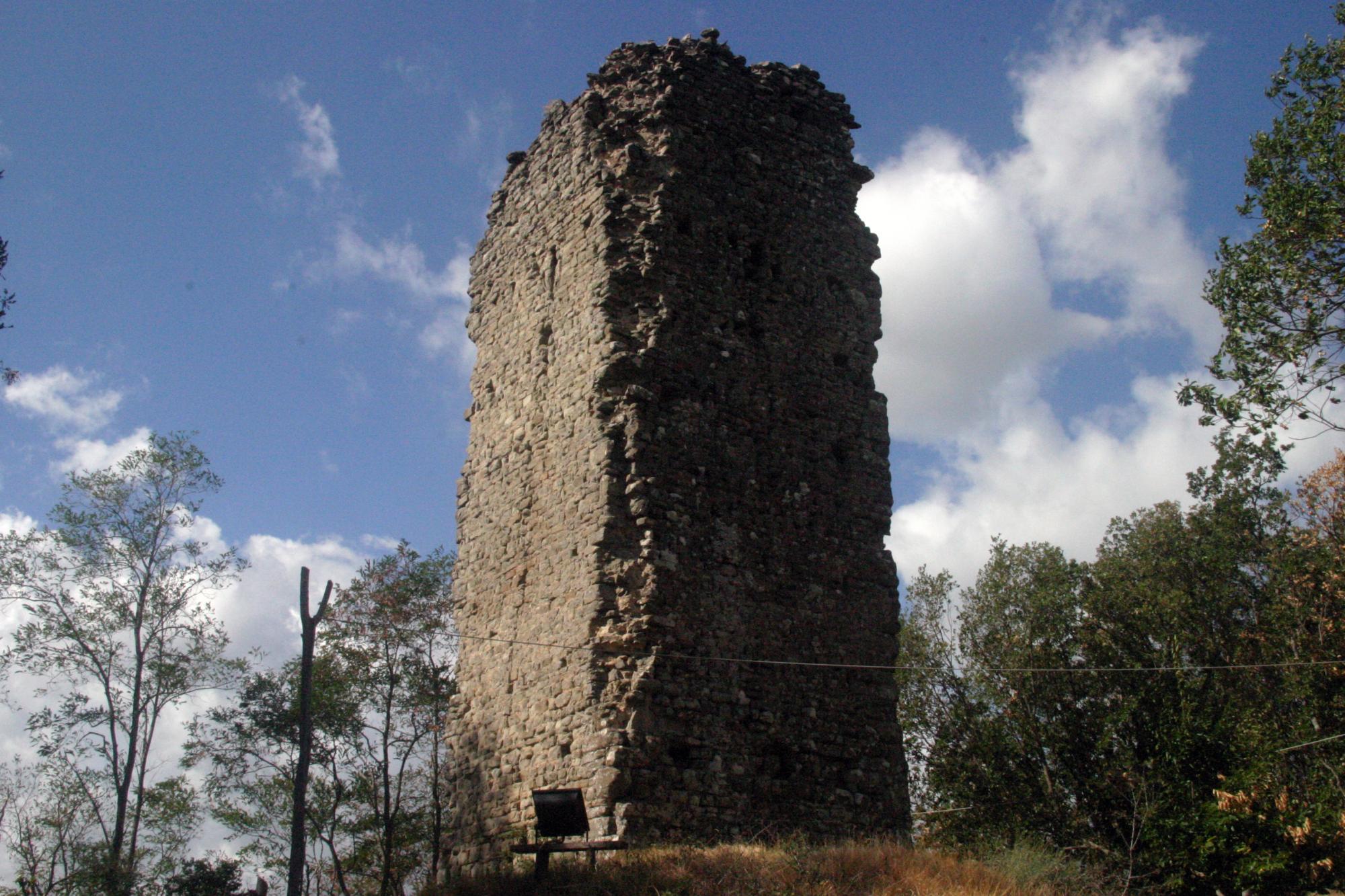
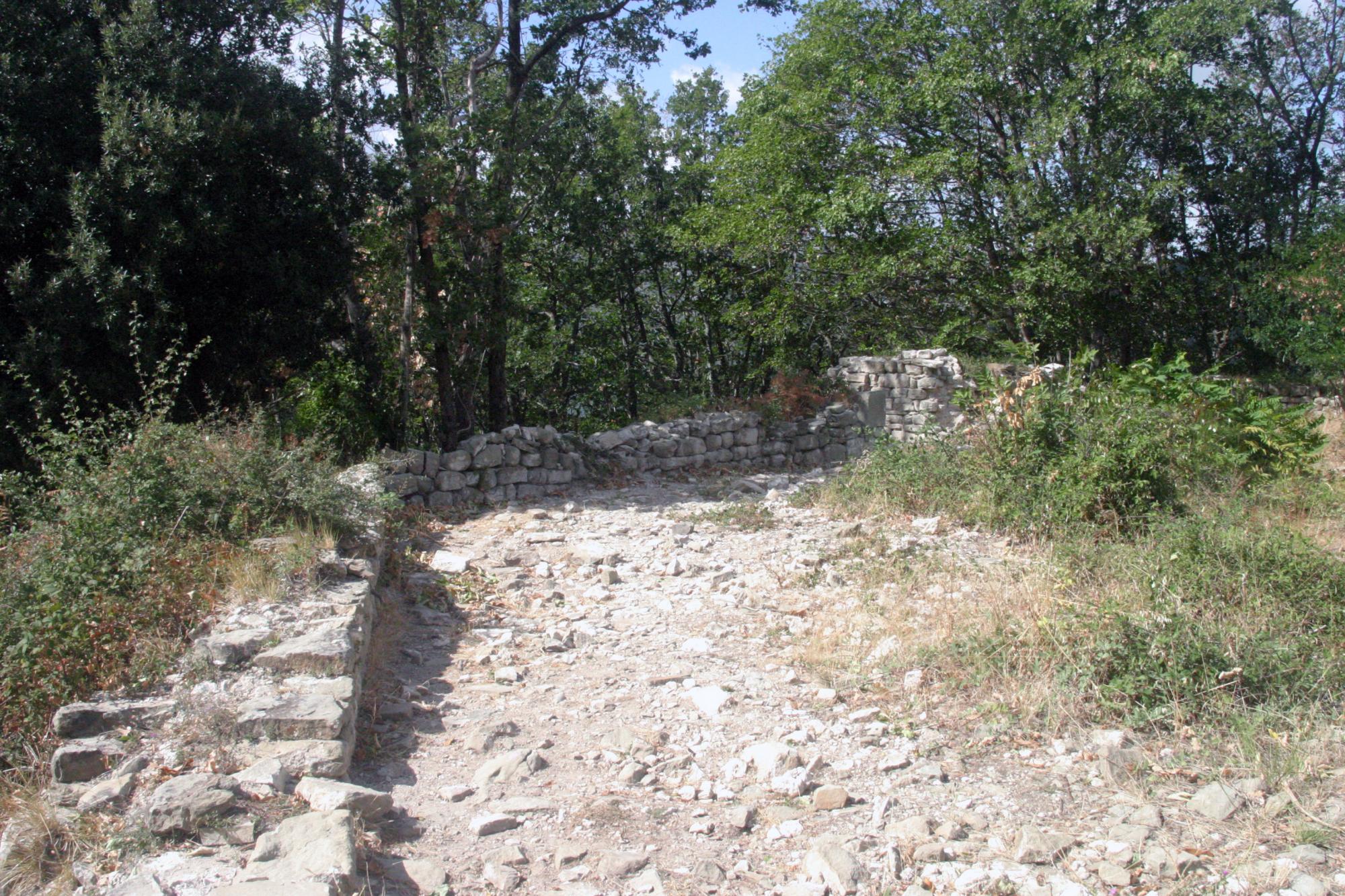
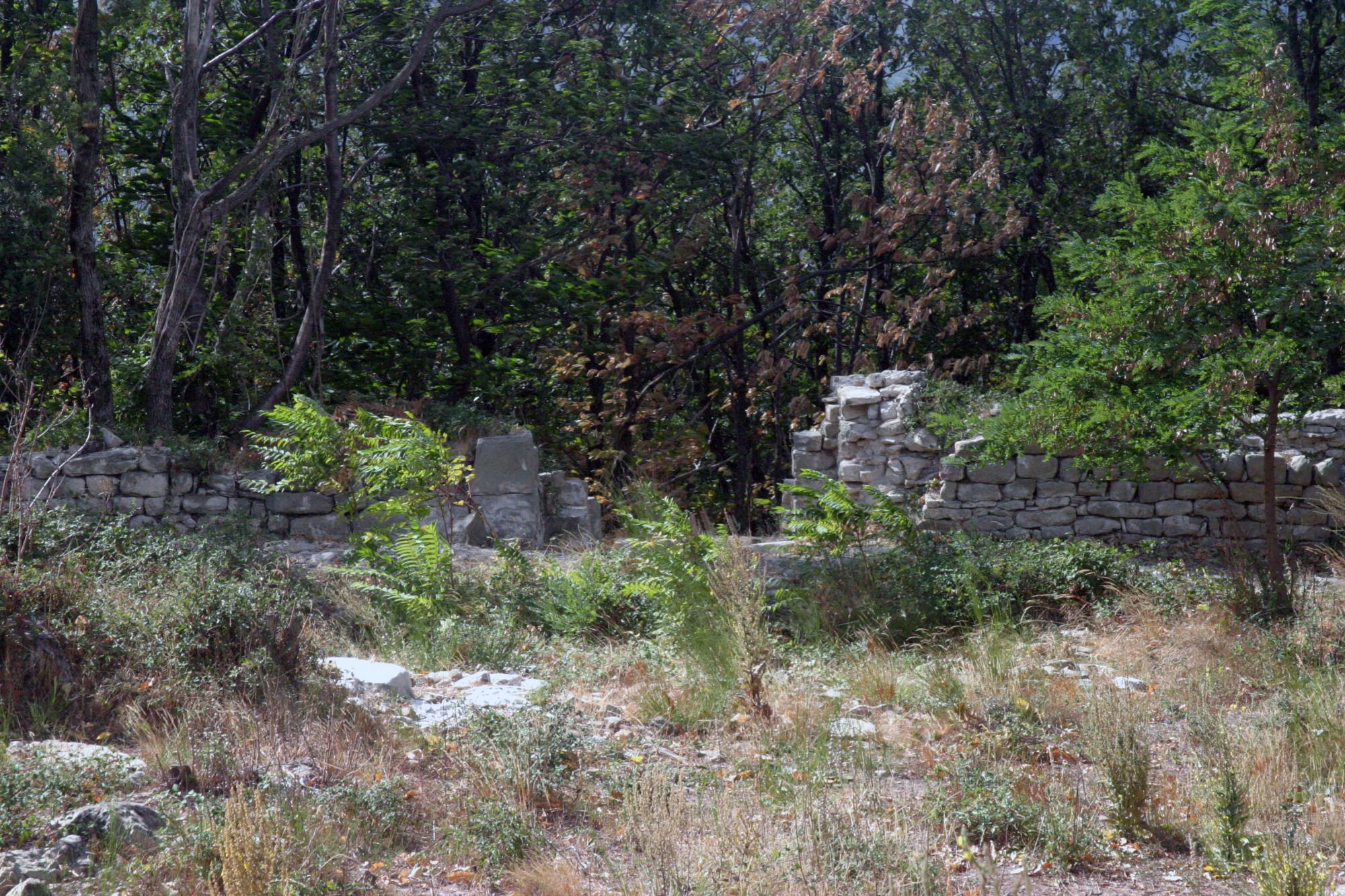
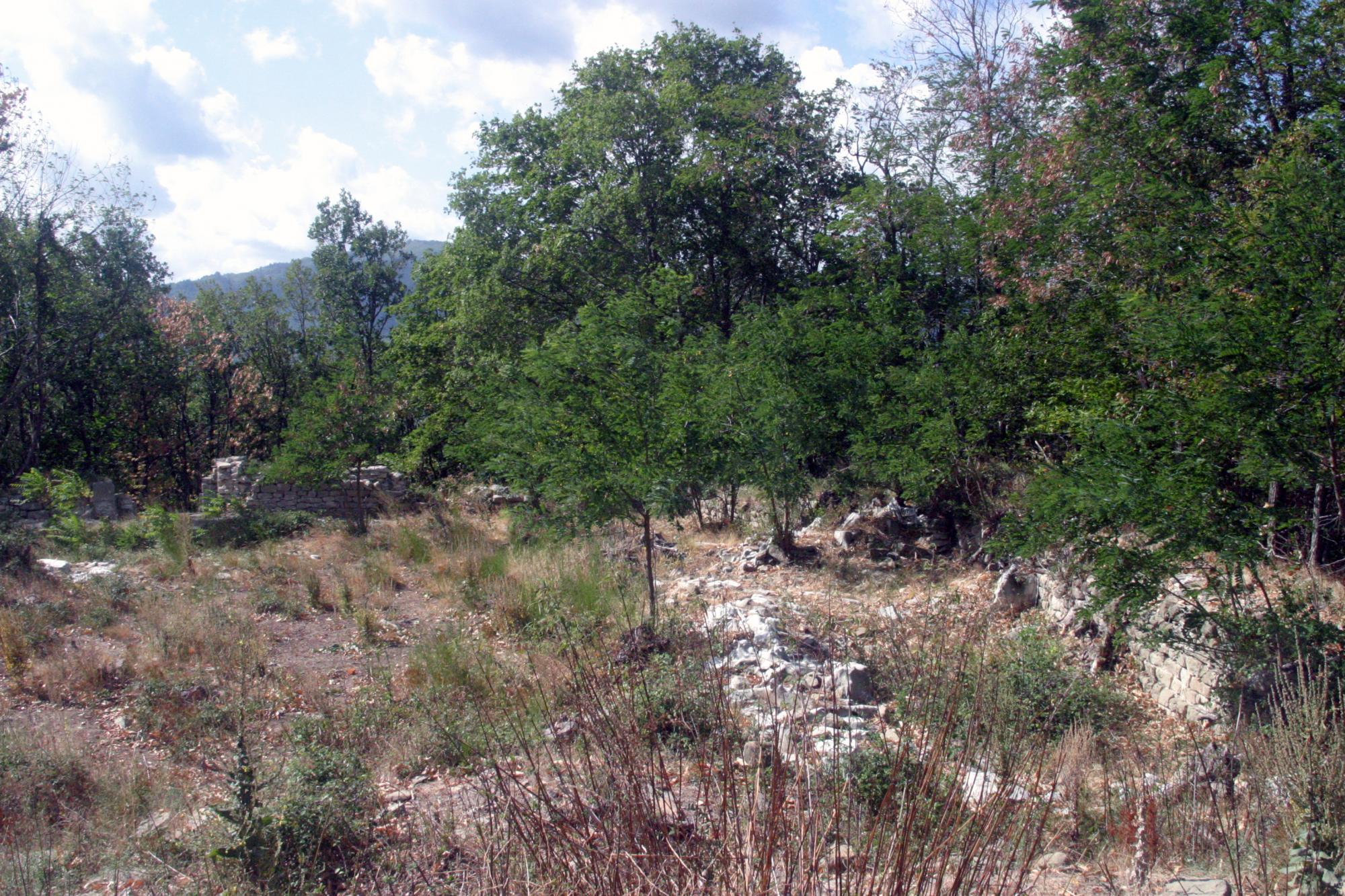
The two towers, both with a square plan, stand a short distance from one another but at different elevations. The upper tower, located at the highest point, formed the heart of the defensive system. Today it is heavily ruined and retains approximately half of its original height; around it, the remains of the polygonal defensive wall and several structures associated with the fortification can still be seen. From this position, a large portion of the upper Lima Valley could be kept under observation.
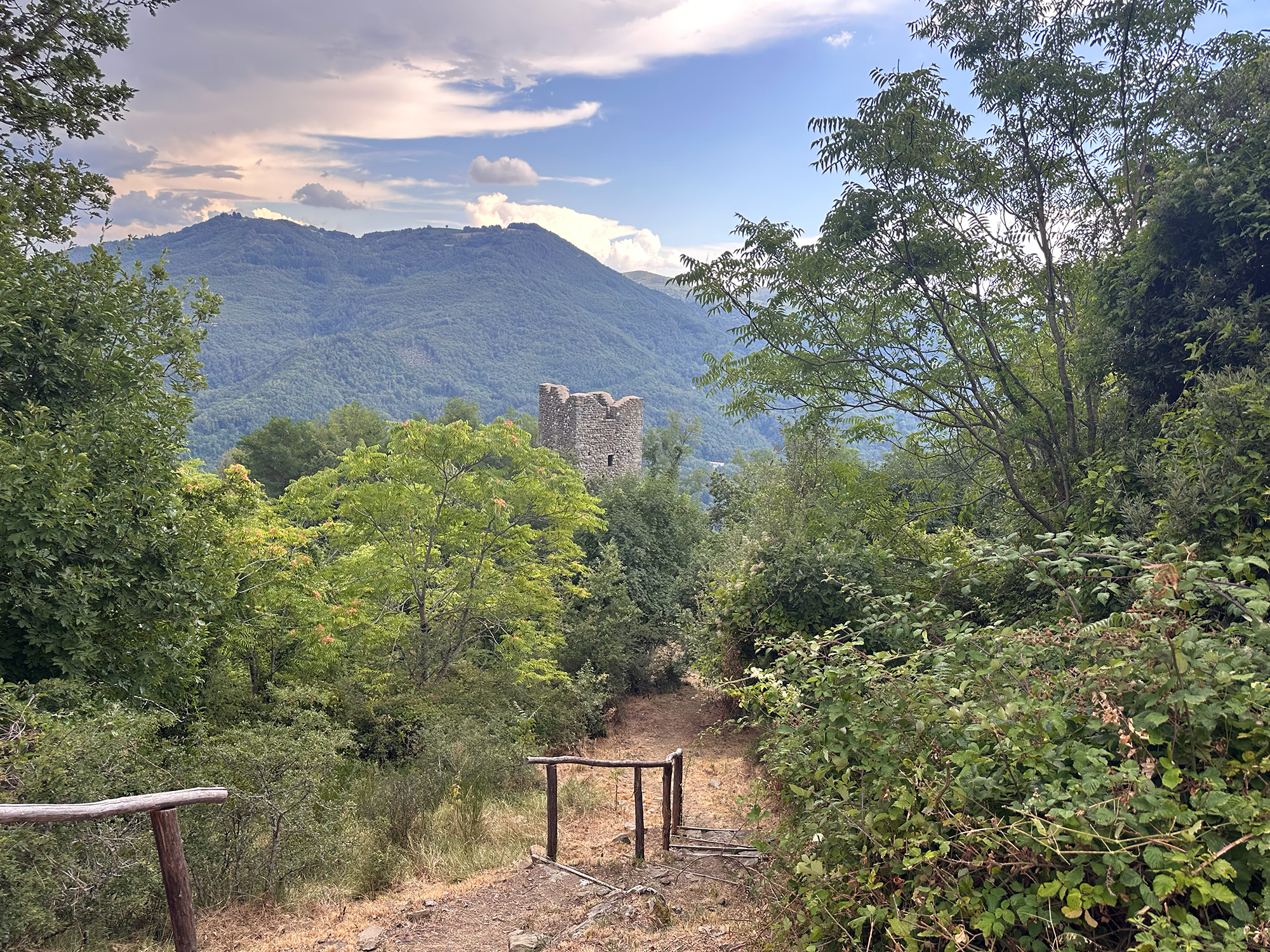
The lower tower, located about twenty metres below the upper one, probably served as an intermediate point for controlling and connecting the village with the upper fortress. Although this structure is also heavily ruined, its position still helps to illustrate the logic of the defensive system.
Architecture and Building Materials
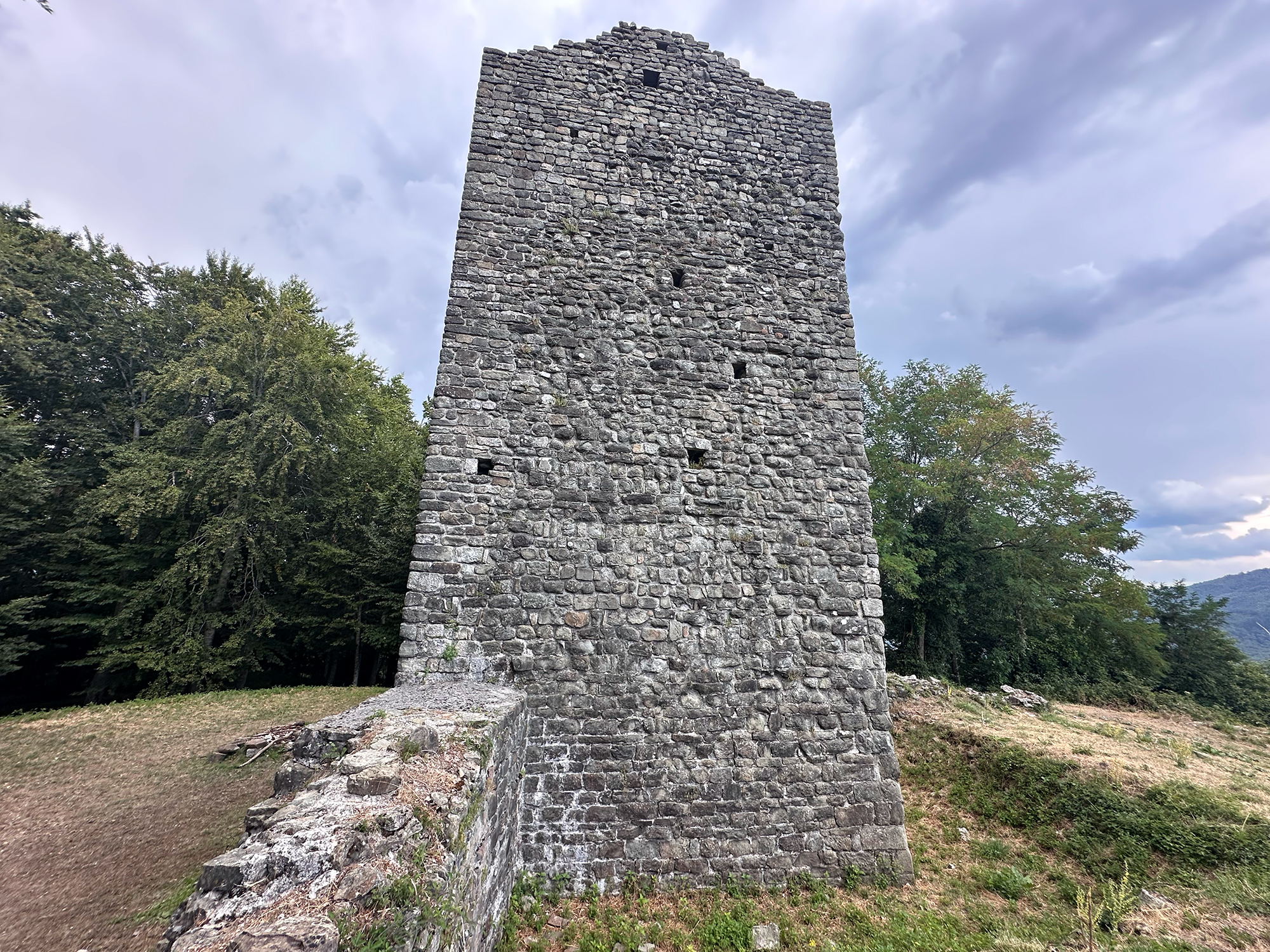
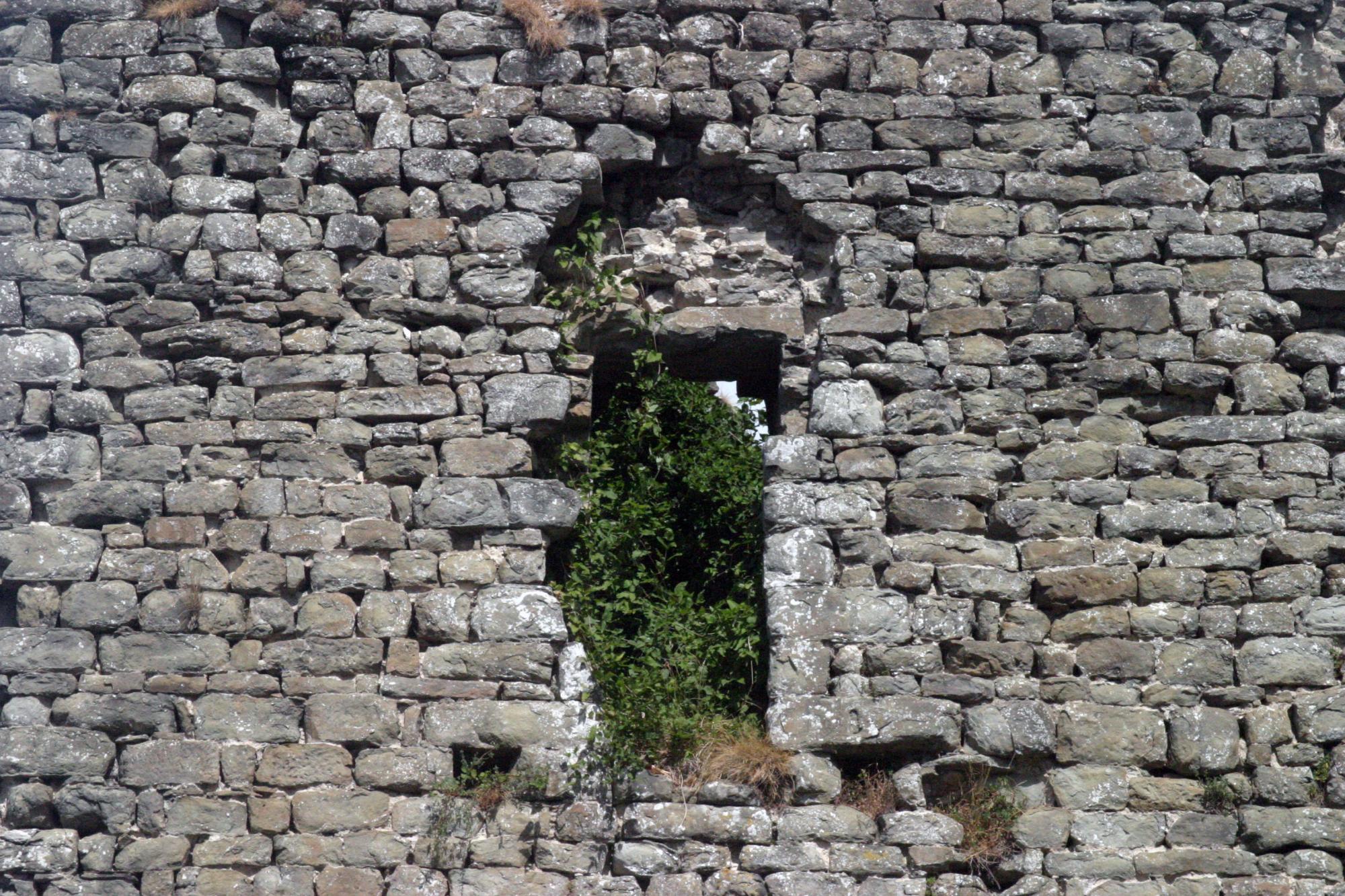
From an architectural perspective, the towers display the essential characteristics of medieval fortified architecture in the Apennines. They are built in stone, with substantial masonry walls and an external stone coursed facing, while the openings are few and narrow, serving primarily defensive and observation purposes.
The upper tower, with sides measuring just under seven metres, stood within a larger defensive enclosure, traces of which can still be identified, including two entrances, one of them a small postern gate on the eastern side. The remains of a water cistern have also been documented within the complex, indicating the need to provide the garrison with a degree of self-sufficiency. Taken together, these features reveal a fortification designed primarily for the control and defence of the territory, rather than for residential purposes.
Archaeological Investigations and Restoration
The complex has been the subject of important research and conservation work. Between 2000 and 2006, archaeological investigations were carried out under the coordination of the University of Pisa, in collaboration with the Superintendency for Archaeological Heritage of Tuscany. These studies helped to shed light on the structure of the fortress and the organisation of its various defensive elements.
In 2005, an important conservation and restoration project was also carried out as part of regional programmes for the restoration and enhancement of cultural heritage. The works helped preserve the surviving structures of the Rocca and maintain the readability of its historic layout.
Recent Restoration and Enhancement of the Area
In recent years, attention has also focused on restoring the surrounding landscape and improving access routes. In 2025, the area underwent cleaning and maintenance works, including the removal of overgrown vegetation and fallen trees, ground restoration, water drainage improvements, and the restoration of paths and wooden fencing.
These works did not constitute a new structural restoration of the towers themselves, but rather an intervention aimed at the recovery and enhancement of the historic site, helping to make the complex easier to understand and access once again.
Today, the Towers of Popiglio, surrounded by the landscape of the Pistoia Mountains, are among the most evocative surviving examples of the ancient defensive system of the upper Lima Valley. Their position still makes it possible to understand their original purpose: a strategic observation and control point between the Pistoia mountains and the Lucca area.
More info & notes
Torri di Popiglio, after the restoration, from the drone: