How to reach
Although it is commonly associated with the village of Rosia, in the municipality of Sovicille, the Hermitage of Santa Lucia is administratively located within the municipality of Chiusdino, just beyond the famous Ponte della Pia along the SR73 Senese Aretina. To reach the hermitage, cross the bridge and follow the road into the woods of the Tenuta di Spannocchia, keeping to the signs on the right. At the first junction, bear left (the sign is now almost unreadable), then continue along a pleasant trail surrounded by nature. The hike is easy and suitable for most visitors: the round-trip route is just under 3 kilometres (1.9 miles) and leads to the evocative ruins of the ancient hermitage.
History
Hidden among the woods surrounding Rosia, along the ancient road leading to the Castle of Montarrenti, stands one of the most fascinating and mysterious places in the Sienese countryside: the Hermitage of Santa Lucia. Its origins predate the 12th century and, according to tradition, are linked to the hermit Bonacorso, who is believed to have chosen this secluded location for a life of prayer and contemplation. Over time, other religious followers gathered around him, making it necessary to build accommodations for the growing monastic community.
The existence of the community was officially recognized by the Dioceses of Siena and Volterra through two important documents dated 1216 and 1239, granting indulgences to those who supported the hermitage through donations. The church, dedicated to Saint Lucy, was probably built around 1252 and consecrated in 1267. Throughout the centuries the complex experienced significant growth: archaeological evidence reveals two major phases of expansion during the second half of the 13th century and the first half of the 14th century.
The history of the monastery is also intertwined with a fascinating local legend. It is said that the prior Clemente da Osimo performed a miracle here by turning water into wine with the simple sign of the cross. This event helped strengthen the spiritual reputation of the hermitage and increased devotion to its Augustinian community.
The hermitage was officially suppressed by the Archdiocese of Siena in 1575, although a number of friars continued to live there for several years. Over time it gradually lost its religious function and, in the Leopoldine Cadastre of the 19th century, it was already listed simply as a "farmstead", before eventually being abandoned.
Between the late 1960s and the late 1970s, the site became the focus of important archaeological excavations directed by the Etruscan Foundation of Detroit and promoted by Count Cinelli, owner of the nearby Tenuta di Spannocchia, of which the hermitage is still part today. These investigations revealed a remarkable amount of information about the site's history, demonstrating continuous occupation from the 10th to the 18th century.
The excavations uncovered numerous architectural and decorative elements of great importance, including carved capital fragments, altar decorations, and precious remains of medieval stained glass windows. Particularly significant were the cemetery areas associated with the different phases of occupation. Anthropological studies carried out on the skeletons revealed numerous deaths caused by epidemic diseases, leading archaeologists to suggest that, during its later history, the hermitage may also have served as a hospital and place of care.
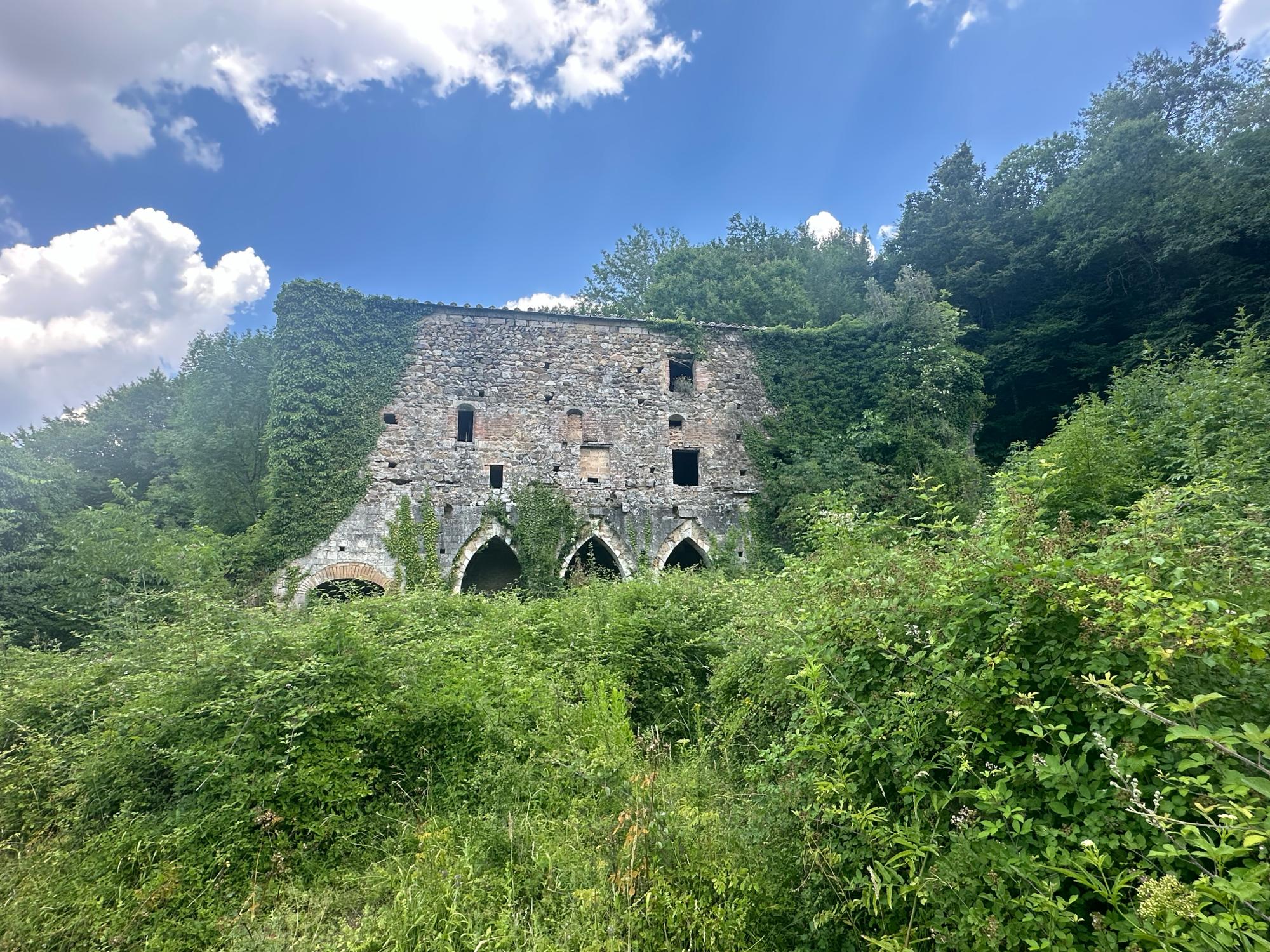
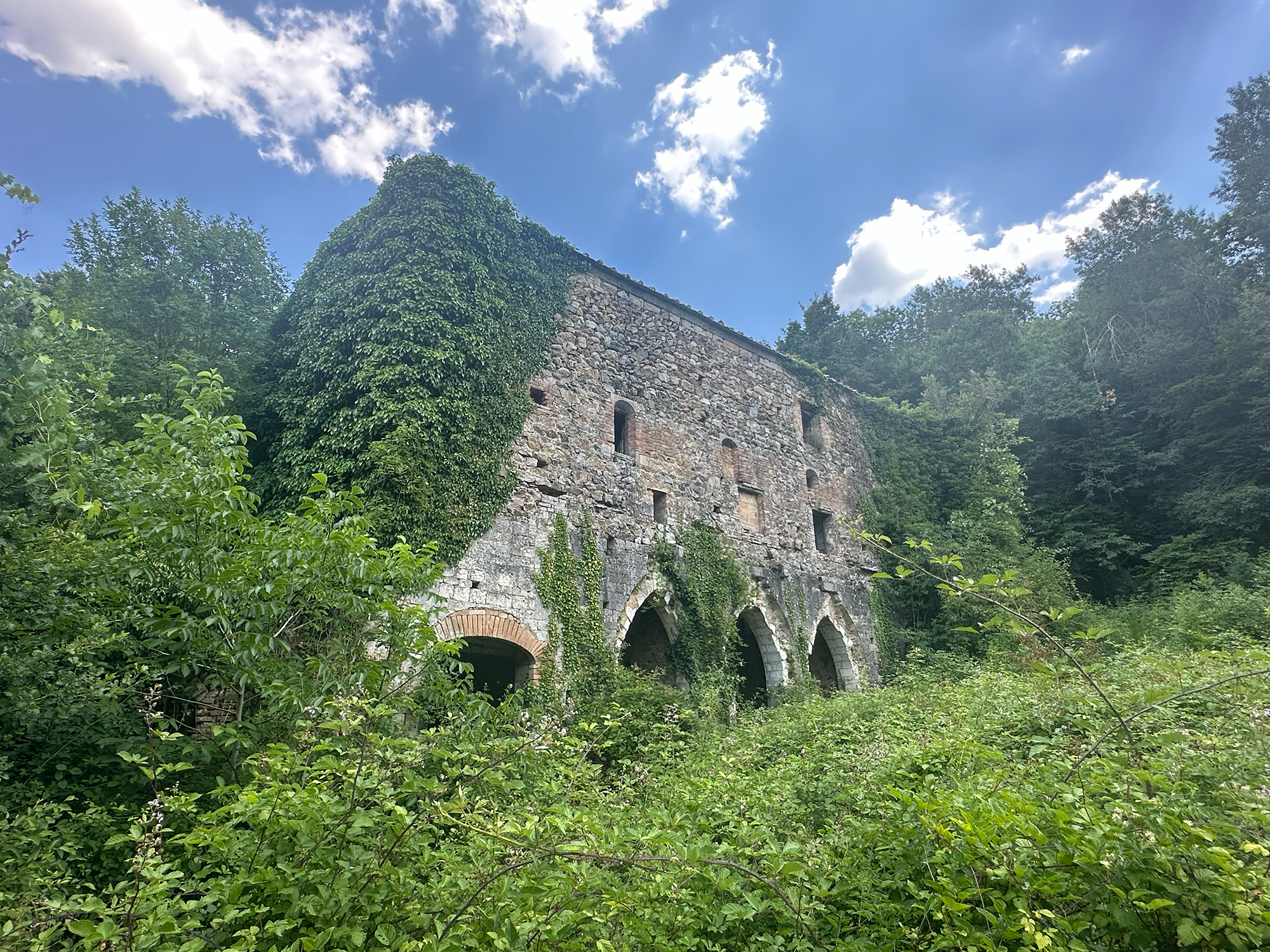
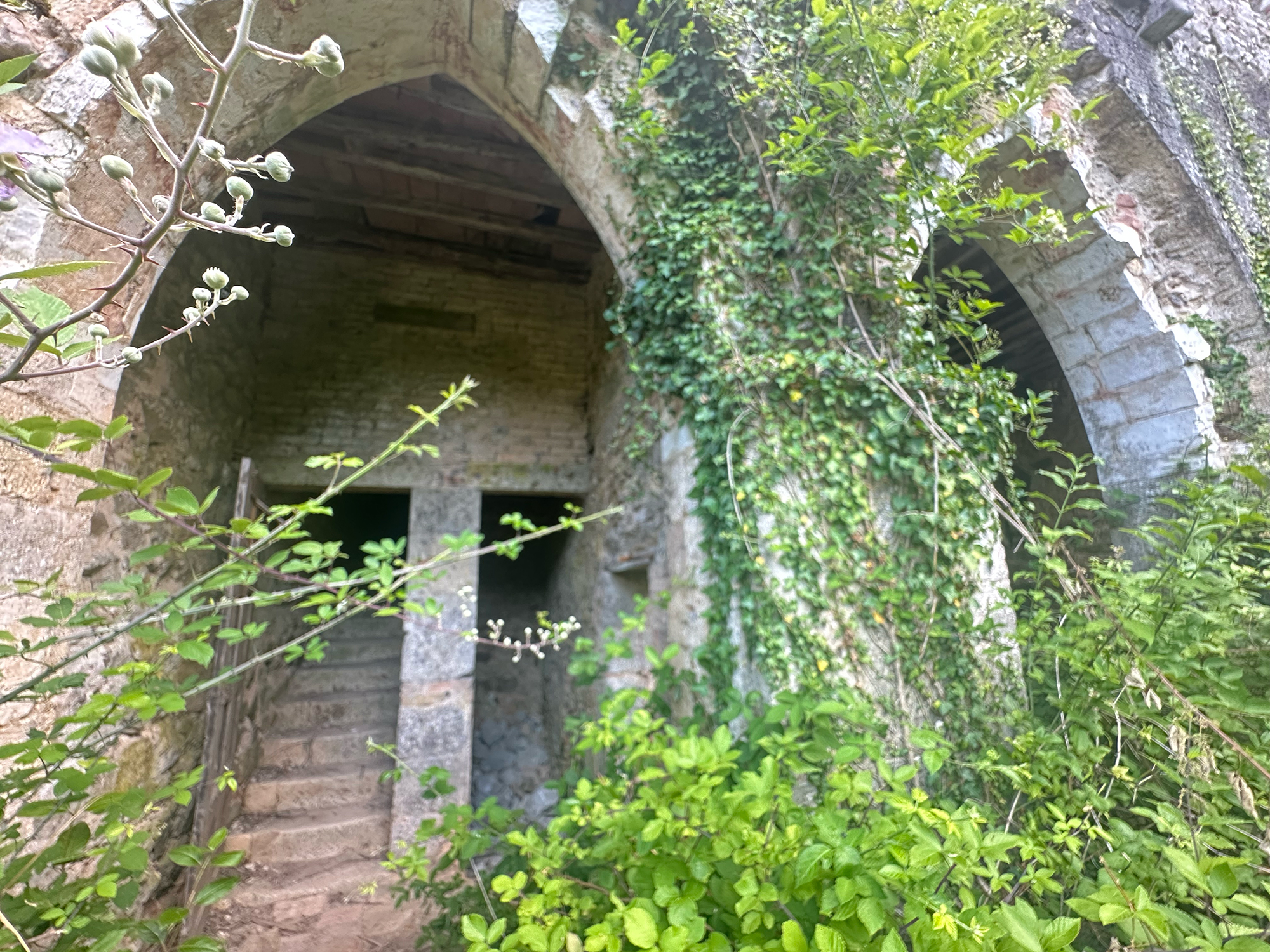
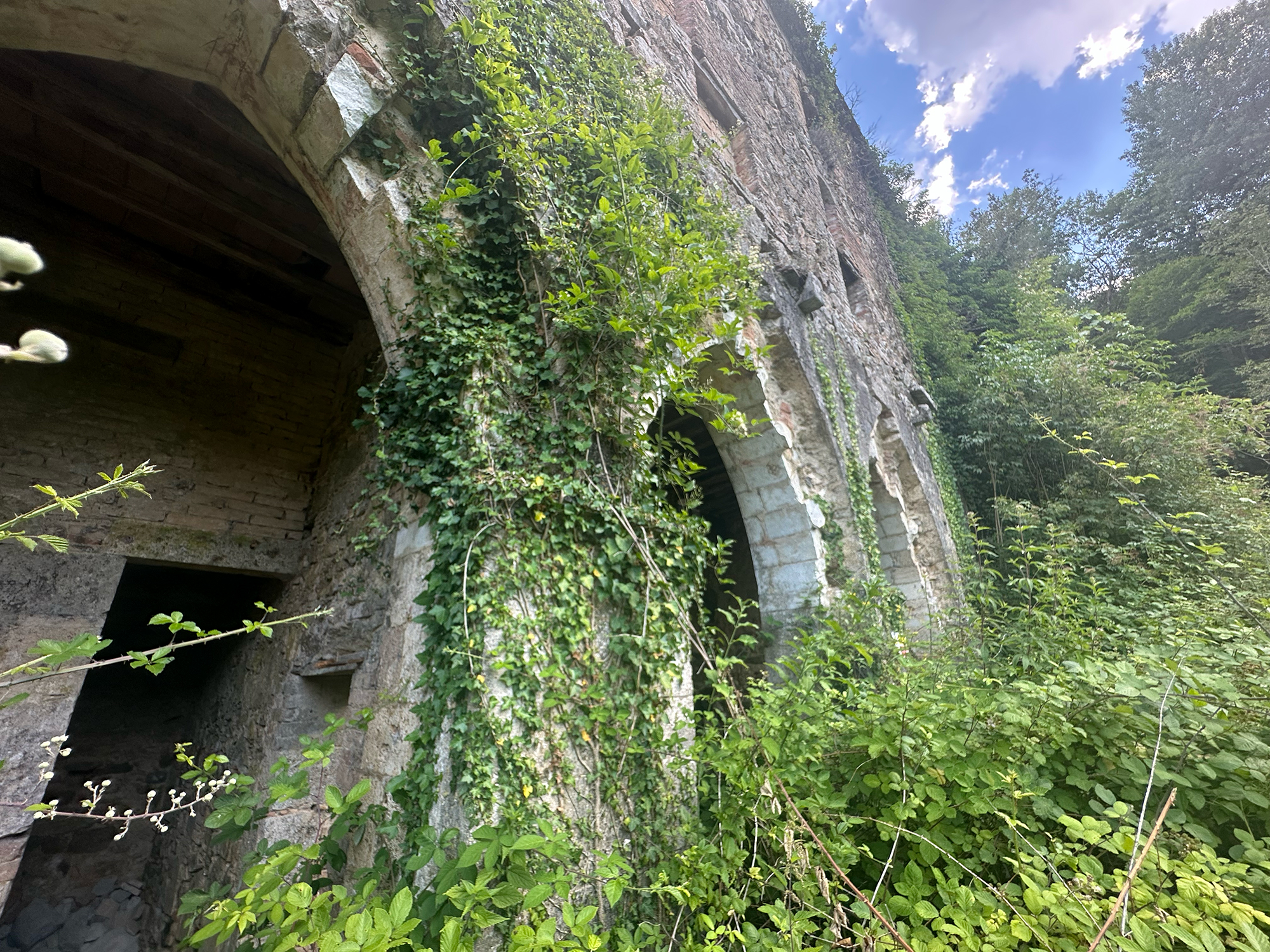
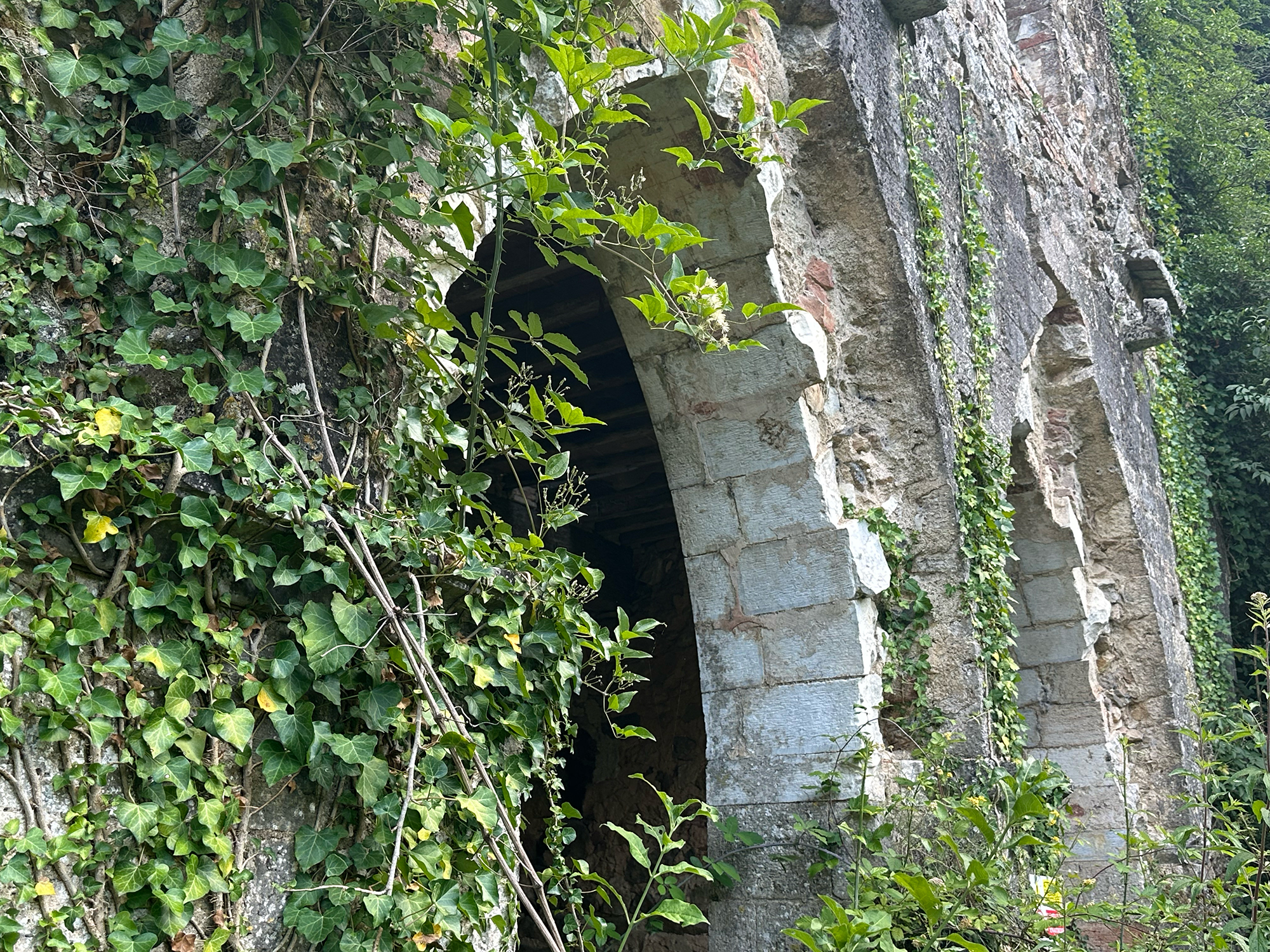
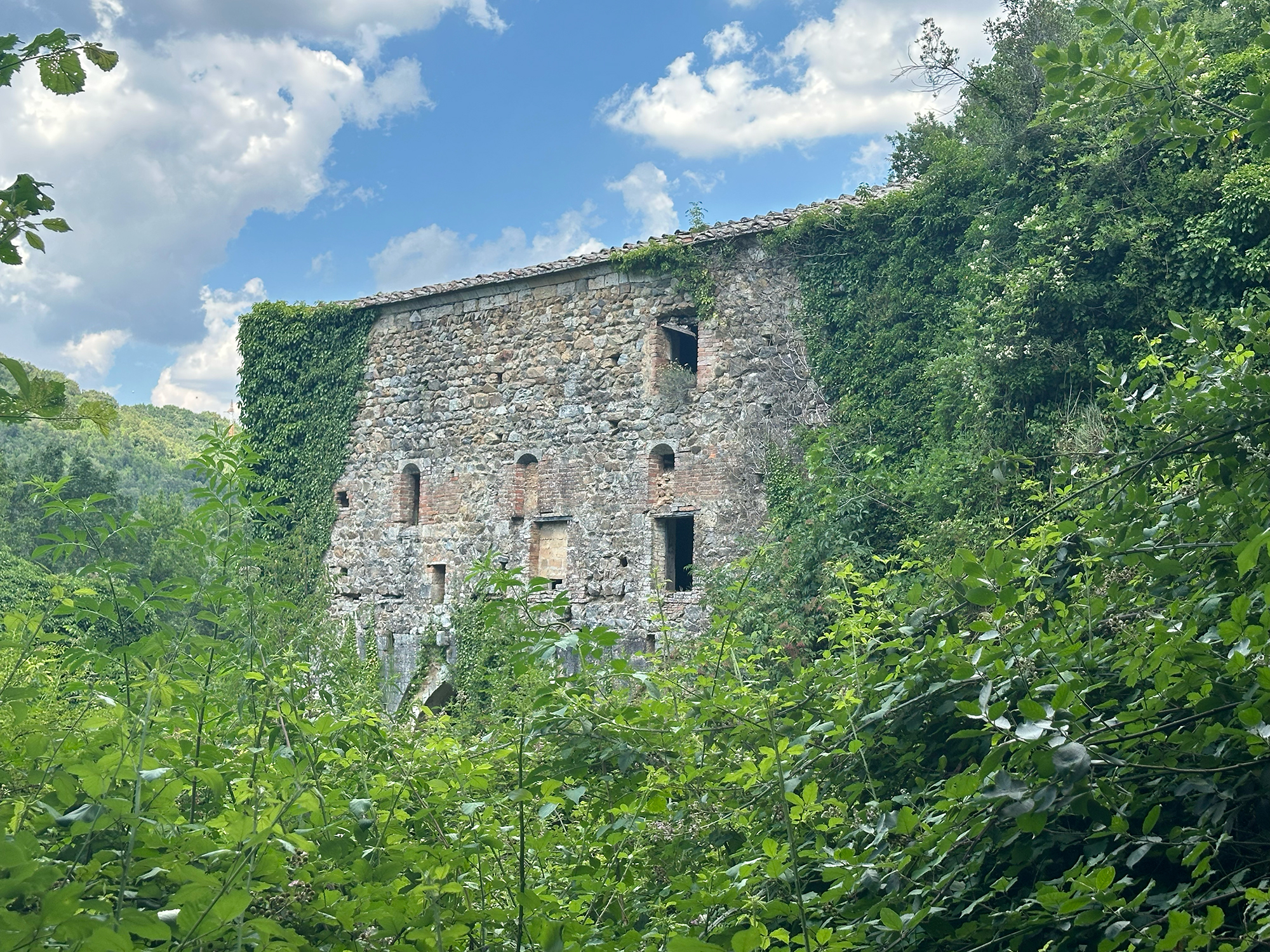
Today, only the evocative ruins of the ancient Augustinian monastery remain, surrounded by dense vegetation. Visitors can still recognize the wing that once housed the chapter house, distinguished by elegant pointed Gothic arches, as well as the remains of the single-nave church and its terminal chapel. The square-shaped choir still preserves the corbels that once supported the ribbed cross vault, offering an important testimony to the site's medieval architecture.
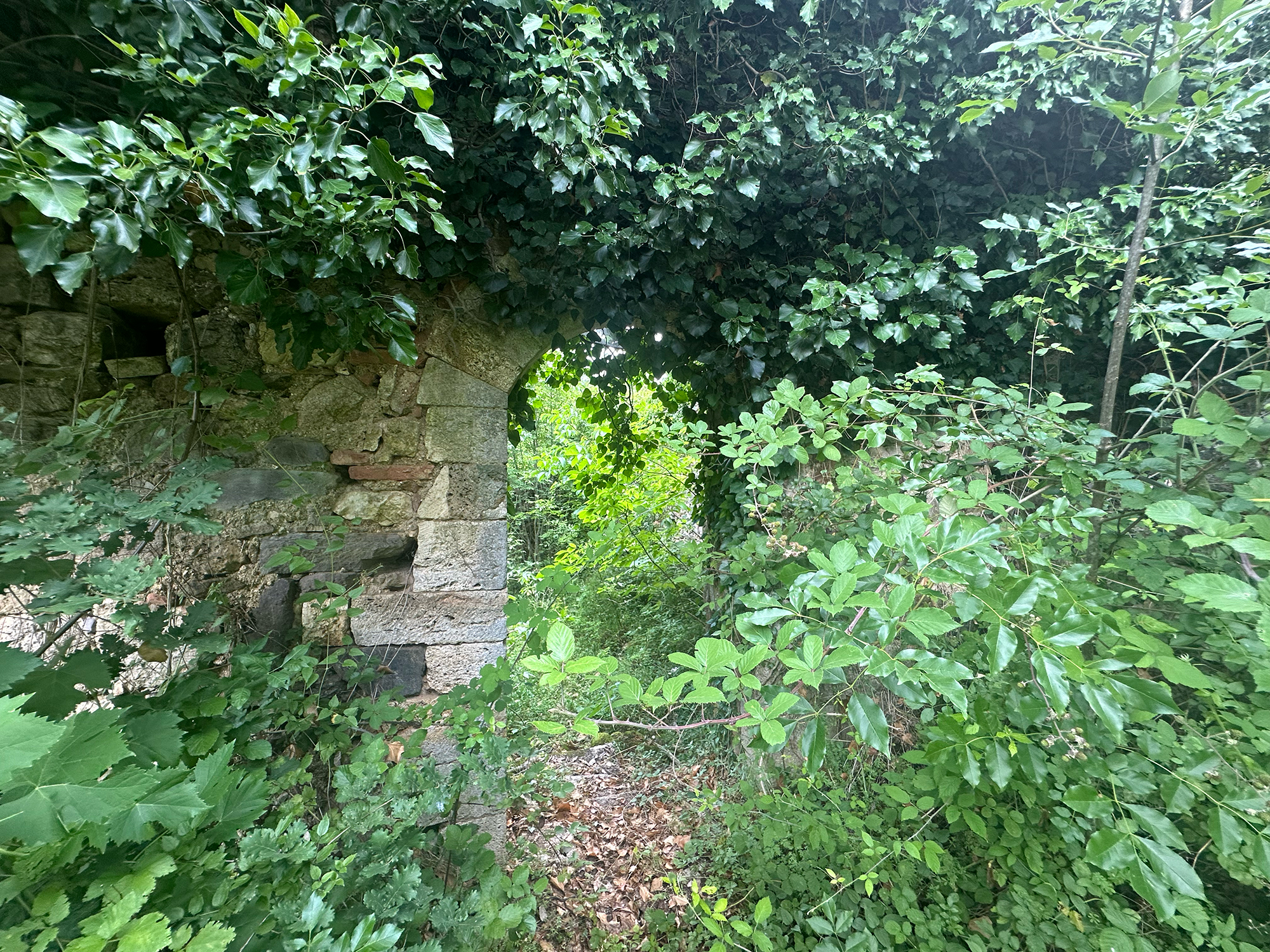
Unfortunately, the conservation status of the hermitage is now extremely poor. The entire area has been overtaken by vegetation and brambles, many structures are severely deteriorated, and the risk of collapse is very real. Over the years, the site has also suffered thefts and acts of vandalism, resulting in the loss of important architectural features, including the marble coverings of the Gothic portals.
Despite its state of abandonment, the Hermitage of Santa Lucia still retains an extraordinary charm. Surrounded by the silence of the Sienese countryside, it represents one of the most evocative testimonies to the medieval spirituality of the Montagnola Senese, where history, archaeology and legend merge within a landscape that has remained almost unchanged for centuries. It is one of Tuscany's hidden treasures, deserving to be rediscovered and preserved for its exceptional historical and cultural value.